Established 2003. Still delivering.

FinTech & Finance

Engineering secure, resilient digital products for the UK financial sector.

Tinderhouse: Specialist FinTech & Finance UK for startups and enterprise teams

Tinderhouse provides high-integrity software engineering for the FinTech and financial services sector, where security, data accuracy, and user trust are the primary benchmarks of success. We understand that in finance, "good enough" is never sufficient: systems must be resilient, encryption-first, and capable of handling high-value transactions with total reliability. From bespoke investment research portals to gamified financial literacy platforms, our team delivers the technical precision required by a regulated industry. We partner with established financial institutions and disruptive startups to build scalable infrastructure that protects assets and empowers users.

We bridge the gap between complex financial logic and user-centric design, building secure systems for wealth management, investment research, and gamified financial literacy.

Discuss your project
Our team is ready to begin new projects.

Our services

Financial App Development

Engineering secure, resilient digital products for the UK financial sector

Explore more →

What we build for fintech and financial services businesses

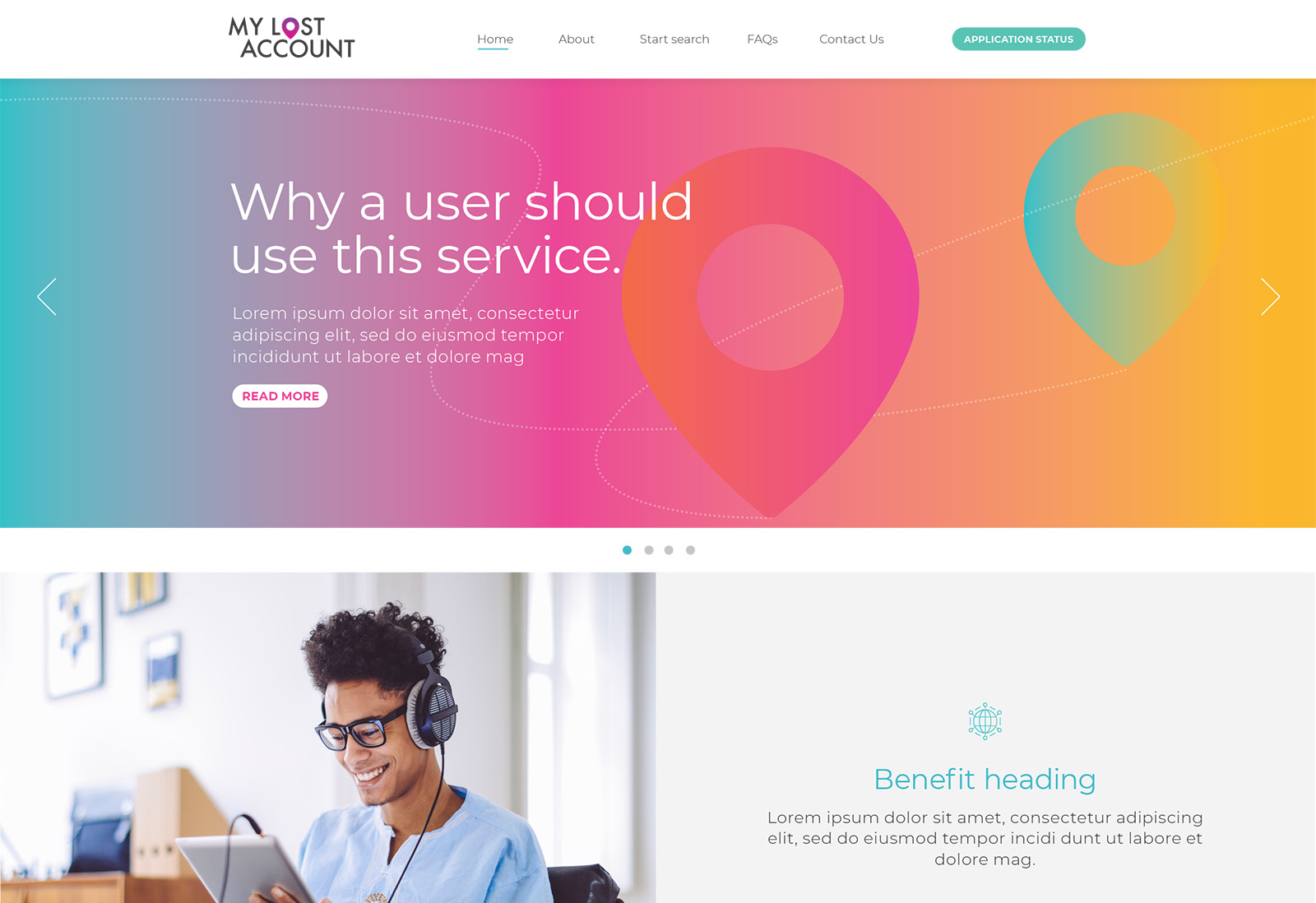
Financial software carries a weight that most digital products do not. Every transaction, every data point, every user interaction sits inside a regulatory framework where the consequences of failure are measured in compliance breaches, lost capital, and eroded trust. Tinderhouse has been engineering systems for the UK financial sector for over two decades, from the My Lost Account portal used daily by all major UK banks to investment research platforms.

Large parts of the financial sector still run on internal platforms that were never designed for the volume, complexity, or compliance standards they now need to meet. Bespoke web systems for financial businesses replace fragile spreadsheet workflows and legacy portals with purpose-built platforms that handle real data volumes under real regulatory scrutiny.

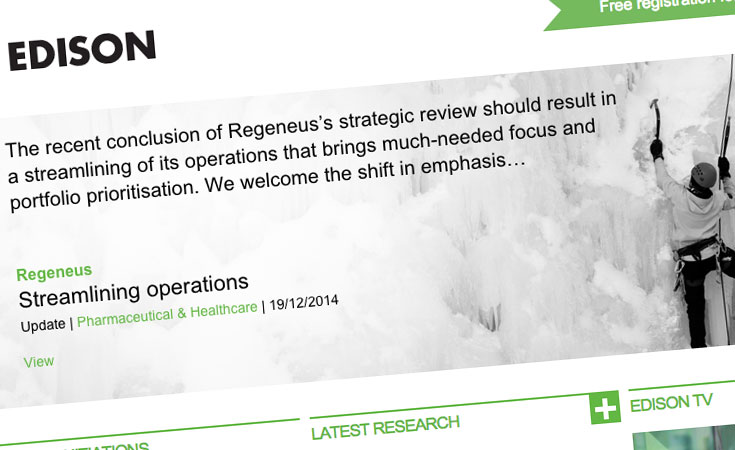
Investment research and distribution The Edison Investment Research platform is a research distribution system and automated publishing extranet built for a global investment intelligence firm. It handles large-scale data ingestion and real-time visualisation, giving analysts and investors the tools to make high-stakes decisions with complete data accuracy. Systems like this require careful attention to publishing workflows, access permissions, and data integrity at every layer.

Client portals and secure data access Wealth management firms, investment houses, and banking institutions all need portals where clients can access sensitive information securely. These are not simple login-and-view systems. They require granular permission models, encrypted data pipelines, and audit logging that satisfies both internal governance and external regulatory requirements.

Open Banking and API orchestration PSD2 and Open Banking have created new expectations around how financial data flows between institutions and third-party providers. We build resilient middleware that connects digital products with core banking systems, payment processors such as Stripe and Adyen, and Open Banking APIs, maintaining security and uptime across every integration point.

Explore more →

The financial sector generates enormous volumes of structured and unstructured data, from market feeds and transaction logs to research reports and customer communications. AI product engineering in this context is not about adding a chatbot to a website. It is about building intelligent systems that process, classify, and surface financial information in ways that support better decisions.

Automated research and reporting Investment firms and analysts spend significant time synthesising data from multiple sources into actionable insight. AI-powered ingestion and summarisation tools can reduce that cycle from hours to minutes, provided the underlying models are trained and prompted with sufficient domain understanding. Accuracy is non-negotiable in this context: a hallucinated data point in a financial summary is not a minor inconvenience, it is a compliance risk.

Fraud detection and anomaly identification Pattern recognition across transaction data is one of the clearest applications of machine learning in financial services. Building these systems well requires clean data pipelines, carefully validated models, and alert mechanisms that integrate with existing compliance workflows rather than creating parallel processes that nobody monitors.

Personalised financial guidance Consumer-facing financial products increasingly use AI to deliver personalised recommendations, whether for pension contributions, investment allocation, or spending habits. The regulatory sensitivity here is significant: anything that could be construed as financial advice must be carefully scoped and disclaimed. We build these systems with guardrails that protect both the user and the business.

Explore more →

Financial SaaS products face a unique combination of pressures: multi-tenancy with strict data isolation, subscription billing that must handle complex pricing tiers, and compliance requirements that differ by client segment and jurisdiction. SaaS development for fintech means building platforms where every tenant's data is segregated, encrypted, and auditable from day one.

Multi-tenant data isolation A wealth management SaaS serving multiple advisory firms cannot allow any data leakage between tenants. This is not just a technical requirement but a regulatory one, and it shapes decisions about database architecture, caching strategies, and API design. We build multi-tenant systems where isolation is enforced at the infrastructure level, not just the application layer.

Subscription and billing complexity Financial SaaS products often have pricing models that reflect usage tiers, regulatory reporting add-ons, or per-seat licensing combined with transaction-based fees. The billing architecture needs to handle this complexity without creating reconciliation headaches for the finance team or confusion for the end user.

Uptime and resilience Financial platforms cannot afford downtime during market hours or transaction windows. SaaS architecture for this sector requires redundancy, automated failover, and monitoring that catches degradation before it becomes an outage. SLA commitments in financial services carry real contractual weight, and the infrastructure must be built to honour them.

Explore more →

Established financial institutions often need to modernise internal systems or launch new digital products without disrupting the infrastructure that keeps the business running. Enterprise app development in financial services means working within existing security policies, integration landscapes, and governance structures, not alongside them.

Legacy system integration Most banks and financial institutions operate a complex ecosystem of legacy platforms, some decades old, that cannot simply be replaced. New digital products need to connect with these systems reliably, pulling and pushing data through secure APIs or middleware layers without introducing new points of failure.

Internal workflow digitisation Compliance teams, operations departments, and client-facing staff in financial organisations often rely on manual processes that create bottlenecks and audit gaps. Purpose-built enterprise applications can automate approval chains, document management, and reporting workflows while maintaining the audit trail that regulators expect.

Governance and change management Enterprise deployments in regulated financial businesses require formal change management processes, security reviews, and phased rollout strategies. We work within these frameworks rather than around them, providing the documentation, testing evidence, and deployment planning that enterprise governance demands.

Explore more →

Mobile is increasingly the primary channel for consumer financial services, from banking and payments to investment tracking and financial education. Mobile app development for the financial sector demands a level of security, performance, and testing rigour that goes well beyond standard consumer app development.

Secure mobile transactions Every interaction in a financial mobile app, from viewing a balance to executing a trade, must be protected by encryption, session management, and biometric or multi-factor authentication. We build mobile applications where security is embedded in the architecture, not layered on top as a skin.

Cross-platform delivery Reaching users on both iOS and Android is essential for consumer-facing financial products, but the approach matters. The 2mins financial education app was built as a cross-platform application to maximise reach without compromising on performance or native feel. Choosing between Flutter, native, or hybrid approaches depends on the specific requirements of the product: how much device-level access is needed, what the performance expectations are, and how the app integrates with backend financial systems.

Compliance in the app stores Financial apps face additional scrutiny from Apple and Google during the review process, particularly around data handling disclosures, in-app purchase rules for subscription products, and claims about financial returns or advice. Understanding these requirements early avoids costly rejection cycles and launch delays.

Explore more →

Fintech startups typically operate under pressure to validate a concept quickly while meeting regulatory requirements that more established businesses already have in place. MVP app development for financial products is not about cutting corners. It is about identifying the smallest version of the product that proves the business model whilst remaining compliant.

Regulatory-aware scoping A financial MVP that ignores FCA requirements or data protection obligations is not a viable product, no matter how quickly it reaches market. We help fintech founders scope their minimum viable product around the regulatory reality of their sector, identifying which compliance requirements apply from launch and which can be addressed as the product scales.

Investor-ready prototypes Many fintech startups need a working prototype to secure funding. The difference between a demo and a credible product is often the quality of the underlying architecture: investors with technical due diligence processes will scrutinise how data is handled, how the system scales, and whether the codebase is built for growth rather than disposal.

Iterating with confidence The path from MVP to full product in financial services involves adding features, integrations, and compliance layers progressively. Building the MVP on a sound architectural foundation means each iteration adds capability without requiring a rebuild, which is particularly important when regulatory approval processes are involved.

Explore more →

Not every financial product needs a native app. Progressive web apps offer a compelling alternative for financial tools, dashboards, and client portals where broad accessibility matters more than deep device integration, and where reducing the friction of app store downloads can improve adoption rates.

Accessible financial dashboards Investment research portals, performance reporting tools, and client-facing dashboards often serve users across a wide range of devices and operating environments. A progressive web app delivers a consistent, responsive experience without requiring installation, which is particularly valuable for platforms where users may access the system from multiple devices or shared workstations.

Reduced distribution friction For B2B financial products, requiring every end user to download a native app creates an adoption barrier. PWAs can be accessed via a URL, bookmarked to a home screen, and updated without app store review cycles, which simplifies distribution for products serving financial advisors, analysts, or institutional clients.

Offline and low-connectivity support Financial professionals working across multiple locations or travelling between client meetings need access to key data even when connectivity is unreliable. Service worker caching in a well-built PWA ensures that critical information remains available offline, syncing automatically when the connection is restored.

Explore more →

Frequently asked questions

Everything you need to know about working with Tinderhouse, from costs and timelines to our process and expertise.

Security is the foundation of our engineering process. We implement end-to-end encryption for all data in transit and at rest, alongside robust multi-factor authentication (MFA) and role-based access controls. Our systems are built on secure AWS infrastructure, ensuring that sensitive financial data and personal information remain protected against unauthorised access while adhering to UK GDPR standards.

Yes. We have extensive experience in API orchestration, securely connecting digital products with core banking systems, payment processors like Stripe or Adyen, and Open Banking providers. We focus on building resilient middleware that ensures seamless, real-time data flow while maintaining the highest levels of security and uptime.

We believe that financial software should be intuitive, not intimidating. Our approach focuses on data clarity and cognitive ease, ensuring that complex financial metrics are presented in a way that is easy to navigate and understand. By combining rigorous user testing with financial logic, we build platforms that drive user confidence and long-term engagement.

We have engineered sophisticated portals for investment research and wealth management firms, including platforms for organisations like Edison Investment Research. These systems handle large-scale data ingestion and real-time visualisation, providing analysts and investors with the tools they need to make high-stakes decisions with 100 percent data accuracy.

We're proud to have worked with...

Team Sky: Elite Sports Technology Partner Willis re Sky Kent County Council Medway Council London School of Economics: Public Sector Research Systems NHS: Healthcare Digital Transformation Partner Cisco Systems: Enterprise Infrastructure Software Partner The Telegraph: National Election Platform Partner

Tinderhouse is ranked as one of the UK's top 50 mobile app development companies.

TEAM SKY
Tech partner
2010-2015
MAP MY TRACKS
#1 App
App Store (Fitness)
MAP MY TRACKS
Featured
App Store
BABY LED WEANING COOKBOOK
#1 App
App Store (Lifestyle)