Build, test, and validate your product idea in weeks, not months
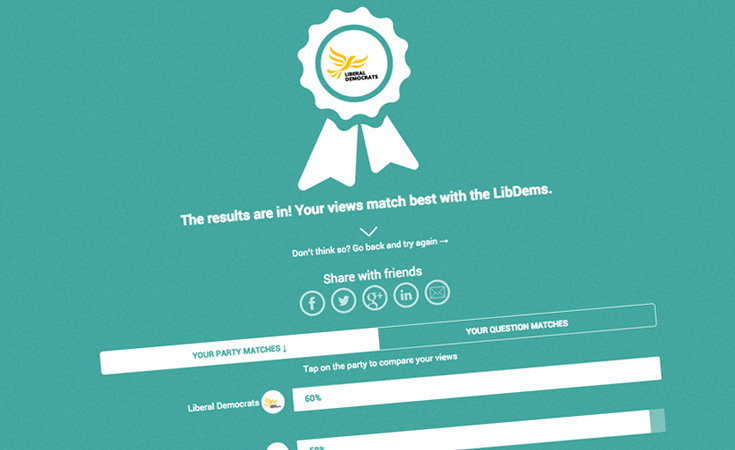
Our MVP app development service focuses on speed-to-market and core value validation. Commissioned by BSkyB to serve as Official Technology Partner to Team Sky (2010-2015), we delivered GPS tracking technology for Tour de France champions and built the fan app connecting millions of cycling enthusiasts. When we built VoteMatch for the 2015 General Election, the mobile-first platform handled 100,000+ concurrent users and was white-labelled by The Telegraph for their national coverage. With over 20 years of experience, we help startup founders and product leads bypass "feature creep" to launch high-quality digital products that users actually want.
The best MVPs aren't minimal - they're focused. We've learned that saying no to features is often more valuable than saying yes.
Our app and website design and development areas of expertise
AI integration specialists
Web service connections
Back-end database integration
Innovative UX/UI design
Our app and website solutions are helping businesses grow, be more efficient and sell more. Let's talk about your project. Call us on +44 (0)1227 811771 or send us an email.
Why MVP App Development Matters in 2026
In the current landscape, the risk of building a product nobody wants is higher than ever. MVP app development is the strategic process of launching a version of your product with just enough features to satisfy early customers and provide feedback for future development. As of 2026, the focus has shifted from "minimal" to “viable”, the product must solve a real problem effectively from day one.
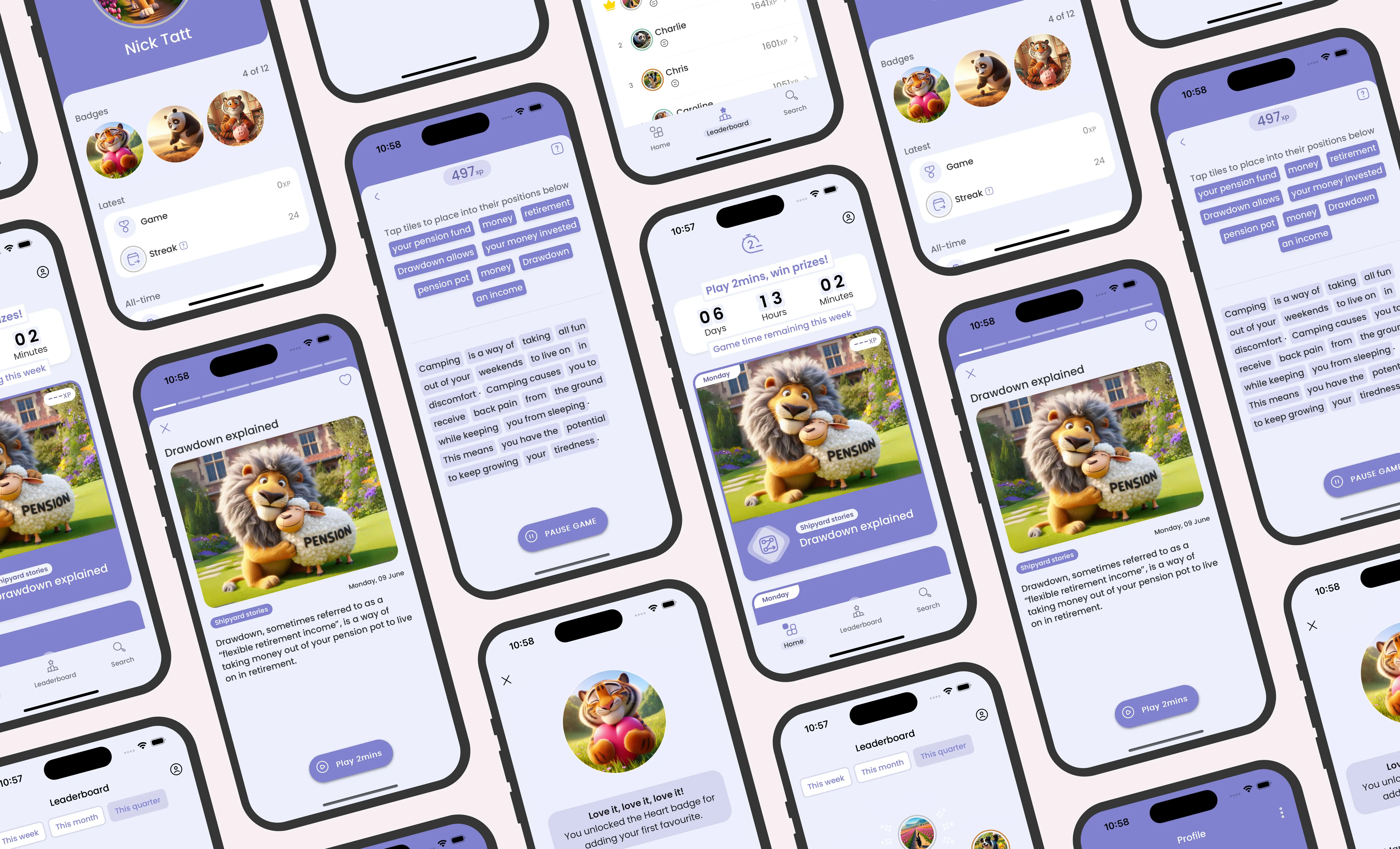
At Tinderhouse, we treat an MVP as a learning vehicle. By prioritising the core value proposition, you reduce financial risk and avoid wasting resources on unproven ideas. For example, when we developed an MVP financial education app, we moved from concept to launch within 8 weeks, allowing the client to test their thesis with real users immediately. This rapid mobile app development approach ensures that your final product is built on a foundation of evidence, not assumptions.
What is MVP App Development?
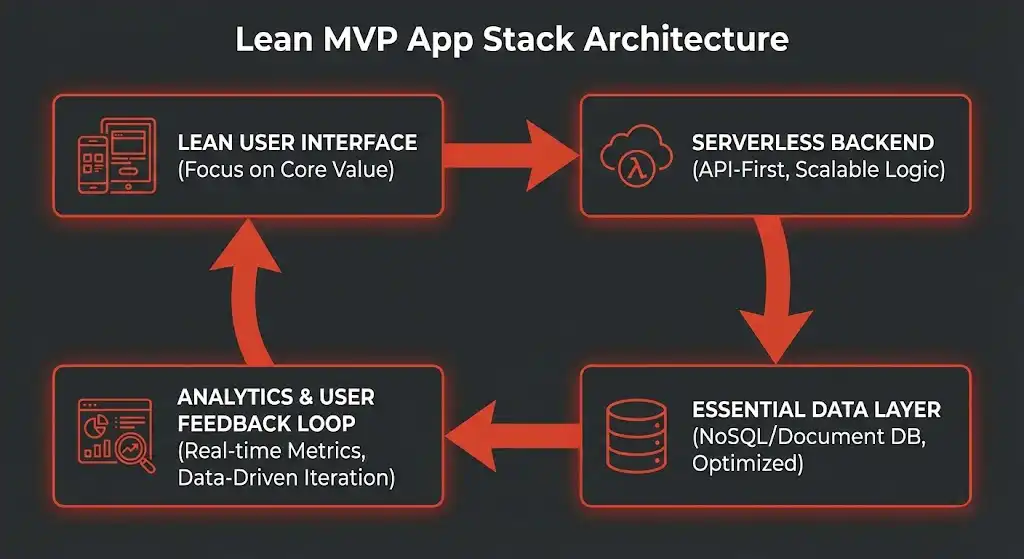
Engineering for Validation: Our lean MVP architecture prioritises speed-to-market without sacrificing technical integrity. By focusing on core UI logic and scalable cloud infrastructure, we ensure your product is ready for rapid iteration and seamless future scale.
An MVP is often confused with a prototype or a "cheap" version of a final product. In reality, it is a development philosophy based on Lean Startup principles, a methodology focused on shortening product development cycles and rapidly discovering if a proposed business model is viable.
Unlike our startup prototype service, which is a functional demo designed for investors, a Tinderhouse MVP is a live, production-ready product. It must be stable enough for public use and robust enough to collect meaningful data through Iteration Cycles—repeated processes of testing, analysing, and refining the software based on user feedback. We focus on identifying the "Minimum" while never compromising on the “Viable.”
Accelerating Validation with Agentic AI
"In 2026, a competitive MVP often requires more than just a slick UI. We specialise in building AI-native MVPs that leverage Agentic AI to automate core user workflows from launch. By integrating intelligent reasoning agents early, we help founders reach Product-Market Fit faster, gathering deeper insights into how users interact with automated features."
Proven at Elite Level: From Team Sky to Everyday Athletes
Between 2010 and 2015, Tinderhouse was commissioned by BSkyB to serve as Official Technology Partner to Team Sky, Britain's professional cycling team. This five-year engagement required us to swiftly deliver both professional-grade GPS tracking solutions for Tour de France preparations and a consumer fan app connecting millions of cycling enthusiasts to Bradley Wiggins, Chris Froome, Mark Cavendish and team riders through live pro rider tracking.
The technical challenges were significant: real-time telemetry and bio data (heart rate, power, cadence, speed) for professional riders, GPS broadcasting with battery efficiency for remote training locations, and architecture capable of handling millions of concurrent users during Tour de France campaigns. The same technology foundation that powered Team Sky's fan engagement serves Map My Tracks users worldwide.
This work with a FTSE 100 corporation demonstrates our capability to deliver fast at any scale, from the highest levels of professional sport to everyday consumers, with the technical rigour and long-term stability that characterises all our mobile engineering.
Why UK Startups Choose Tinderhouse for MVP Development
Founders and technical leads partner with us as expert mobile app developers to manage two critical resources: time and capital. By focusing on a narrow feature set, you can achieve a faster time-to-market, which is essential in competitive niches like healthcare app development and fintech app development.
Risk Mitigation: You validate your business model before committing to a full-scale build.
Faster Feedback: Real user data informs your roadmap, preventing expensive pivots later.
Capital Efficiency: Investment is channeled into features that users have already proven they value.
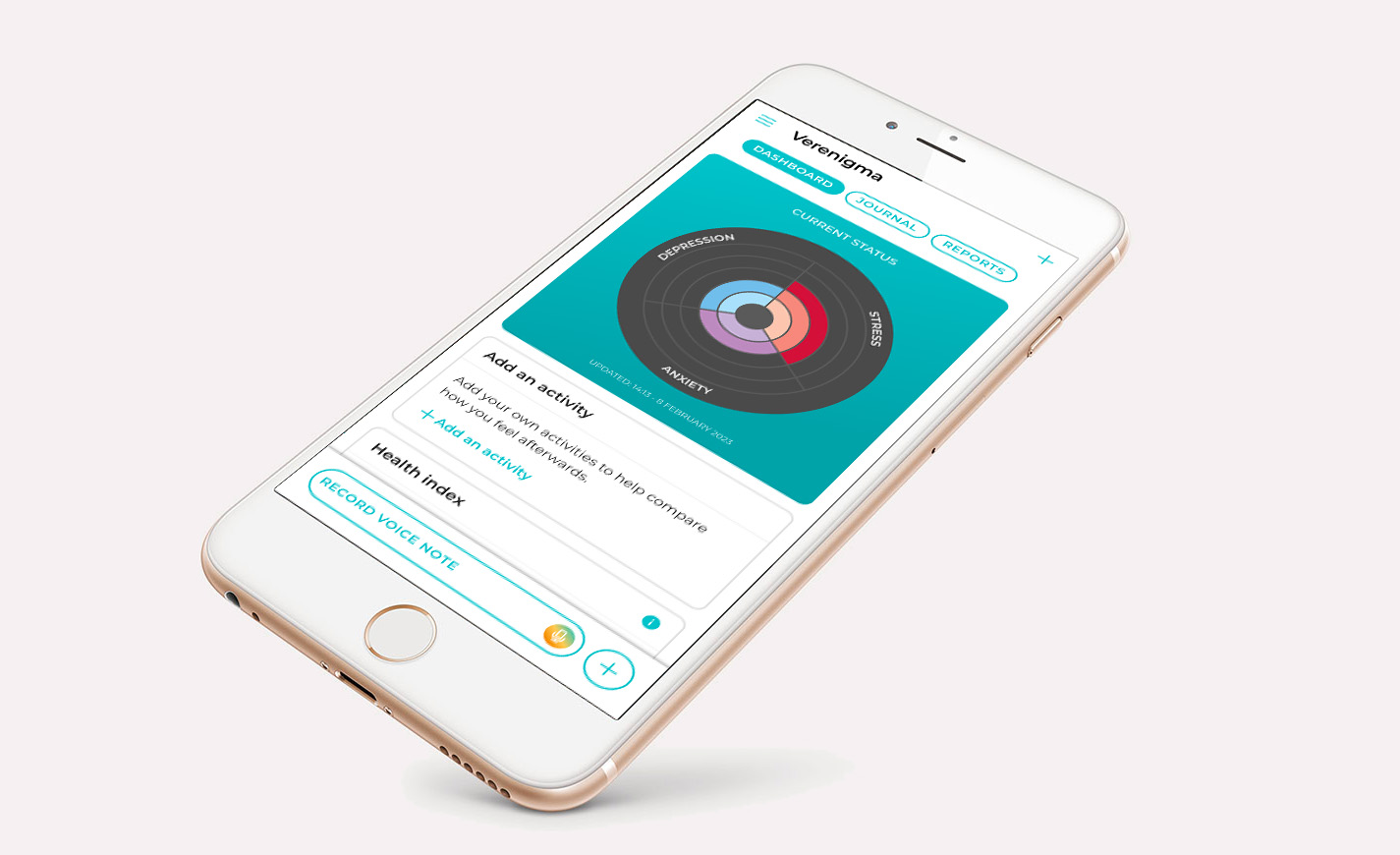
We saw this in action with the Verenigma app. By focusing on the core voice recording analysis for stress and anxiety, we were able to deliver a functional tool that provided immediate value to users while establishing a roadmap for complex future features.
The MVP App Development Process
Our process is designed to be transparent and collaborative, ensuring that technical decisions align with business goals.
1. Discovery and Scoping
We begin by stripping the concept down to its core. We identify the primary problem your app solves and the absolute minimum set of features required for a successful startup launch. We identify the primary problem your app solves and the absolute minimum set of features required to solve it. This stage often involves defining the Product-Market Fit, the degree to which a product satisfies a strong market demand.
2. Agile Development
We follow Agile methodology—short development cycles that let us adapt as you learn about your users. Within this, we use Scrum practices: two-week sprints with clear deliverables and regular check-ins. This ensures that the business app developer team and the client remain in total sync.
3. Testing and Deployment
Before launch, we utilise TestFlight/Google Play beta testing, platforms that allow us to distribute the app to a limited group of users for real-world stress testing. This helps us identify bugs and usability issues before the general public sees the product.
4. Feedback and Iteration
Once the app is live, the work doesn't stop. We analyse user behaviour and feedback to plan the next phase of development. Our goal is to move from a progressive web app or native MVP to a full-scale solution through evidence-based growth. Many of our MVP clients transition to our Fractional Product Team service after validation, securing dedicated senior capacity on a monthly retainer rather than managing project-by-project scoping. This provides the continuous development velocity needed to capitalise on early traction whilst maintaining the capital efficiency that got you to market in the first place.
Common Mistakes to Avoid
In our 20 years of experience, we have seen common pitfalls that can sink a promising project.
Feature Creep: Trying to include "just one more thing" often delays the launch and muddies the user experience.
Ignoring Technical Debt: Choosing the cheapest development route often leads to technical debt which is why our expert mobile app developers prioritise clean, documented architecture from the very first sprint. This is the long-term cost of taking shortcuts in code quality. Every "quick fix" creates maintenance work later, which is why we prioritise clean, documented architecture. Our five-year engagement with BSkyB for Team Sky demonstrated how proper architecture enables continuous evolution. The GPS tracking technology we built in 2010 continued serving millions through 2015 without requiring fundamental rebuilds.
Ignoring Technical Debt: Choosing the cheapest development route often leads to technical debt which is why our expert mobile app developers prioritise clean, documented architecture from the very first sprint. This is the long-term cost of taking shortcuts in code quality. Every "quick fix" creates maintenance work later, which is why we prioritise clean, documented architecture. Our five-year engagement with BSkyB for Team Sky demonstrated how proper architecture enables continuous evolution. Similarly, VoteMatch was architected for white-label deployment from day one - enabling The Telegraph, The Independent, and Huffington Post to run their own branded versions simultaneously without infrastructure changes.
Building for Everyone: An MVP should target a specific "early adopter" group. Trying to please everyone usually results in a product that pleases no one.
Skipping Analytics: If you aren't measuring how users interact with the app, the MVP has failed its primary purpose of providing data.
Cost and Timeline
An MVP is a specialised tool for speed, and our timelines reflect that. While every project is unique, most of our MVP builds, such as our work with the NHS app for new mothers, follow a lean 8-to-12-week schedule.
Factors affecting cost include the complexity of third-party integrations, the choice between native or cross-platform development, and the depth of the initial UI/UX design. We provide ongoing support across all projects to ensure that as your user base grows, your infrastructure grows with it.
MVP development investment by complexity: Current UK market rates
MVP Complexity
Timeline
Investment
Typical Features
Simple MVP
6-8 weeks
£8K-£15K
Single user type, basic CRUD, 3-5 core features
Standard MVP
10-14 weeks
£15K-£35K
Multiple user types, API integrations, payments, 8-12 features
Complex MVP
14-20 weeks
£35K-£60K
Real-time features, AI/ML, complex workflows, 12+ features
When to choose each approach:
Startup Prototype: For pre-funding validation and demonstrating your concept to investors in 4 weeks.
MVP: When you need real market validation to secure startup funding or prove product-market fit
Full Product: After MVP validation shows clear market demand and you have funding to scale
Fractional Product Team: After validating product-market fit, when you need 2-4 days/week of senior engineering capacity without £200K+ hiring commitments (ideal for angel to Series A phase)
Is This Right For You?
This works well if you:
Are an early-stage startup needing to prove a concept to investors or internal stakeholders quickly.
Have a limited budget and need to prioritise the most impactful features. Once validated, our Fractional Product Team service lets you maintain development velocity without committing to £200K+ annual hiring costs.
Are entering a new market where user behaviour is not yet fully understood.
Need infrastructure that can scale rapidly - our VoteMatch platform went from launch to 100,000+ concurrent users during the 2015 election campaign.
This may not be right if:
You are building a high-security enterprise tool that requires 100% feature parity with existing legacy systems from day one.
Your "core" value proposition requires a massive, interconnected ecosystem to function at all.
What Happens After Your MVP Succeeds?
The most dangerous moment for a startup isn't launching—it's the six months after validation when you're racing to capitalise on early traction. You've proven the concept works, but you're not yet ready to commit £200K-£400K to building an internal engineering team.
This is precisely why we created our Fractional Product Team service. Rather than losing momentum whilst you navigate recruitment and onboarding, you retain the team that built your MVP on a monthly retainer. We continue as your embedded technology department, shipping 5-15 features per month depending on your tier, whilst you focus on fundraising, sales, and market expansion.
Three post-MVP partnership tiers:
Sprint Partner (£3,500/month): 2 days per week for angel-backed startups maintaining momentum between funding rounds
Growth Pod (£6,000/month): 3 days per week for seed-stage companies scaling toward Series A
Product Department (£10-12K/month): Near full-time capacity replacing the need for an internal engineering department entirely
Your fractional team already knows your architecture, your users, and your vision. There's no knowledge transfer, no onboarding delay, and no recruitment risk. Just continuous velocity from validation through to scale.
How Tinderhouse Serves Startups Across London, Kent, and the UK
Based at the Innovation Centre in Canterbury and in London, we operate as a conversational peer. We aren't just coders; we are product partners. We use API-first architecture, designing the data layer before the interface. This means your mobile app, web dashboard, and future integrations all speak the same language from day one.
Ranked in the top 50 UK app developers by Clutch, we combine 20 years of technical heritage with a pragmatic approach. For Map My Tracks, we scaled the product to over 1 million users globally by focusing on high-performance code and scalable architecture from the very first version. VoteMatch's MVP developed into a web app capable of scaling to 100,000+ concurrent users. We also utilise CI/CD pipelines—automated testing and deployment systems that catch bugs early and let us release updates safely and frequently.
For startups that validate product-market fit, our Fractional Product Team service provides the ongoing senior capacity needed to scale toward Series A without the capital commitment of internal hiring, maintaining the development velocity that got you to market whilst you focus on growth.
Ready to Discuss Your Project?
We've helped businesses across the UK turn technical challenges into working solutions. Whether you're at the planning stage or ready to start development, we're here to provide honest advice and clear guidance.
From £3,500/month: Your embedded product team that scales with your growth
Explore more →
Frequently asked questions
Everything you need to know about working with Tinderhouse, from costs and timelines to our process and expertise.
You do. 100%. Unlike some agencies that charge licensing fees or retain rights to the core code, we transfer full Intellectual Property (IP) ownership to you once the final balance is settled. You own the source code, the design files, and the database. You are free to host it where you want, modify it how you want, or even take it to another development team in the future.
No. We provide a detailed, fixed-price proposal before we write a single line of code. The price we quote is the price you pay for the agreed scope. If you decide to add new features during the project, we will always provide a separate quote for your approval first. You will never receive an invoice you didn't expect.
Never. We build using industry-standard frameworks and write clean, well-documented code. We don't use proprietary ‘black box’ systems that only we can understand. Any professional developer can pick up our code and start working on it. We want you to stay with us because you love our work, not because you're trapped.
A prototype is built specifically for validation and pitch meetings (see our startup prototype development for this stage). A Tinderhouse MVP is a production-ready application with real backend infrastructure, designed to acquire and support your first 1,000+ users. We use our expertise in web development to ensure core features, such as the real-time data streaming we engineered for Team Sky, are built on a scalable architecture from day one.
Absolutely. In fact, we specialise in AI-driven automation. During the initial build, we identify the most impactful AI touchpoints to ensure your product provides a distinct competitive advantage in the 2026 market.
We were commissioned by BSkyB (Sky Corporation) to serve as Official Technology Partner to Team Sky from 2010-2015, delivering GPS tracking solutions for professional riders and building the official fan app with live pro rider tracking. This five-year engagement demonstrated our capability to deliver both professional-grade systems and consumer applications at scale for a major broadcasting and media corporation.
Our standard window for app development at the MVP stage is 8 to 12 weeks. This timeframe is achieved by focusing on critical path features, which allows you to enter the market quickly without accumulating technical debt that hinders future scaling.
We transition into a phase of Iteration Cycles. We use real-world data to determine which features to build next. We provide ongoing support and maintenance to ensure the app remains stable as the user base grows.
This depends on your target audience. Often, we recommend iOS app development for initial validation due to the concentrated device market, or a Progressive Web App to reach both platforms simultaneously with a single codebase.
We manage technical debt—the cost of shortcuts—by using clean code standards and documenting where speed was prioritised over long-term architecture. This allows us to "refactor" and strengthen the code in future phases without rebuilding from scratch.
Yes. We are a professional agency based in Kent and London, and we respect the intellectual property of our clients. We frequently work on sensitive projects, including a Hansard Society web portal for monitoring Parliamentary activity.
An AI-first MVP is a software product built with artificial intelligence at its core logic rather than as a bolt-on feature. At Tinderhouse, we can develop AI-first MVPs by integrating agentic workflows and proprietary RAG systems from day one, ensuring the product is scalable, intelligent, and ready for the full scale market release.
No. Unlike agencies that use no-code shortcuts, our custom software engineering uses the same high performance standards as our enterprise solutions. Every line of code is written to be the foundation of your future product, ensuring a seamless transition as you secure funding.
We generally have the capacity to begin your project immediately. As a specialist team based in Kent and London, we structure our engineering sprints to support parallel development cycles. This agile approach means you do not have to wait for a "slot" to open up. We can move your product into the technical discovery phase straight away, ensuring your idea gains market traction as quickly as possible.
No. All development work is completed in-house at our offices in Canterbury, Kent and London by our UK-based team. We don't outsource to third-party agencies or offshore development partners. This ensures consistent code quality, clear communication throughout your project, and the ability to work closely with you during development. When you contact us, you're speaking directly with the people building your app.
Every project we launch comes with a 90-day post-launch warranty. At Tinderhouse, we believe execution doesn't end at 'Go-Live.' For the first three months after launch, our UK-based team handles any technical issues, bug fixes, or performance refinements within the original project budget. This ensures your software or AI system is fully stable in a real-world environment before transitioning to long-term support, protecting your investment and ensuring a seamless experience for your users.