Build autonomous AI agents that handle specific business tasks and integrate seamlessly with your systems
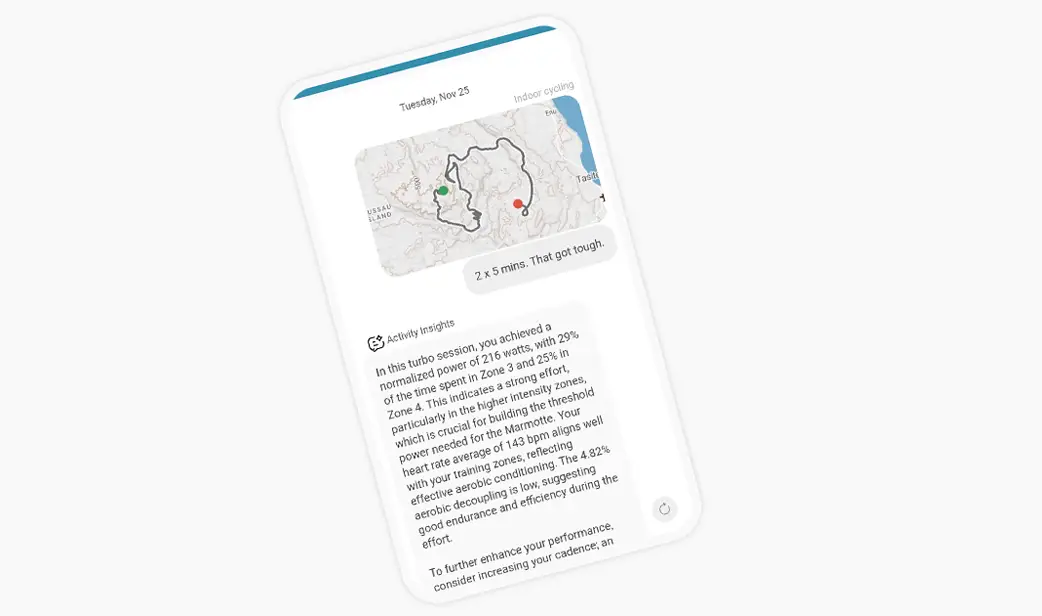
We build AI agents that work like specialised digital team members. Each agent is designed for a specific role, whether handling customer enquiries, qualifying sales leads, or researching competitors. Our Activity Insights feature in Map My Tracks already serves over 1 million users with personalised AI coaching that adapts to individual preferences, demonstrating our capability to build autonomous agents that operate reliably at scale.
The best AI agents feel like experienced team members who never sleep. They handle routine tasks autonomously whilst knowing exactly when to escalate to humans.
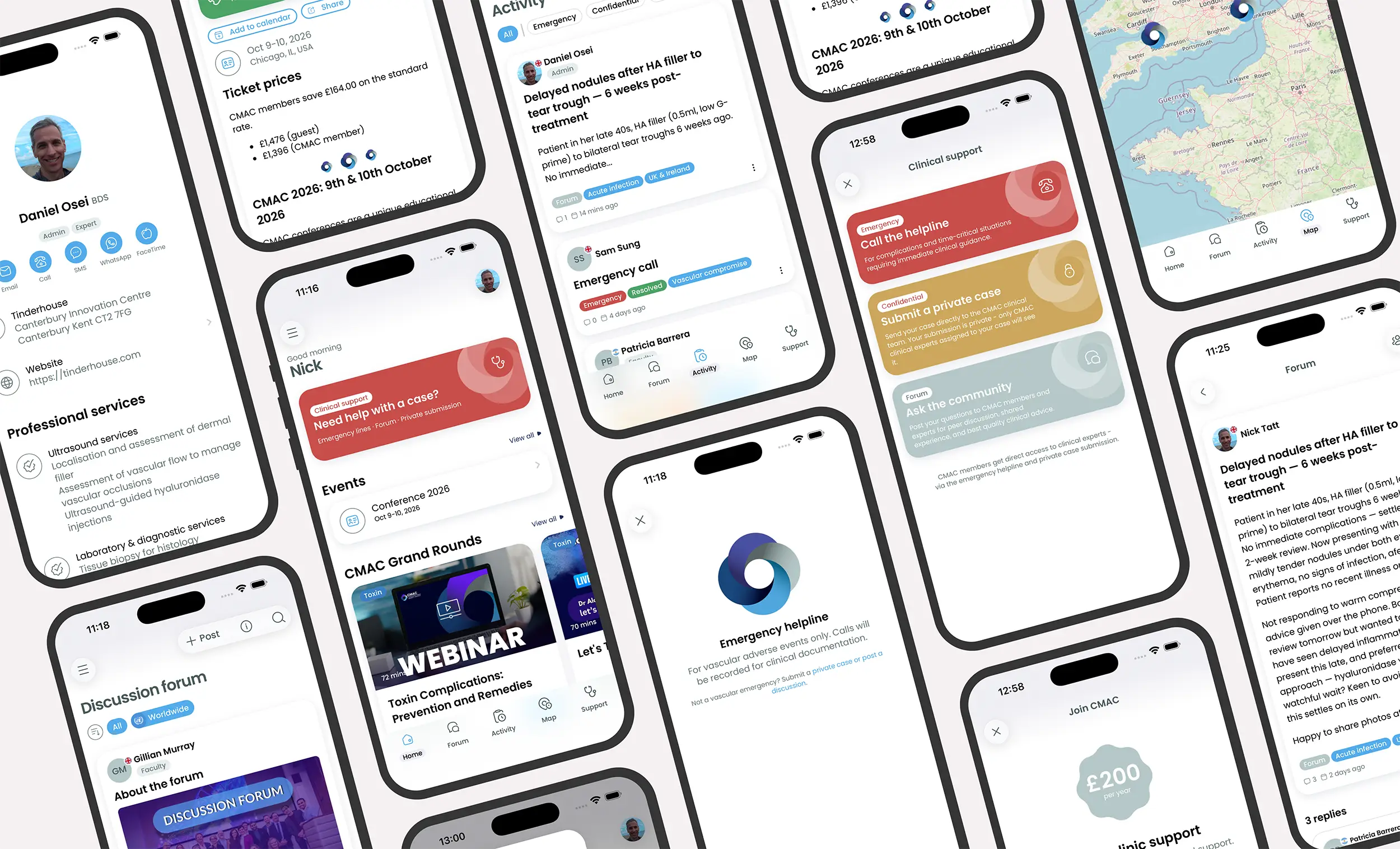
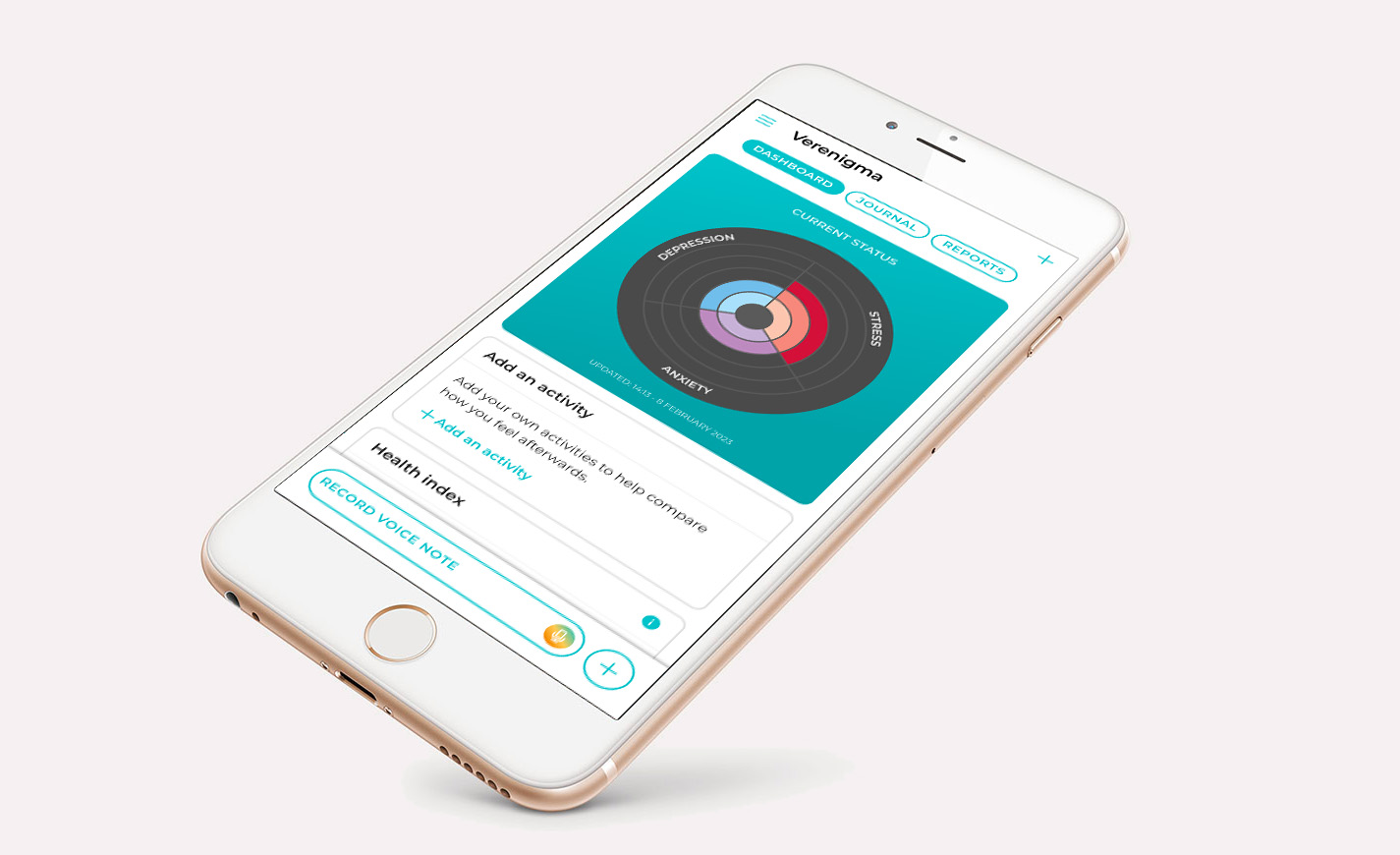
Our app and website design and development areas of expertise
AI integration specialists
Web service connections
Back-end database integration
Innovative UX/UI design
Our app and website solutions are helping businesses grow, be more efficient and sell more. Let's talk about your project. Call us on +44 (0)1227 811771 or send us an email.
Proven AI Agent Application Developers
Our Activity Insights feature in Map My Tracks serves over 1 million users across 190 countries with personalised AI coaching. This is not a proof-of-concept or demo. It is a production autonomous agent processing thousands of workouts daily, adapting to individual user preferences, and delivering contextually appropriate feedback at scale.
Building Activity Insights taught us what most AI agencies only theorise about: how to prevent repetitive responses, how to scale context-aware reasoning, how to implement cost guardrails that prevent runaway API expenses, and how to handle edge cases that only emerge at production scale.
When you work with Tinderhouse, you are working with a team that has solved the hard problems of deploying autonomous agents in real-world environments. We have built systems for the NHS, major banks, and served as Official Technology Partner to Team Sky. We understand what it takes to build AI agents that operate reliably under pressure.
What We Build: Role-Based AI Agents
Sales Agent
Qualifies inbound leads by analysing enquiry details, researching company information, and scoring against your ideal customer profile. Updates your CRM automatically, books meetings for high-value prospects, and sends personalised follow-up sequences. The same reasoning architecture we use in Activity Insights to assess fitness data applies to qualifying sales opportunities.
Customer Support Agent
Resolves tier-one enquiries by accessing your knowledge base, troubleshooting common issues, and escalating complex problems with full context. The approach we developed to provide coaching feedback across different fitness activities (running, cycling, swimming) translates directly to handling support enquiries across product lines.
Research Agent
Monitors competitors, tracks industry developments, and compiles intelligence reports. Configured to watch specific companies, pricing changes, or regulatory updates. The same content synthesis capability that generates workout insights applies to business intelligence gathering.
Operations Agent
Processes invoices, validates data, flags discrepancies, and routes approvals. The guardrails we built to prevent Activity Insights from over-processing ultra-marathon data apply to preventing expensive operational errors.
Comparison table of agentic AI development services vs traditional chatbots
Feature
Chatbot
Automation
Agentic AI
Reasoning
✗
✗
✓
Tool-Calling
✗
Limited Fixed integrations
✓ Dynamic tool selection
Adaptability
✗ Static responses
✗ Fixed workflows
✓ Learns from context
Decision-Making
✗ No decisions
Rule-based If-then logic
Context-aware Autonomous judgment
Multi-Step Workflows
✗
Pre-defined Cannot deviate
✓ Plans and adapts
Handles Ambiguity
✗
✗
✓ Interprets intent
Industry Applications: Proven Approaches
Healthcare & Life Sciences
Building for the NHS taught us patient data sensitivity, audit requirements, and the importance of explainable AI decisions. A patient triage agent applies the same assessment logic we use in Activity Insights, asking clarifying questions following clinical protocols whilst maintaining GDPR compliance.
Financial Services
Our work on "My Lost Account" banking portal, handling sensitive data across every major UK bank, demonstrated our capability to build systems with appropriate security controls. Compliance monitoring agents use similar pattern recognition to Activity Insights detecting training anomalies, but applied to transaction data.
Professional Services
A lead qualification agent uses the same contextual reasoning we built for Activity Insights. Just as our coaching agent adapts tone based on user preferences (supportive vs. analytical), a sales agent adjusts engagement based on prospect behaviour and qualification criteria.
Retail & E-commerce
Inventory management agents apply the same predictive logic Activity Insights uses to recommend training adaptations. Stock level monitoring and demand prediction use similar pattern recognition at scale.
Manufacturing
Quality control agents use defect pattern analysis similar to how Activity Insights identifies training load issues. The difference is sensor data instead of GPS data, but the autonomous reasoning architecture remains consistent.
How We Build AI Agents: Lessons from Scale
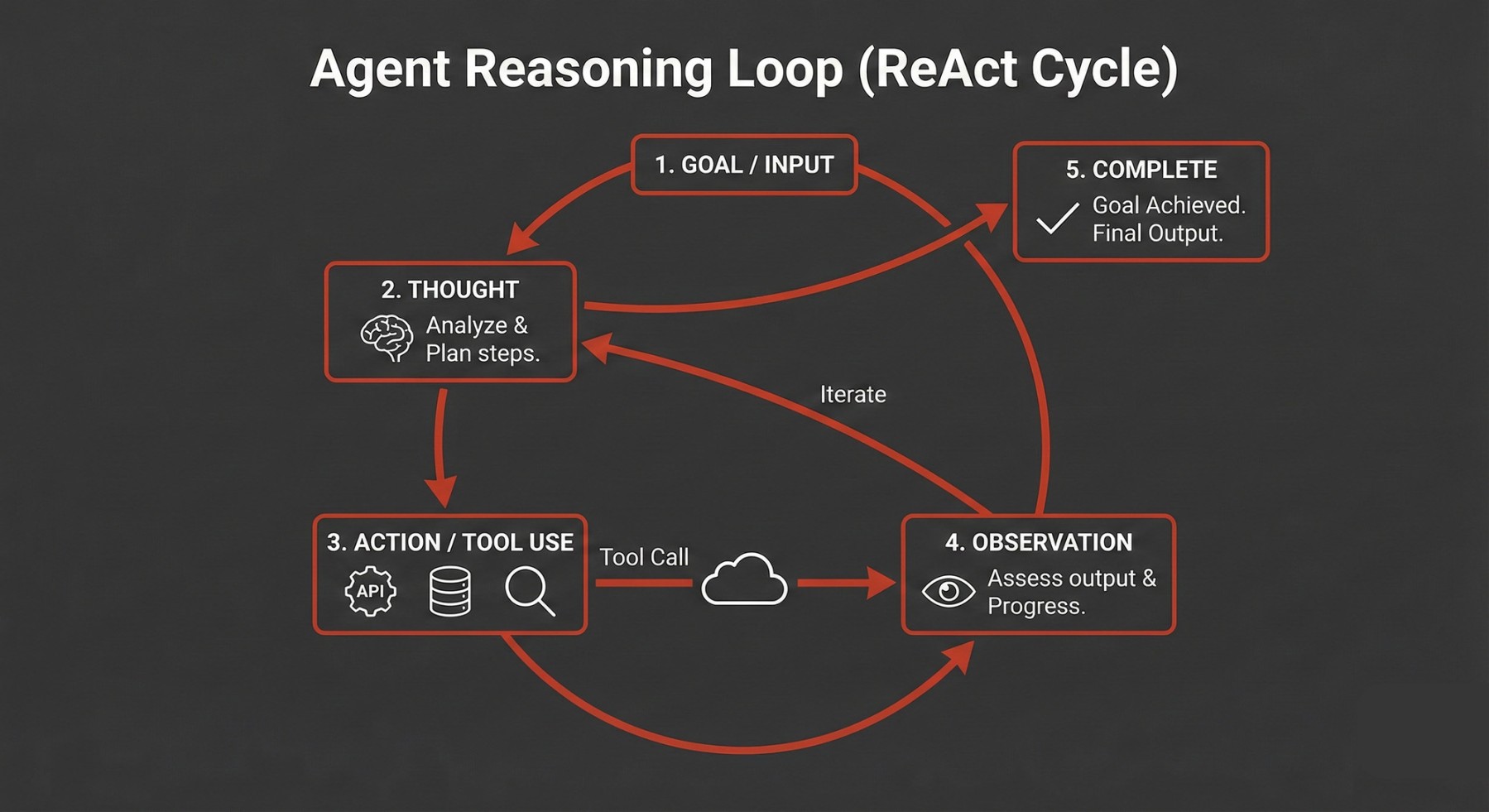
The Agent Reasoning Loop: A continuous ReAct cycle (Reasoning + Acting) that allows our autonomous agents to plan steps, call external tools, and observe results to solve complex business goals without manual intervention.
Discovery Grounded in Production Reality
We start every project with technical discovery, the same rigorous approach we used before building Activity Insights. We document the specific task, required integrations, decision parameters, and success criteria. Unlike agencies selling concepts, we scope based on production experience.
Integration Architecture That Works
Activity Insights integrates with ExpressionEngine CMS, user databases, GPS data processing, and OpenAI API. We built it to handle a million users without breaking. Your CRM integration, support platform connection, or ERP link gets the same reliability-focused architecture.
Guardrails Learned the Hard Way
When Activity Insights users upload 100km+ ultra-marathons, our cost guardrails prevent expensive over-processing by using tiered analysis: quick summary first, detailed coaching only if requested. Your agents get the same protection: cost budgets per action, human approval for high-stakes decisions, circuit breakers for runaway processes.
Iterative Deployment That Manages Risk
We deployed Activity Insights in stages: observation, limited coaching, full autonomy. This approach caught edge cases before they became expensive. Your agent follows the same staged rollout: we observe, we test limited actions, we deploy full autonomy only after validation.
Production Monitoring That Matters
Activity Insights includes dashboards showing API costs, response patterns, and user engagement metrics. Your agent gets equivalent monitoring: actions taken, decisions made, costs incurred, escalation patterns. We learned what to monitor by running a production agent at scale.
What You Get: Production-Grade Delivery
✓ Autonomous agent built with the same architecture serving 1M+ Map My Tracks users ✓ System integrations using reliability-focused approaches proven in NHS and banking projects ✓ Safety guardrails refined through pre-existing production deployments ✓ Monitoring infrastructure based on production operational experience ✓ Technical documentation from a team that has maintained systems for 20+ years ✓ Ongoing support from developers who understand production environments
Why This Matters: Theory vs. Production
Most AI agencies can demonstrate prototypes. Few have shipped autonomous agents serving a million users. The difference matters because:
Edge cases only appear at scale. Activity Insights handles users who upload corrupted GPS files, workouts with impossible speeds, activities with no heart rate data. Your agent will face equivalent edge cases. We have already solved these problems.
Cost control is essential. Processing a million workouts taught us how to prevent runaway API expenses. Your agent benefits from guardrails refined through production experience.
Integration complexity is underestimated. Connecting Activity Insights to legacy ExpressionEngine systems, mobile apps, and third-party APIs required the same integration expertise your agent needs.
Reliability is non-negotiable. Map My Tracks users expect coaching insights. Your customers expect your agent to work. We understand production reliability requirements.
Our Background: 20 Years Building Production Systems
This background means we understand integration challenges, security requirements, and operational reliability in ways that prompt-engineering consultancies simply cannot.
Ready to Build an AI Agent?
Call us on +44 (0)1227 811771 to discuss your project, or send us an email using our contact form. We will assess whether an AI agent is the right solution based on our production experience, not sales targets.
We start with honest scoping grounded in reality. If we think an agent is not appropriate for your use case, we will tell you. If it is appropriate, you will work with a team that has already solved the hard problems of deploying autonomous agents at scale.
Strategic AI advisory from a team that has spent 20 years building the things other consultants advise about.
Explore more →
Frequently asked questions
Everything you need to know about working with Tinderhouse, from costs and timelines to our process and expertise.
We're one of the few UK agencies with a production agentic AI system already serving over 1 million users. Activity Insights in Map My Tracks demonstrates our ability to build autonomous agents that operate reliably at scale, handle ambiguous user intent, and adapt to individual preferences, all the capabilities enterprises need.
Most AI consultancies can show you demos and proofs-of-concept. We can show you a live system processing thousands of real-world agentic workflows daily. This production experience is why our enterprise implementations succeed where others struggle with unexpected edge cases and scaling challenges.
A chatbot responds to questions with text. An AI agent takes actions. While a chatbot might tell you about your inventory levels, an agent would check stock, identify low items, automatically generate purchase orders, and notify your procurement team. Agents have autonomy to complete multi-step tasks without constant human intervention.
Simple agents handling single workflows typically take 10-14 weeks from discovery to deployment. More complex agents coordinating across multiple systems take 16-20 weeks. We always start with a technical discovery phase to validate feasibility and provide accurate timelines before committing to full development.
Yes. We specialise in API-first integration, connecting agents to CRM systems, support platforms, databases, and internal tools. If your system has an API, we can integrate with it. For older systems without modern APIs, we explore alternative integration approaches including database connections or user interface automation.
We implement multiple safety layers. Cost guardrails limit API spending per action. Human approval workflows require review before high-stakes decisions. Circuit breakers stop processes exceeding time or iteration limits. We learned these approaches building Activity Insights at scale, where guardrails prevent expensive over-processing across a million users.
Your data stays under your control. We typically use Retrieval-Augmented Generation (RAG) approaches where the agent accesses your information to answer questions but does not send it to external AI services for training. All integrations include appropriate authentication, encryption, and audit logging to meet your security requirements.
Agents handle routine tasks, freeing your team for higher-value work. A Support Agent resolves common enquiries, allowing human agents to focus on complex issues requiring empathy and judgment. A Research Agent compiles intelligence reports, giving analysts more time for strategic interpretation. Agents augment teams rather than replace them.
We always recommend beginning with a technical discovery phase. By focusing on mvp app development as the first milestone, we can validate your core features and architecture before committing to a full scale rollout. This lean methodology reduces risk and ensures your product is engineered to scale from day one.
We build production software, not proofs-of-concept. Our Activity Insights feature serves over 1 million users with autonomous AI coaching, demonstrating our capability to build reliable agents at scale. With 20+ years developing systems for the NHS, banks, and enterprise clients, we understand integration complexity and production requirements that consulting-focused agencies often underestimate.
Every project we launch comes with a 90-day post-launch warranty. At Tinderhouse, we believe execution doesn't end at 'Go-Live.' For the first three months after launch, our UK-based team handles any technical issues, bug fixes, or performance refinements within the original project budget. This ensures your software or AI system is fully stable in a real-world environment before transitioning to long-term support, protecting your investment and ensuring a seamless experience for your users.