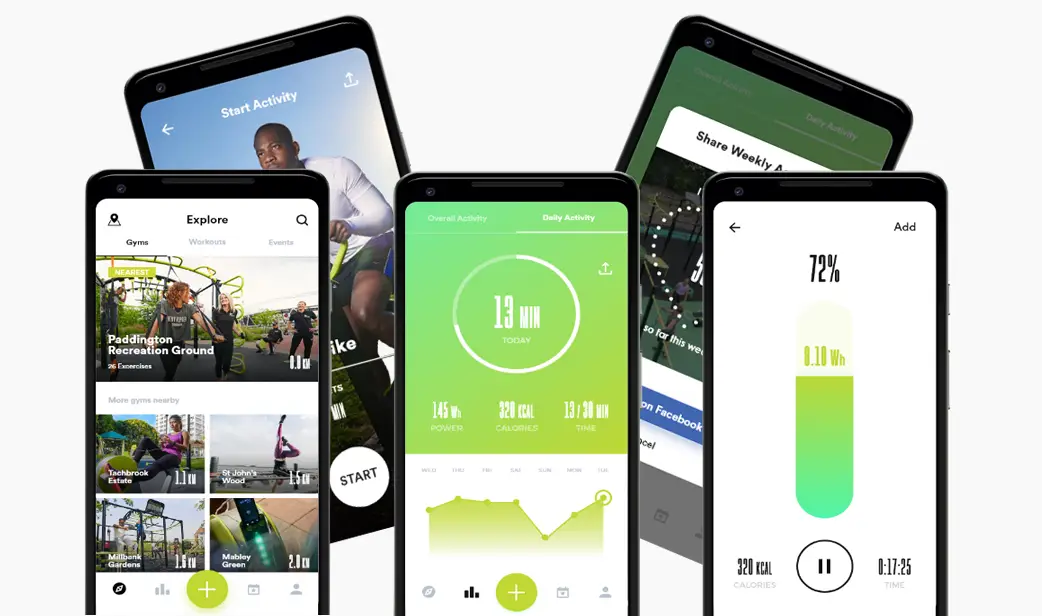
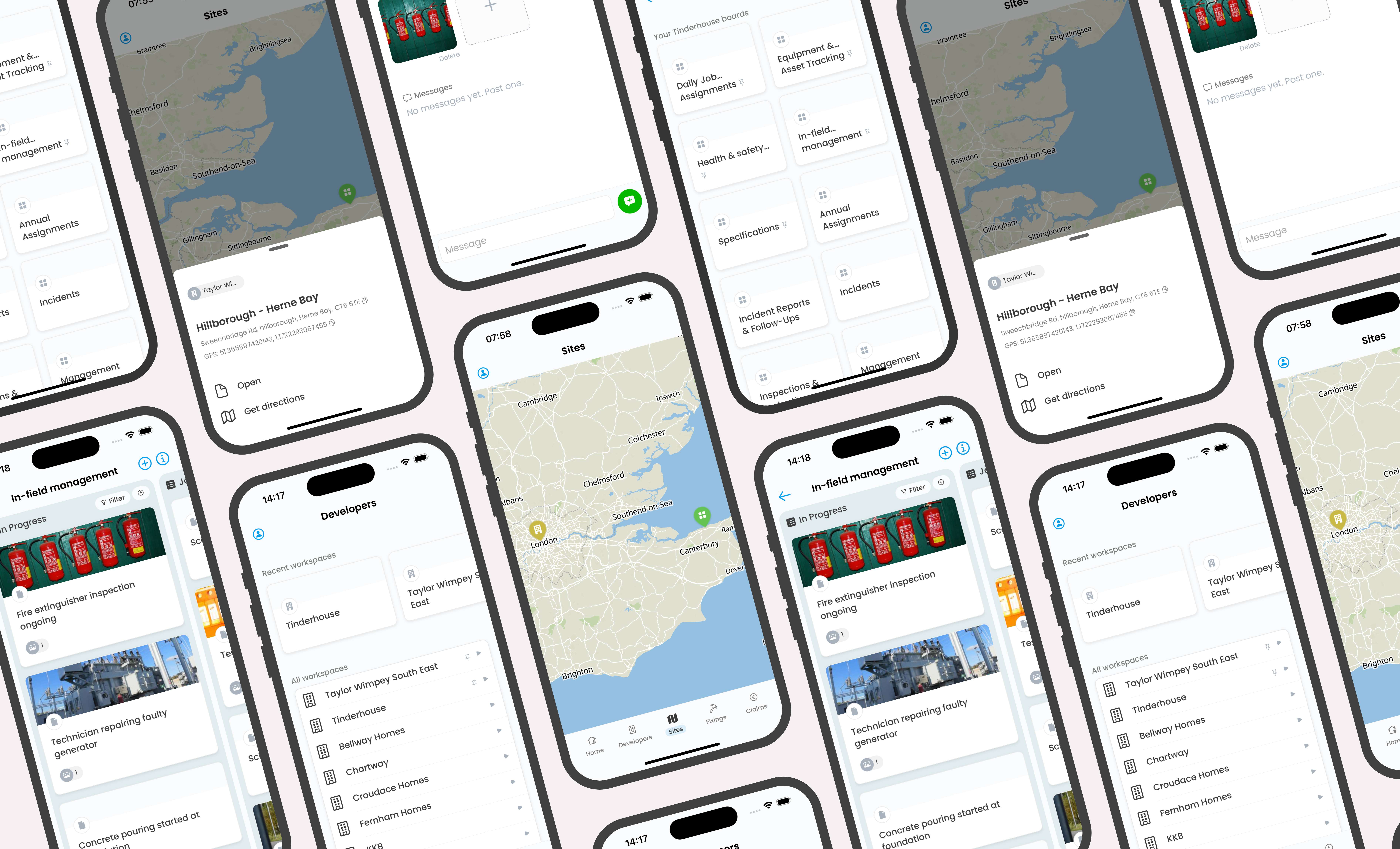
Cross-platform applications for iOS, Android, and web from a single codebase
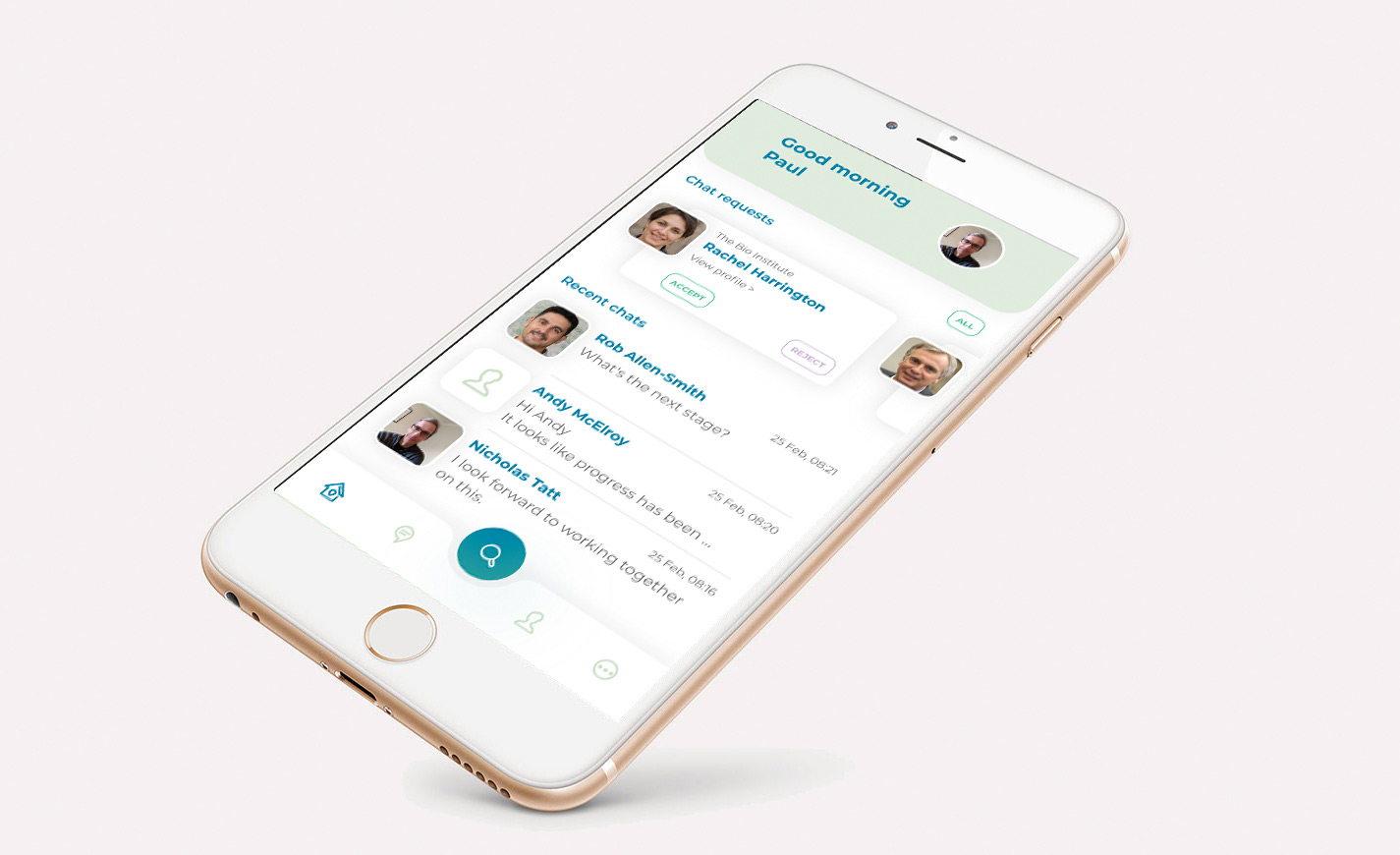
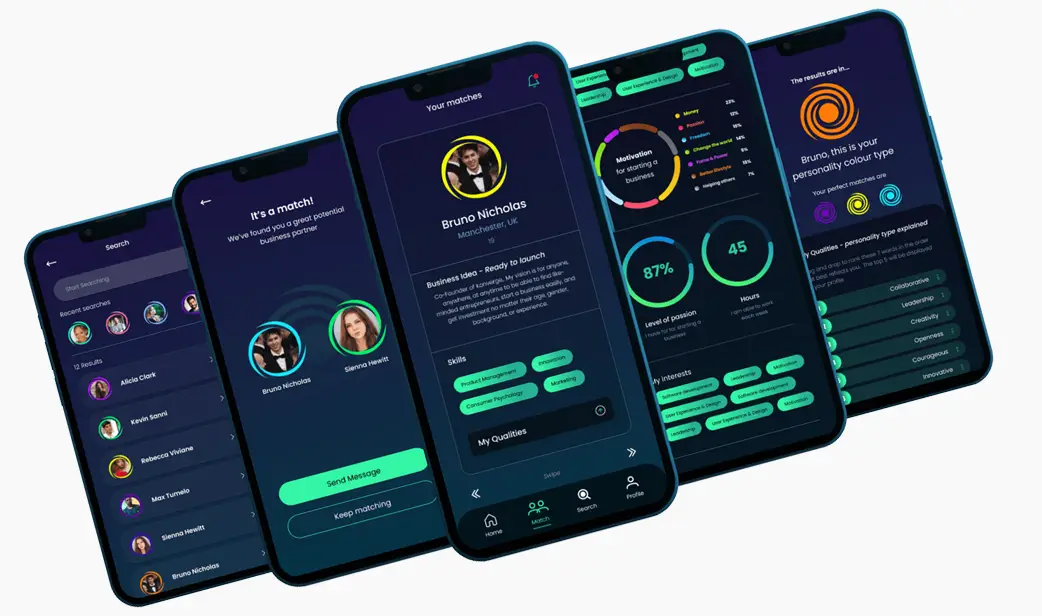
Tinderhouse provides specialist Flutter app development for organisations that require modern cross-platform applications with native performance and exceptional design quality. With over 20 years of experience building scalable mobile and web applications, we've delivered Flutter solutions including The Research Network, a sophisticated platform connecting researchers globally with complex data visualisation and real-time collaboration features. Our approach combines technical rigour with creative interface design, ensuring your Flutter application delivers consistent user experience across iOS, Android, and web platforms from a single, maintainable codebase.
The best cross-platform applications don't look identical everywhere - they feel natural everywhere. Flutter gives us the tools to share code whilst respecting platform expectations.
Our app and website design and development areas of expertise
AI integration specialists
Web service connections
Back-end database integration
Innovative UX/UI design
Our app and website solutions are helping businesses grow, be more efficient and sell more. Let's talk about your project. Call us on +44 (0)1227 811771 or send us an email.
Why Flutter App Development Matters in 2026
The economics of mobile app development have fundamentally changed. Maintaining separate codebases for iOS and Android creates compounding technical debt - every feature takes twice as long to build, every bug exists in two places, and design consistency requires constant vigilance across platforms. Flutter addresses this by allowing organisations to deploy high-performance applications to iOS, Android, web, and desktop from a single Dart codebase, reducing development time by 40-60% whilst maintaining native-level performance.
However, Flutter's real advantage lies beyond simple code sharing. The framework's widget-based architecture and declarative UI approach enable sophisticated custom interfaces that would be prohibitively expensive to build natively. When we developed The Research Network platform, Flutter's flexibility allowed us to create complex data visualisation components and animated transitions that feel native on both iOS and Android, whilst sharing the same codebase with the web version. This architectural approach reduces long-term maintenance costs and accelerates feature delivery without compromising on design quality.
The challenge many organisations face is distinguishing between frameworks that promise cross-platform development and those that actually deliver production-ready applications. Flutter's compiled architecture produces ARM binaries that run directly on device hardware, avoiding the JavaScript bridge bottleneck that affects older hybrid app development approaches. For companies requiring responsive interfaces, smooth animations, and reliable performance across diverse device specifications, Flutter represents the most mature cross-platform solution currently available.
What is Flutter App Development?
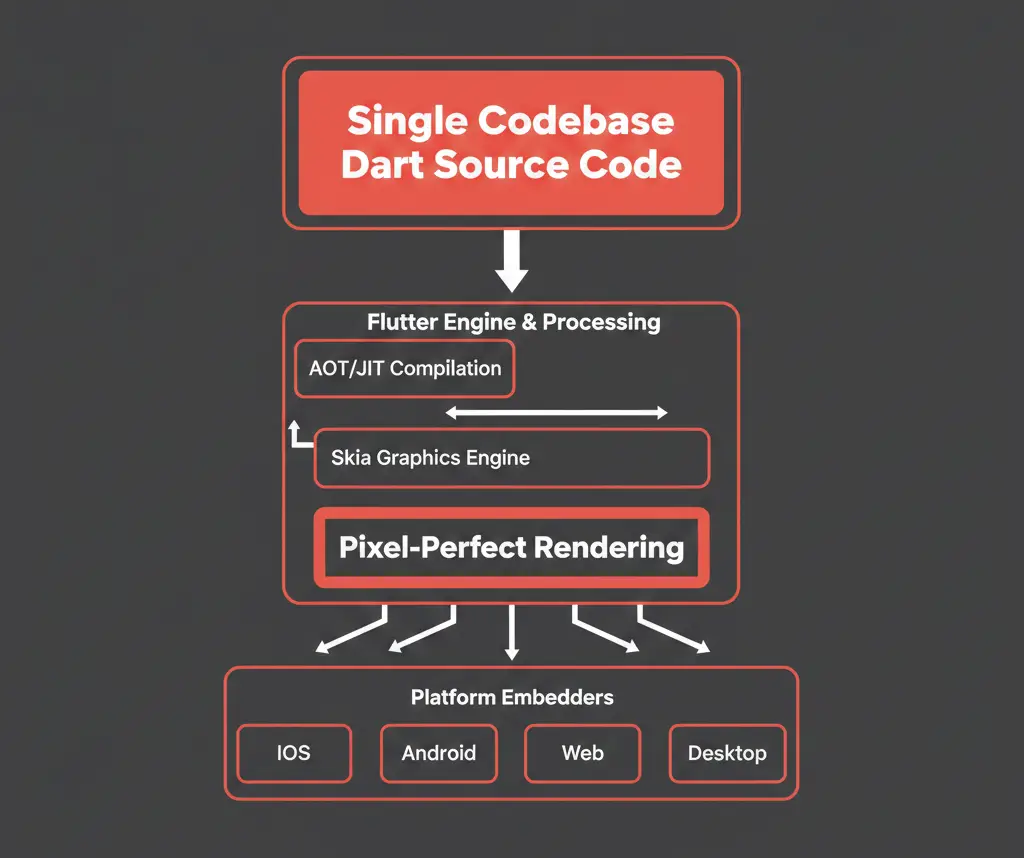
Flutter is Google's open-source UI toolkit for building natively compiled applications from a single codebase. Unlike hybrid frameworks that rely on WebView rendering or JavaScript bridges, Flutter compiles to native ARM code and renders every pixel directly using its own graphics engine (Skia). This architectural approach means Flutter applications achieve performance characteristics comparable to apps written in Swift or Kotlin, whilst maintaining the development efficiency of a shared codebase.
The framework's widget-based composition model differs fundamentally from native development patterns. In Flutter, everything is a widget - from structural elements like buttons and containers to behavioural concepts like gesture detection and animation controllers. This consistency enables rapid UI development using hot reload (instant code changes visible in running applications without losing state), significantly accelerating the design iteration cycle. When building The Research Network, hot reload allowed our designers and developers to refine complex interaction patterns in real-time, reducing the traditional feedback loop from hours to seconds.
Flutter supports Material Design (Google's design language) and Cupertino (iOS design patterns) out of the box, but its real strength lies in custom interface development. The framework provides low-level painting APIs that allow precise control over every rendered pixel, enabling distinctive visual identities that don't feel like template-based applications. We've used Flutter to build applications ranging from data-heavy research platforms to consumer-facing products, each with unique visual treatments that would be extremely costly to implement in traditional native development workflows.
The Intelligent Interface: AI Integration in Flutter Applications
"Flutter's efficient architecture makes it an ideal foundation for AI-powered applications requiring real-time processing and responsive interfaces. We specialise in building Flutter applications that integrate Agentic AI to deliver intelligent user experiences, from predictive search to automated workflow orchestration. By combining Flutter's performant rendering with edge-based inference and cloud AI services, we help founders build products that adapt to user behaviour whilst maintaining the responsiveness users expect from native applications."
The technical decision between Flutter and alternatives like React Native or native development depends on specific project requirements. Flutter excels when projects demand custom interfaces, smooth animations, consistent design across platforms, and strong performance on mid-range devices. It's particularly suited to applications with complex UI requirements, real-time data visualisation, or sophisticated interaction patterns. Projects requiring extensive platform-specific APIs or deep integration with native device features may benefit from a hybrid approach, combining Flutter UI with native modules for specialised functionality.
Engineering for Consistency: Our Flutter app development architecture ensures pixel-perfect rendering across all platforms, providing identical user experience whether deployed to iOS, Android, web, or desktop environments.
Why UK Companies Choose Tinderhouse for Flutter App Development
Proven Cross-Platform Delivery The Research Network demonstrates our capability to deliver sophisticated Flutter applications that serve professional users across multiple platforms. The platform connects researchers globally, requiring complex data handling, real-time collaboration features, and responsive interfaces that perform identically on iOS, Android, and web. This project showcases Flutter's ability to handle demanding technical requirements whilst maintaining a single, efficient codebase.
Technical Architecture Expertise We implement API-first architecture (designing the data layer before the interface) to ensure Flutter applications integrate seamlessly with existing systems and future service requirements. Our approach separates business logic from presentation, enabling code reuse across platforms whilst maintaining clear architectural boundaries. This methodology has proven essential in projects like Konverge, where backend services needed to support multiple client interfaces with varying requirements.
Design-Led Development Process Flutter's hot reload capability fundamentally changes the design process, allowing real-time collaboration between designers and developers. We leverage this during our technical discovery phase to rapidly prototype interface concepts and validate interaction patterns with actual users before committing to full development. This approach reduces design-to-development friction and ensures the final product matches design specifications precisely.
Performance Optimisation We optimise Flutter applications for real-world device constraints, not just flagship hardware. Our testing regimen includes mid-range Android devices (where performance challenges typically surface), older iOS models, and various screen sizes to ensure consistent experience across the installed base. This includes frame rate monitoring, memory profiling, and network performance analysis to identify and resolve bottlenecks before they reach production.
Long-Term Maintainability Flutter's stable API surface and Google's commitment to backward compatibility ensure applications remain maintainable as the framework evolves. We structure Flutter codebases using modular architecture patterns that isolate features and enable independent testing, making future enhancements and bug fixes efficient even years after initial delivery. Our ongoing work with clients like The Research Network demonstrates our capacity for sustained product evolution and platform adaptation.
The Flutter App Development Process
Our approach to every project is built on a proven mvp app development framework, where we use a rigorous technical discovery phase to turn complex ideas into high performance, market ready applications.
Discovery and Architecture Planning
Flutter projects begin with technical discovery focused on identifying platform-specific requirements and architectural patterns. We evaluate which features require native platform integration (camera access, biometric authentication, background processing) versus pure Flutter implementation, informing codebase structure decisions early. This phase includes API design, determining whether existing backend services need modification to support mobile requirements, and establishing data synchronisation strategies for offline-capable applications.
We create interactive prototypes using Flutter's rapid development capabilities to validate core user journeys before committing to full development. These prototypes typically include actual UI components and realistic data flows, providing stakeholders with accurate representation of the final product. For The Research Network, early prototypes revealed usability insights about complex data filtering interfaces that significantly influenced the final architecture, preventing expensive mid-project redesigns.
Development and Implementation
Flutter development proceeds using hot reload to maintain tight feedback loops between design and implementation. Our development workflow includes automated testing at multiple levels - unit tests for business logic, widget tests for UI components, and integration tests for complete user flows. This testing pyramid ensures regressions are caught early and features can be refactored confidently as requirements evolve.
We implement state management (coordinating data flow across application screens) using patterns appropriate to application complexity. Simple applications might use Flutter's built-in setState approach, whilst complex applications with significant data dependencies benefit from reactive state management using BLoC or Provider patterns. The Research Network uses a hybrid approach, with local state for UI-specific concerns and centralised state for data synchronisation with backend services.
Platform Integration and Testing
Cross-platform development requires careful attention to platform-specific behaviours and design patterns. We test on actual iOS and Android devices throughout development, not just emulators, to catch platform-specific issues early. This includes verifying gesture handling differences (iOS swipe-from-edge navigation versus Android hardware back button), ensuring text rendering consistency across platforms, and validating that platform-specific UI conventions are respected where appropriate.
Integration testing focuses on areas where Flutter code interacts with native platform features through platform channels (Flutter's mechanism for calling platform-specific code). We verify camera access, local storage, push notifications, and other native integrations across the full device matrix, including older OS versions that may have different API behaviours or security requirements.
Deployment and Continuous Improvement
Flutter applications deploy to the Apple App Store and Google Play Store using standard submission processes, requiring adherence to each platform's specific guidelines. We handle app signing, provisioning profiles, and store metadata setup, navigating platform-specific requirements like Apple's privacy disclosures and Google's target API level requirements. For organisations requiring private distribution, we configure enterprise deployment or internal testing programmes appropriate to each platform.
Post-launch, we monitor application performance using Firebase Crashlytics or similar tools to identify runtime issues across the device installed base. Flutter's architecture enables rapid bug fixes - often we can identify issues, implement fixes, test across platforms, and submit updates within 24 hours. Our relationship with clients like The Research Network includes ongoing feature development, performance optimisation as Flutter evolves, and ensuring compatibility with new OS versions as they're released.
Common Mistakes to Avoid
In our 20+ years of experience building mobile applications, we've observed several recurring pitfalls specific to Flutter development. Understanding these prevents costly rework and ensures projects deliver sustainable, maintainable applications.
Ignoring Platform-Specific Design Patterns Flutter's ability to render identical interfaces across platforms tempts developers to create single designs for iOS and Android. Whilst this approach maximises code reuse, it often produces applications that feel foreign to users accustomed to platform conventions. iOS users expect swipe-from-edge navigation and specific tab bar behaviours, whilst Android users expect material design principles and floating action buttons. We recommend a pragmatic middle ground - shared core functionality with platform-specific navigation chrome and interaction patterns where user expectations diverge significantly.
Underestimating Native Integration Complexity Flutter handles UI rendering and application logic efficiently, but interactions with platform-specific features require native code through platform channels. Developers sometimes underestimate the complexity of maintaining Kotlin/Java code for Android and Swift/Objective-C for iOS alongside the Flutter codebase. Projects requiring deep platform integration (complex background processing, hardware sensors beyond standard APIs, platform-specific frameworks) need developers comfortable with native development, not just Dart proficiency.
Inadequate State Management Planning Flutter's flexibility in state management approaches creates architectural decisions that significantly impact long-term maintainability. Starting with simple setState patterns works for prototypes but becomes unmaintainable as applications grow complex. We've inherited Flutter projects requiring substantial refactoring because state management patterns weren't established early. The solution is evaluating state management requirements during technical discovery and implementing appropriate patterns from project inception, even if they seem excessive for initial feature sets.
Neglecting Performance Testing on Lower-End Devices Flutter's compiled architecture delivers strong performance on modern devices, but mid-range Android phones with constrained memory and older processors reveal performance issues that don't surface during development on flagship devices. We've seen Flutter applications that perform beautifully on developer machines but suffer frame drops and out-of-memory crashes on devices representing significant portions of the actual user base. Comprehensive testing includes actual budget Android devices and older iOS models, with performance monitoring integrated from early development stages.
Insufficient Automated Testing Flutter's excellent testing frameworks make writing unit and widget tests straightforward, yet many projects skip testing to accelerate initial development. This creates mounting technical debt as features become difficult to refactor without breaking existing functionality. We implement testing from sprint one, treating test coverage as a deliverable equal to features themselves. This approach may feel slower initially but dramatically reduces debugging time and enables confident refactoring as requirements evolve.
Cost and Timeline
Flutter app development investment depends primarily on feature complexity, platform integration requirements, and design sophistication. A focused MVP application with standard UI components and minimal native integration typically requires £20K-£45K and delivers in 10-14 weeks. Applications requiring custom UI components, complex data synchronisation, or extensive native platform integration generally fall in the £45K-£80K range with 14-20 week timelines. Enterprise applications with multiple user roles, sophisticated offline capabilities, and integration with existing systems typically require £80K-£120K and 20-24 weeks for initial release.
These ranges reflect realistic development timelines including proper technical discovery, architecture planning, development, testing, and app store submission. Flutter's cross-platform nature means you're developing for iOS, Android, and potentially web simultaneously - this represents substantial cost savings compared to separate native applications which would require essentially double the investment for equivalent functionality. The Research Network platform demonstrates Flutter's value proposition for complex applications - building equivalent functionality as separate iOS and Android applications would have required at least 60% more development time.
Timeline variations depend significantly on backend complexity and third-party integrations. Applications requiring new API development alongside the mobile app need additional time for backend work, whilst projects integrating with established APIs can proceed more rapidly. Design complexity also impacts timeline - applications using Flutter's standard Material or Cupertino widgets develop faster than those requiring extensive custom UI components. During our technical discovery phase, we identify these variables and provide detailed timeline estimates based on actual project requirements.
Is This Right For You?
This works well if you:
Need applications deployed to iOS, Android, and web from a single codebase to maximise development efficiency
Require custom interface design that goes beyond standard platform UI components
Value rapid iteration and design refinement using hot reload development workflows
Plan sustained product evolution requiring long-term codebase maintainability
Need strong performance across diverse device specifications including mid-range Android phones
This may not be right if:
Your application requires extensive platform-specific features that lack Flutter plugins (though native integration is possible)
You have existing native iOS and Android applications that are well-maintained and don't require cross-platform expansion
Your primary requirement is web-only deployment with no mobile app plans (standard web frameworks may be more appropriate)
Flutter represents the most mature cross-platform framework currently available, but project success depends on matching technology to requirements. During initial conversations, we assess whether Flutter's strengths align with your specific needs or whether native development or progressive web apps might be more appropriate. This honest evaluation ensures we're building on the right foundation from day one.
How Tinderhouse Works
Tinderhouse operates from Canterbury and London, combining technical expertise with collaborative working relationships that produce exceptional applications. Our Flutter development process emphasises transparency - you'll have access to development builds throughout the project, not just at formal milestone reviews. This continuous visibility ensures concerns are addressed immediately and prevents expensive late-stage discoveries.
We implement CI/CD pipelines (automated testing and deployment systems) from project inception, enabling rapid iteration and confident releases. Every code commit triggers automated tests across widget, integration, and platform levels, catching regressions before they reach human testing. Our deployment pipeline handles app signing, version management, and automated submission to TestFlight and Google Play beta channels, reducing deployment friction and enabling weekly or bi-weekly release cadences.
Our technical approach combines agile development methodology with structured architecture planning. We don't use agile as an excuse for insufficient planning - our technical discovery phase establishes clear architectural patterns and feature prioritisation before sprint planning begins. This foundation enables productive sprints focused on implementation rather than architectural debates, whilst maintaining flexibility to adapt as user feedback informs product evolution.
Flutter's rapid development capabilities enable a genuinely collaborative design process. During development sprints, designers work alongside developers using hot reload to refine interface details in real-time. This working method produces applications that match design specifications precisely, avoiding the traditional "design handoff" bottleneck where implementation compromises undermine original vision. The Research Network demonstrates this collaborative approach - the final product's sophisticated data visualisation and interaction patterns resulted from iterative refinement that wouldn't be feasible in traditional native development workflows.
Build, test, and validate your product idea in weeks, not months
Explore more →
Frequently asked questions
Everything you need to know about working with Tinderhouse, from costs and timelines to our process and expertise.
Flutter and React Native both enable cross-platform development, but use fundamentally different architectures. React Native uses JavaScript and communicates with native components through a bridge, which can create performance bottlenecks for complex interfaces. Flutter compiles to native ARM code and renders every pixel using its own graphics engine, avoiding the bridge overhead. We've found Flutter delivers more consistent performance across device specifications and enables more sophisticated custom UI development. However, React Native has a larger ecosystem of third-party plugins, which can be advantageous for projects requiring extensive native integrations.
Yes, Flutter provides platform channels that allow Dart code to call platform-specific APIs written in Kotlin/Java (Android) or Swift/Objective-C (iOS). Most common device features have existing Flutter plugins maintained by Google or the community - camera access, biometric authentication, local storage, push notifications, and location services all have mature implementations. For specialised requirements without existing plugins, we write custom platform channel code to expose native functionality to the Flutter layer. The Research Network uses several platform-specific features whilst maintaining a unified codebase.
Flutter applications automatically adapt to different screen sizes, but thoughtful tablet experiences require deliberate design for larger displays. We implement responsive layouts (interfaces that adapt to available screen space) using Flutter's built-in layout widgets, ensuring your application provides appropriate experiences across phones, tablets, and even desktop environments. This might mean different navigation patterns on tablets (side navigation versus bottom tabs) or multi-pane layouts that take advantage of horizontal space. Flutter makes these responsive adaptations straightforward compared to managing separate layouts in native development.
Flutter applications submit to the Apple App Store and Google Play Store using standard processes - the fact that they're built with Flutter is invisible to app store reviewers. We handle the technical requirements including code signing, provisioning profiles, app icons and splash screens for both platforms, store listing content, and navigation of platform-specific requirements like Apple's privacy disclosures. Our experience submitting applications across various categories means we understand common rejection reasons and proactively address them during development.
Yes, Flutter supports incremental adoption where Flutter screens are embedded within existing native applications. This approach allows organisations to introduce Flutter gradually, perhaps starting with a new feature whilst maintaining existing native code. However, this hybrid approach introduces additional complexity - maintaining three codebases (iOS native, Android native, and shared Flutter) rather than one. We typically recommend this strategy only when you have substantial existing native code that works well and want to use Flutter for new features, not as a long-term architecture pattern.
Google maintains Flutter with regular updates supporting new OS releases, typically within weeks of major iOS and Android launches. Our ongoing maintenance includes testing your application on new OS beta releases before public availability, ensuring compatibility issues are identified early. Flutter's architecture insulates applications from many OS-level changes, but we verify behaviour on new platforms and update dependencies as needed. Clients with maintenance agreements receive proactive updates ensuring their applications remain compatible as the platform ecosystem evolves.
We test on representative devices throughout development, including mid-range Android phones from 2-3 years ago where performance challenges typically surface. Flutter's compiled architecture provides good baseline performance, but we use performance profiling tools to identify frame rate drops, memory issues, and excessive battery usage. This includes monitoring widget rebuild performance, optimising image loading and caching strategies, and ensuring data processing happens efficiently. The Research Network handles complex data visualisation on devices across a wide specification range by implementing progressive rendering and lazy loading patterns that maintain responsiveness regardless of hardware capability.
Flutter applications can implement sophisticated offline-first architecture using local databases (SQLite, Hive, or Sembast) to store data and sync with backend services when connectivity is available. This approach requires careful planning during technical discovery to establish which features need offline capability and how conflicts are resolved when online and offline data diverge. We've implemented offline functionality across various applications, ensuring users can continue working productively even without connectivity, with changes synchronising transparently once network access returns.