App Developers UK: Mobile & Web Solutions for Startups to Enterprise
Trusted UK app developers: Built for NHS, Team Sky, The Telegraph & 100+ businesses since 2003
Tinderhouse is one of the UK's top 50 app developers, providing specialised mobile and web development for founders and product leads who prioritise performance over hype. With over 20 years of experience as UK-based mobile app developers, we transform complex requirements into functional, scalable software.
As one of the leading app developers in the UK, we deliver native and cross-platform solutions that serve millions of users globally. Our approach is grounded in practical logic, ensuring your application is built on a stable foundation ready for future growth and iteration.
The best mobile applications are not defined by the number of features they include. They are defined by how reliably they solve a specific problem for the person using them.
Our app and website design and development areas of expertise
AI integration specialists
Web service connections
Back-end database integration
Innovative UX/UI design
Our app and website solutions are helping businesses grow, be more efficient and sell more. Let's talk about your project. Call us on +44 (0)1227 811771 or send us an email.
Why Choosing Experienced Mobile App Developers Matters
Choosing the right mobile app developers is a decision that impacts your business far beyond the initial launch. In our two decades of operation, we have seen how architectural decisions made in week one affect maintenance costs in year three. As of 2025, the mobile landscape requires more than just a functional interface; it demands high security, offline capability, and efficient data handling.
Working with a senior team means navigating the balance between speed to market and technical excellence. We focus on building products that are easy to update and cheap to maintain. This involves a deep understanding of mobile app development, where we prioritise clean code and documented logic over quick fixes that lead to future complications.
Why Choose UK-Based App Developers Over Offshore Teams?
When searching for "app developers UK" or "mobile app developers UK," businesses face a critical decision: UK-based teams or offshore alternatives. Having rescued dozens of projects that started offshore, we understand the hidden costs that emerge after the initial budget savings disappear.
The UK App Developer Advantage
Working with UK-based app developers provides tangible business benefits that offshore teams cannot match. Same time zone collaboration means real-time communication during your business hours, eliminating the 12-hour delay cycles that plague offshore projects. UK data protection and GDPR compliance come built-in rather than bolted on, critical for healthcare, fintech, and any business handling customer data
As UK app developers operating from Canterbury and London, we provide easy in-person meetings when needed, direct access to your development team without language or cultural barriers, and UK company law protection for your contracts and intellectual property. Our clients consistently report that these advantages outweigh any initial cost differences.
The True Cost of Offshore Development
Offshore development might appear cheaper on paper, but hidden costs quickly accumulate. Time zone delays mean simple clarifications take 24 hours instead of 24 minutes. Communication breakdowns lead to features built incorrectly and requiring expensive rework. Quality inconsistencies appear when you can't directly oversee development. Most critically, lack of legal recourse leaves you exposed if the project fails.
One of our manufacturing clients came to us after spending £45,000 with an offshore team on an app that didn't work. We rebuilt it properly in 12 weeks for £32,000. The "cheaper" option cost them £77,000 and 9 months of lost market opportunity.
UK Quality at Sensible Pricing
As top 50 UK app developers, we're based in Canterbury and London, putting us at the heart of the UK tech ecosystem while maintaining lower overheads than London-only agencies. This means you get UK development quality, UK legal protection, and UK-based communication at pricing that makes business sense.
Our 20+ years of experience as UK mobile app developers means we've optimised every aspect of delivery. We know how to scope projects accurately, avoid costly mistakes, and deliver on time. This efficiency means our UK-based development often costs similar to or even less than offshore projects when you factor in the hidden costs and project success rate.
What are Modern Mobile App Developers?
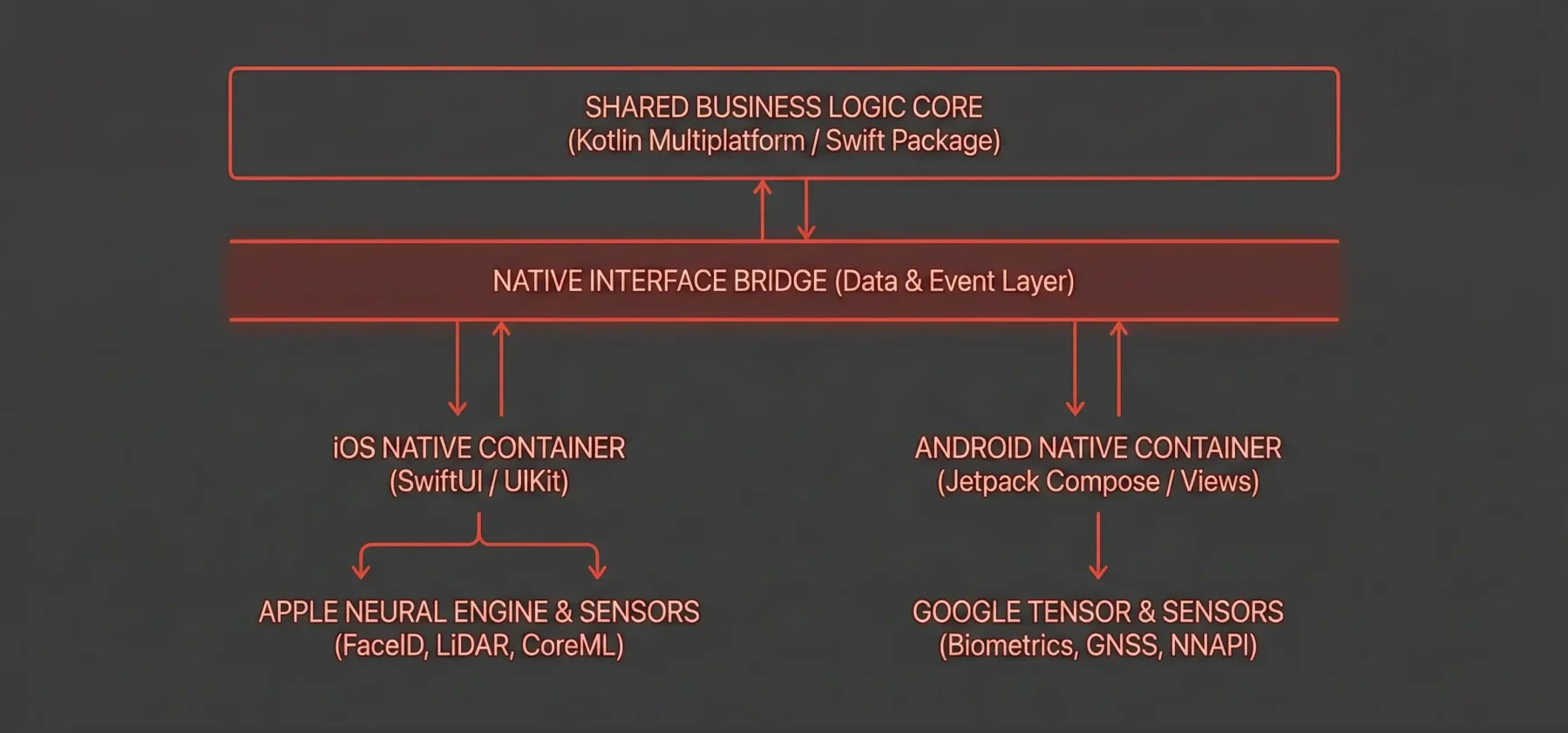
Modern mobile app developers act as technical partners rather than just code executors. We focus on two primary paths for mobile delivery: native development and cross-platform solutions. Native development involves writing specific code for iOS (using Swift) and Android (using Kotlin), providing the highest possible performance and deepest integration with hardware.
In contrast, cross-platform development allows a single codebase to run on both operating systems. We often use this for business app development to reduce initial costs while maintaining quality. We also specialise in Progressive Web Apps (web-based applications that look and feel like native apps). These use service workers (scripts that run in the background) to enable offline functionality and push notifications without requiring a store download.
Why Businesses Choose UK App Developers Like Tinderhouse
Founders and technical leads choose UK-based app developers like Tinderhouse because we prioritise results over rhetoric. As one of the top 50 app developers in the UK, our history includes building Map My Tracks, which ranked #1 in the App Store Fitness category and serves over 1 million global users. This level of scale requires a rigorous approach to mobile app development that most junior UK app developers cannot provide. Our UK-based team combines 20+ years of experience with modern approaches including agentic AI development services that help businesses move beyond simple integration to autonomous systems.
Proven Reliability: We developed the banking portal "My Lost Account," used daily by every major bank in the UK.
Speed and Precision: Our team delivered a high-performance startup MVP app development project for a financial education platform within just 8 weeks.
Sector Expertise: From the NHS to commercial music portals, our 20 years of experience covers diverse regulatory and technical environments.
The Mobile App Development Process
Our process is designed to eliminate ambiguity and focus on high-value outcomes. We follow Agile methodology. These are short development cycles that let us adapt as we learn more about your users and their behaviour. Our approach to every project is built on a proven mvp app development framework, where we use a rigorous technical discovery phase to turn complex ideas into high performance, market ready applications.
1. Discovery and Logic Mapping
Before a single line of code is written, we map out the application logic and user flows. This stage is about identifying the minimum viable product (the version of a new product that allows a team to collect the maximum amount of validated learning with the least effort). This prevents over-engineering and keeps the initial investment focused on core value.
2. Architecture and API-First Design
We build with API-first architecture (designing the data layer before the interface). This means your mobile app, web dashboard, and future integrations all speak the same language from day one. It ensures that as your business grows, your software does not need a complete rewrite to accommodate new platforms.
3. Iterative Development
During development, we use CI/CD pipelines (automated testing and deployment systems). These catch bugs early by testing code every time a change is made. This is part of our enterprise app development standard, ensuring that updates are stable and do not break existing features.
4. Deployment and Support
Launching on the App Store or Google Play is only the beginning. We provide ongoing support across all projects, ensuring your app remains compatible with new OS versions and hardware. For the Hansard Society, this meant creating a portal that monitors Parliamentary activity with high reliability over long periods.
Common Mistakes to Avoid
In our experience as mobile app developers, most project failures stem from predictable pitfalls. Avoiding these is critical for maintaining your budget and timeline.
Accumulating Technical Debt: This is the long-term cost of taking shortcuts in code quality. Every "quick fix" creates maintenance work later, so we plan time to address these trade-offs properly.
Ignoring User Feedback: Building too many features before testing them with real people often leads to wasted resources. We recommend an iterative approach to MVP app development.
Poor Security Standards: For projects like our Verenigma app, which handles sensitive voice recording analysis for stress and anxiety, security cannot be an afterthought.
Cost and Timeline Expectations
The cost of hiring mobile app developers depends on functional complexity, the number of platforms, and integration requirements. A simple task management tool or a progressive web app for staff will naturally have a different profile than a global fitness platform with a million users.
Typically, a focused MVP app development phase can have your product ready for market testing within 8 to 12 weeks. Larger enterprise systems or healthcare apps requiring complex compliance (such as the NHS app for new mothers) may take longer due to rigorous testing and data protection requirements. We provide realistic ranges based on our 20-year history of delivery.
Is Tinderhouse the Right Partner for You?
We work best with partners who value technical honesty and clear communication.
This works well if you:
Need a team that understands the long-term implications of technical choices.
Value a calm, grounded approach to complex problem-solving.
This may not be right if:
You are looking for the cheapest possible offshore rate without regard for code quality.
You prefer "hype" and buzzwords over practical engineering discussions.
How Tinderhouse Works
We operate as a conversational peer to your internal team or as your dedicated technical department. Our status as ExpressionEngine specialists since version 1 demonstrates our commitment to mastering the tools we use rather than chasing every passing trend.
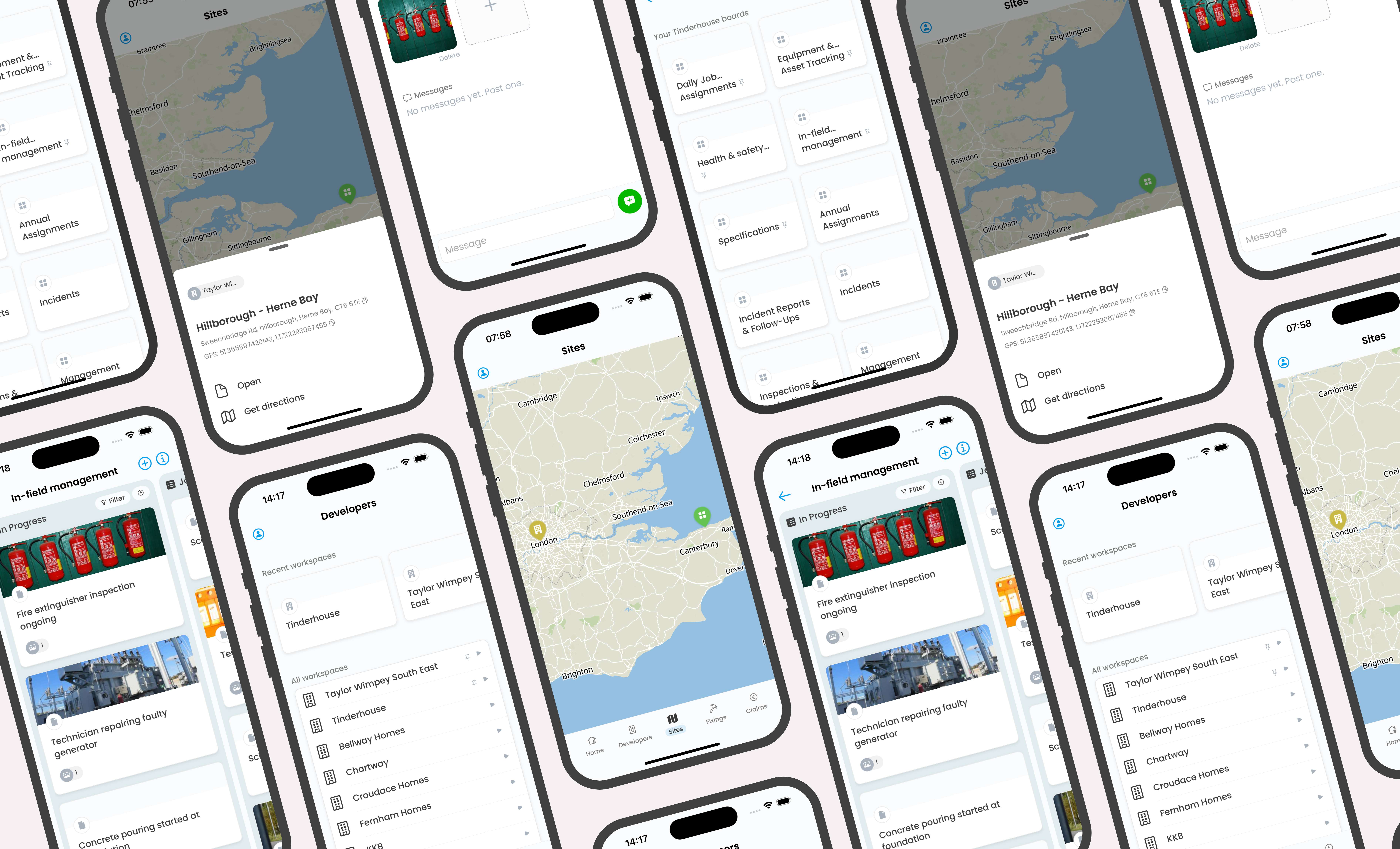
We use role-based access control (a method of restricting system access to authorised users) in all our business tools. This ensures data security, which was vital when building the field worker app for health and safety compliance. We don't just build apps; we build sustainable business tools that integrate with your existing SaaS development ecosystem.
Ready to Discuss Your Project?
We've helped businesses across the UK turn technical challenges into working solutions. Whether you're at the planning stage or ready to start development, we're here to provide honest advice and clear guidance.
Call us on +44 (0)1227 811771 to discuss your project, or send us an email using our contact form.
Build autonomous AI agents that handle specific business tasks and integrate seamlessly with your systems
Explore more →
How your industry uses mobile app development
Every sector has its own version of the same underlying problem: critical workflows trapped in spreadsheets, paper forms, or desktop software that nobody uses in the field. The way a mobile app gets designed and built for a construction site manager looks nothing like what a fintech startup needs to put in front of retail investors.
Financial services operate under intense regulatory scrutiny, and every interface handling customer data carries compliance obligations that most development teams underestimate. Mobile apps in this space are not simply about convenience. They must meet specific security thresholds, pass penetration testing, and maintain audit trails that regulators can inspect. Tinderhouse has been building secure financial platforms for over two decades, including My Lost Account, the central portal used daily by every major UK bank.
Secure transaction interfaces Banks and financial institutions need mobile interfaces that handle sensitive operations without exposing customer data. This means encrypted communication at every layer, biometric authentication, and session management that accounts for real-world usage patterns such as interrupted connections or device switching. We built the My Lost Account platform with these principles at its core, and the same standards apply to every fintech project we take on.
Regulatory compliance by design Building compliance into an app after the fact is expensive and unreliable. PSD2, FCA reporting requirements, and anti-money laundering checks need to be part of the architecture from the discovery phase. Our approach is to map regulatory obligations alongside user flows so that compliance is structural, not cosmetic.
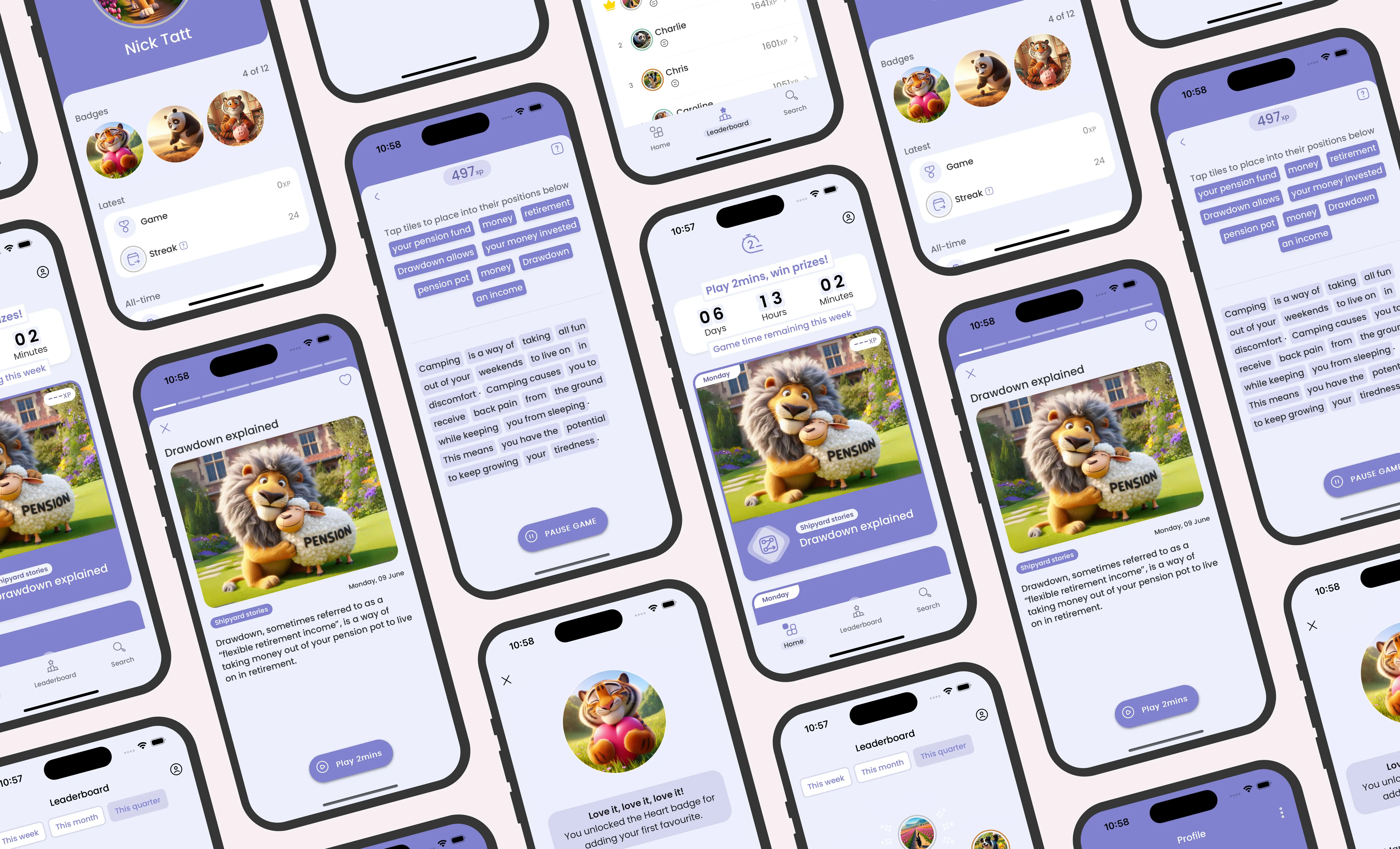
Portfolio and account management Retail investors and pension holders expect real-time visibility of their positions, presented clearly on a mobile device. The challenge is not just pulling data from APIs but presenting complex financial information in a way that a non-expert can act on. Our work on the 2mins financial education app involved exactly this kind of translation, turning pension and investment concepts into an interface people actually use.
Client onboarding and KYC Know Your Customer workflows are often the first experience a user has with a financial product, and they are frequently the point where drop-off is highest. Document capture, identity verification, and liveness checks all need to work reliably across a range of devices and lighting conditions. Getting this right on mobile requires careful attention to camera APIs, image compression, and error handling that guides the user rather than frustrating them.
Push notification compliance Financial notifications carry legal weight. A price alert or transaction confirmation is not the same as a marketing push. The notification architecture needs to distinguish between mandatory alerts and optional communications, respecting both regulatory requirements and user preferences. This is a detail that many development teams overlook until it becomes a compliance issue.
Clinical environments are unforgiving. Staff are under pressure, connectivity is unreliable in many hospital buildings, and the consequences of a poorly designed interface can affect patient safety. Mobile apps in healthcare must account for these realities from the start, not as afterthoughts bolted onto a standard build process. Tinderhouse has delivered multiple NHS platforms including Patients in Control and Health Help Now, and every healthcare project we undertake is built to meet NHS DSP Toolkit standards.
Clinical workflow apps Ward staff and community nurses need tools that fit into their existing routines, not systems that add administrative overhead. A mobile app for clinical use has to work with gloved hands, in poor lighting, and with interruptions every few minutes. The UX decisions in a healthcare system matter as much as the technical logic, because an interface that clinical staff cannot navigate quickly will simply not get used.
Patient-facing platforms Patients managing long-term conditions need reliable access to their records, appointment schedules, and care plans. The NHS Patients in Control project involved building exactly this kind of tool, giving patients direct access to their data whilst ensuring that the platform met strict information governance requirements. Offline capability is essential here, as patients in rural areas or those with limited data access still need to view their information.
Remote monitoring and triage Wearable integrations and symptom-tracking apps can reduce unnecessary GP and A&E visits, but only when the data flows reliably from device to clinical dashboard. Building these connections requires careful API design and an understanding of HL7 and FHIR data standards that most general app developers do not have experience with.
Mental health and wellbeing tools The Verenigma project involved voice recording analysis for stress and anxiety monitoring, handling sensitive audio data with appropriate encryption and consent management. Mental health apps carry a particular responsibility around data sensitivity, and the architecture must reflect that from day one.
Secure data handling and compliance NHS Digital's Data Security and Protection Toolkit is not optional for any app that touches patient data. Meeting these requirements means encrypted storage, controlled access, and detailed audit logging. We build these into the foundation of every healthcare project rather than treating them as a final checklist item.
Construction sites are chaotic by nature. Workers move between locations, connectivity drops out, and the people using the software are often holding a phone in one hand whilst managing a physical task with the other. Mobile apps built for this environment need to be robust in ways that office-based software never has to consider. Tinderhouse has built multiple field operations platforms, including the D&D Carpentry construction management app and the Noted SaaS platform for field workforce management.
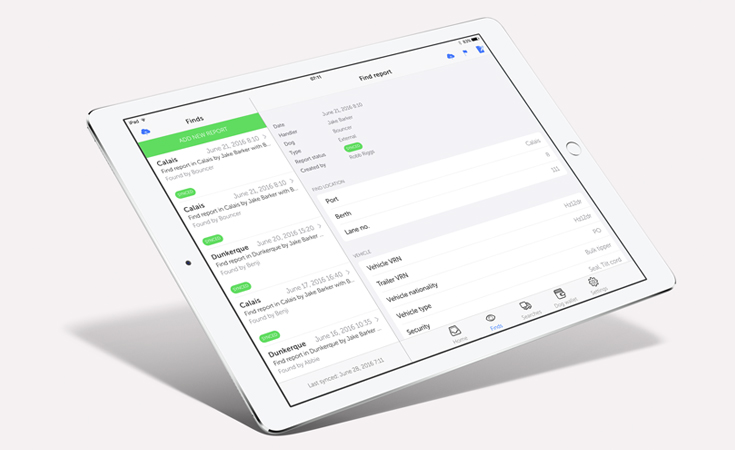
Job allocation and site communication Sub-contractors working across multiple sites need a single place to receive job assignments, report progress, and flag issues. The D&D Carpentry project addressed exactly this problem, replacing a chain of phone calls and text messages with a structured mobile workflow that site managers and tradespeople could both rely on.
Offline-first data capture Many construction sites have poor or no mobile signal. An app that requires constant connectivity is useless in a basement or a rural build. Offline-first architecture stores data locally and syncs when a connection becomes available, with conflict resolution logic to handle situations where multiple users have updated the same record.
Health and safety compliance Digital safety checklists, incident reporting, and method statement sign-offs all need to happen on-site, at the point of work. Paper-based systems get lost, arrive late, and are difficult to audit. A well-designed mobile app captures compliance data with timestamps, GPS coordinates, and photographic evidence, creating an audit trail that stands up to inspection.
Asset and equipment tracking Knowing where plant, tools, and materials are across multiple sites prevents losses and reduces downtime. Barcode and QR scanning on mobile devices, combined with a simple check-in and check-out workflow, can replace the spreadsheets and guesswork that most small and mid-sized contractors rely on.
Time and attendance logging Accurate records of who was on which site, and when, feed directly into payroll, client billing, and contractual compliance. GPS-verified clock-in removes disputes and manual reconciliation.
Sports technology has a low tolerance for imprecision. Athletes, coaches, and event organisers rely on data that must be accurate, timely, and presented in a way that supports real decisions during training and competition. Tinderhouse built Map My Tracks, which reached number one in the App Store Fitness category and now serves over one million users across 190 countries. That experience informs every sports and fitness project we take on.
GPS tracking and activity recording Reliable GPS performance is harder than it looks. Signal drift, battery drain, and background processing restrictions on both iOS and Android all affect the quality of recorded data. Map My Tracks was built to handle these challenges across thousands of device types and usage conditions, and the lessons from that work apply directly to any sports tracking application.
AI-powered coaching and performance analysis The Activity Insights feature uses large language models to generate personalised coaching feedback based on a user's activity data. Building this involved not just API integration but careful prompt engineering to ensure the advice is contextually appropriate, avoids repetition, and respects the difference between a beginner cyclist and an ultra-endurance athlete.
Wearable device integration Connecting to Apple Watch, Garmin, and other wearable platforms requires navigating different SDKs, data formats, and sync behaviours. The Bike Hub Apple Watch app demonstrates how companion watch apps need to function independently when the phone is out of range, with data reconciliation happening cleanly when the devices reconnect.
Event and competition platforms Race organisers need apps that handle registration, live tracking, results, and participant communication. These apps face extreme usage spikes, with thousands of users hitting the same endpoints simultaneously at race start. The architecture has to account for this with proper load management and graceful degradation.
Community and social features Leaderboards, challenges, and social sharing drive retention in fitness apps. The design challenge is keeping these features motivating without creating a toxic competitive environment, which is a UX problem as much as a technical one.
SaaS products live or die on user retention, and a well-built mobile companion app can be the difference between a platform that becomes habitual and one that gets forgotten. The mobile component of a SaaS product is rarely a simple replica of the web dashboard. It needs to surface the right subset of functionality for on-the-go use, with push notifications and offline access that keep users engaged between desktop sessions.
Mobile companion apps Most SaaS platforms start on the web, but users increasingly expect mobile access for approvals, notifications, and quick data checks. The challenge is deciding what belongs on mobile and what does not. Cramming the entire web experience into a phone screen produces a poor result. A focused mobile app that handles the twenty percent of actions users need most frequently will outperform a bloated port of the full platform.
White-label mobile frameworks SaaS companies serving multiple clients often need a mobile app that can be branded and configured per customer without maintaining separate codebases. Building a white-label framework requires careful abstraction of theming, feature flags, and API endpoints so that each deployment feels bespoke whilst sharing a common codebase.
Push notification strategy Notifications are the primary re-engagement mechanism for SaaS mobile apps, and getting them wrong, either too frequent or poorly targeted, drives uninstalls. The notification system needs to be configurable by user preference and tied to meaningful events rather than arbitrary schedules.
Offline data access Field teams using a SaaS platform need access to critical records even without connectivity. Selective sync, where only relevant data is cached locally, balances storage constraints against the need for offline access. Conflict resolution logic handles the inevitable cases where records are updated both locally and on the server.
API-first architecture for mobile A SaaS platform with a well-designed API makes mobile development faster and cheaper. Tinderhouse builds API-first from the start, ensuring that the mobile app, the web dashboard, and future integrations all consume the same data layer without requiring separate backend logic.
Hospitality and retail businesses face constant pressure on margins, and the operational gains from a well-designed mobile app can be significant. Staff scheduling, stock management, customer loyalty, and ordering workflows all benefit from mobile solutions, but only when the app is built around how the business actually operates rather than a generic template.
Mobile ordering and payments Customers expect to order and pay from their phones, whether in a restaurant, at a festival, or from home for collection. The integration challenge is connecting the mobile ordering flow with existing EPOS systems, kitchen display screens, and stock management so that the experience is consistent and the back-of-house operation is not disrupted.
Staff scheduling and communication Hospitality businesses with shift-based workforces need scheduling tools that account for availability, skill requirements, and legal rest-period obligations. A mobile app that lets staff view rotas, swap shifts, and receive updates reduces the management overhead that often falls on a single overworked operations manager.
Loyalty and retention programmes Points, stamps, and tiered rewards all need to work reliably and feel rewarding without being complicated. The mobile loyalty app needs to integrate with the payment system so that rewards are applied automatically, removing friction at the point of sale.
Inventory and supplier management Real-time stock visibility across multiple locations, combined with automated reorder triggers, prevents both waste and stock-outs. A mobile interface lets managers check and adjust stock levels from the floor without returning to a back-office terminal.
Public sector technology projects carry a specific burden: they must be accessible, transparent, and resilient in ways that commercial products can sometimes avoid. Tinderhouse has delivered platforms for the London School of Economics, the Hansard Society, and multiple local authorities, and understands the procurement, accessibility, and data governance requirements that public sector work demands.
Citizen-facing service apps Council services, planning applications, and public consultations can all be made more accessible through well-designed mobile interfaces. The key requirement is WCAG 2.1 AA accessibility compliance, ensuring that every user, including those with visual or motor impairments, can complete their task without barriers.
Parliamentary and policy monitoring The Hansard Society Statutory Instrument Tracker monitors Parliamentary activity with high reliability over long periods. This type of platform requires robust data ingestion, alert logic, and an interface that policy professionals can use efficiently under time pressure.
Democratic engagement platforms The Democratic Dashboard built with the London School of Economics demonstrates how mobile and web platforms can make democratic data more accessible to citizens and researchers. These projects require careful handling of public data sources and clear, neutral presentation.
Field worker and inspection apps Environmental health officers, social workers, and building inspectors all need mobile tools that work offline, capture evidence with timestamps and location data, and sync reliably when connectivity returns. The data captured often feeds into statutory reporting, so accuracy and audit trails are essential.
Multi-agency data sharing Public sector organisations frequently need to share data across agency boundaries whilst respecting different data governance frameworks. The mobile layer needs to enforce role-based access control so that each user sees only what they are authorised to view.
Law firms, accountancies, and consultancies run on time-sensitive communication and document management. Mobile apps in this sector need to be secure enough for client-privileged information whilst being simple enough that partners and associates will actually use them instead of defaulting to email.
Secure client communication Client-facing messaging within a branded mobile app keeps privileged communications off personal email and consumer messaging platforms. End-to-end encryption, message expiry, and audit logging provide the governance that professional indemnity insurers increasingly expect.
Time recording and billing Accurate contemporaneous time recording is the foundation of professional services revenue. A mobile app that captures time entries with minimal friction, ideally with smart suggestions based on calendar events and location, recovers billable hours that would otherwise be lost to end-of-day memory.
Document review and approval Reviewing contracts, accounts, or compliance reports on a mobile device requires more than just a PDF viewer. Annotation, version tracking, and approval workflows need to function reliably on a phone or tablet, particularly for professionals who spend significant time travelling between client sites.
Client portal access Giving clients mobile access to case progress, document libraries, and billing information reduces the volume of status-update calls and emails that consume fee-earner time. The portal needs to feel reassuringly professional and secure, reflecting the standards the client expects from their adviser.
Educational institutions and EdTech companies need mobile apps that work across a wide range of devices, many of them older or budget models used by students. Performance on low-specification hardware is a genuine constraint that affects architectural decisions from the outset.
Student engagement platforms Timetables, assignment submissions, and campus notifications are the baseline expectations for a university or college app. The Hadlow College project involved building a digital presence that served both prospective and current students, and the mobile experience was central to that.
Language learning and assessment The Kent School of English project required tools that supported international students with varying levels of English proficiency. Mobile apps for language learning need to handle audio recording and playback reliably, support multiple input methods, and work effectively on inconsistent network connections.
Classroom and resource management Teachers and lecturers need mobile access to attendance records, resource booking systems, and communication tools. The app must be fast to use during a lesson changeover, which means the interface needs to prioritise speed over comprehensive functionality.
Parent communication Schools increasingly use mobile apps to communicate with parents about attendance, events, and student progress. The notification system needs to be reliable without being overwhelming, and the data presented must respect access controls, particularly in cases involving separated parents or safeguarding restrictions.
Charities operate with constrained budgets and often rely on a mix of staff and volunteers with varying levels of technical confidence. A mobile app for a charity needs to deliver clear value without requiring extensive training or ongoing technical support. The Pilgrims Hospices project demonstrated how a well-scoped digital platform can serve a charity's operational and fundraising needs without overcomplicating the technology.
Volunteer coordination Managing volunteer availability, shift allocation, and task assignment through a mobile app replaces the WhatsApp groups and spreadsheets that most charities rely on. The app needs to be simple enough that a volunteer using it for the first time can complete their task without a tutorial.
Fundraising and donor engagement Event registrations, donation processing, and Gift Aid declarations can all be handled through a mobile interface that connects to the charity's CRM. The conversion rate improvement from a well-designed mobile donation flow often justifies the initial development investment within the first campaign cycle.
Service delivery tracking Charities delivering frontline services need to record interactions, outcomes, and safeguarding concerns in the field. A mobile app with offline capability ensures that records are captured at the point of contact rather than reconstructed later from memory.
Impact reporting Funders and trustees need evidence of impact. A mobile app that captures data consistently across service delivery teams makes reporting faster and more reliable, reducing the administrative burden on programme managers who would otherwise spend hours compiling spreadsheets.
Frequently asked questions
Everything you need to know about working with Tinderhouse, from costs and timelines to our process and expertise.
Native apps are built specifically for one platform (iOS or Android) using their primary languages. Cross-platform apps use a single codebase for both. Native is best for high performance and complex hardware use, while cross-platform can be more cost-effective for standard business logic.
We implement encryption and secure authentication as standard. For our banking and healthcare projects, we follow strict data handling protocols. This includes ensuring your app is prepared for future security audits and remains compliant with UK data protection laws.
Yes, we manage the entire submission process. This includes preparing metadata, ensuring the app meets platform-specific guidelines, and handling any feedback from the store reviewers. We have been doing this for 20 years, so we understand the nuances of the approval process.
We often help clients rescue projects that have stalled or suffered from high technical debt. We begin with a code audit to understand the current state of the software before proposing a plan for stabilisation and future development.
Ongoing support is provided across all our projects. Mobile OS updates occur annually, and we ensure your application continues to function perfectly on the latest devices. This proactive maintenance prevents "bit rot" and keeps the user experience smooth.
A Progressive Web App (PWA) is a website that functions like a mobile app. It can be installed on a home screen and work offline. We built a PWA for a property company to handle staff task management, providing a fast, reliable tool without the overhead of store maintenance.
We always recommend beginning with a technical discovery phase. By focusing on mvp app development as the first milestone, we can validate your core features and architecture before committing to a full scale rollout. This lean methodology reduces risk and ensures your product is engineered to scale from day one.
Every project we launch comes with a 90-day post-launch warranty. At Tinderhouse, we believe execution doesn't end at 'Go-Live.' For the first three months after launch, our UK-based team handles any technical issues, bug fixes, or performance refinements within the original project budget. This ensures your software or AI system is fully stable in a real-world environment before transitioning to long-term support, protecting your investment and ensuring a seamless experience for your users.
Our team are based in Canterbury, Kent, and London, and support clients both national and internationally. Our location strategy allows us to stay close to the UK tech scene with our Canterbury studio just 55 minutes from London St Pancras, while delivering high-performance software for clients across the UK and overseas. Whether you are a founder in the South East or a global enterprise lead, you get direct access to our 100% UK-based team, ensuring no communication gaps and no offshoring risks regardless of your location.
When searching for "app developers UK" or "mobile app developers UK," look for these five critical indicators of quality:
Proven Track Record: Check their portfolio for apps similar to yours. As top 50 UK app developers, we've built apps that reached #1 in the App Store and serve over 1 million users globally.
100% UK-Based Team: Ensure they're not outsourcing to offshore developers. Our entire development team is based in Canterbury and London, providing direct communication and UK legal protection.
Technical Expertise: Ask about their approach to native vs cross-platform development, API architecture, and scalability. We have 20+ years of experience with both iOS and Android development.
Post-Launch Support: Verify they provide ongoing maintenance. Every project we deliver includes a 90-day warranty and ongoing support to keep your app compatible with the latest devices.
Transparent Pricing: Get fixed-price quotes, not hourly estimates that can spiral out of control. We provide clear, fixed pricing upfront with no hidden fees.
Our status as one of the UK's top 50 mobile app developers means you're working with proven professionals, not hoping for the best with an untested team.