Established 2003. Still delivering.

Sports & Endurance

Expert engineering for high-performance sports communities and athletes.

Tinderhouse: Specialist Sports & Endurance UK for startups and enterprise teams

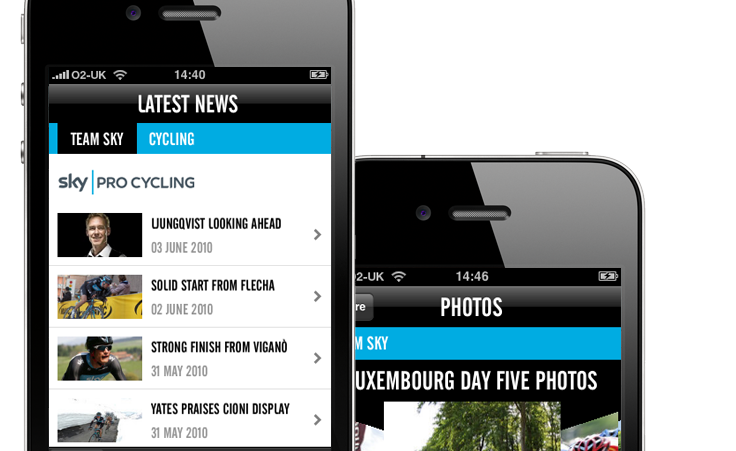
Tinderhouse provides specialist sports app development for organisations that require technical stability and massive scalability. We served as Official Technology Partner to Team Sky (2010-2015) and Tour of Britain, delivering real-time GPS tracking and fan engagement platforms for UCI WorldTour events. We built the official Team Sky fan app with live pro rider tracking that connected millions of cycling fans during Tour de France championship campaigns. With over 20 years of UK-based experience in mobile and web development for elite sports, we focus on building products that serve millions of users without compromising on speed or reliability under the extreme pressure of live competition.

Trusted by Team Sky, Tour of Britain, and UCI WorldTour events: building resilient apps proven at elite competition scale.

Discuss your project
Our team is ready to begin new projects.

Our services

Sports App Development

Trusted by Tour de France Winners, UCI WorldTour Events & 1 Million+ Fitness Users

Explore more →

Fitness and Wellness App Development

Build scalable health platforms that users rely on for their daily wellbeing

Explore more →

What we build for sports and endurance businesses

Serving as Official Technology Partner to Team Sky across five Tour de France campaigns taught us what sports technology actually demands: sub-second data delivery under massive concurrent load, GPS accuracy that holds up in remote terrain, and apps that survive real-world conditions where connectivity is patchy and batteries are dying. From Map My Tracks serving over a million endurance athletes globally to live tracking systems for Tour of Britain, the work below reflects two decades of building for this sector specifically.

Wearable app development for sport operates under constraints that smartphone apps never encounter: tiny screens, limited processing power, strict battery budgets, and the expectation that data syncs instantly with a companion app or cloud platform.

Apple Watch for cycling and fitness The Bike Hub Apple Watch App was built to deliver cycling-specific data at a glance, where riders cannot afford to look away from the road for more than a second. Designing for a 44mm screen while displaying speed, distance, heart rate, and navigation requires ruthless prioritisation of what matters at any given moment. Every pixel and interaction must earn its place.

Biometric data streaming During the Team Sky partnership, Tinderhouse handled real-time streaming from riders' power meters and heart rate monitors. Wearable development in sport means understanding the full data pipeline: from sensor to device, device to phone, phone to cloud, and cloud to spectator. Latency at any point in that chain degrades the experience. Building wearable apps that handle biometric data also means compliance with UK GDPR and health data regulations, particularly when athlete performance data has competitive value.

Battery and connectivity management Endurance events can last 24 hours or more. A wearable app that drains a watch battery in four hours is useless to an ultra-distance cyclist. Tinderhouse builds with aggressive power management strategies, intelligent GPS sampling intervals, and offline-first data buffering so that tracking continues even when Bluetooth connections drop mid-ride.

Explore more →

AI product engineering in sport goes beyond generic chatbots. It means building intelligent systems that understand training data, performance patterns, and the context an athlete needs to improve.

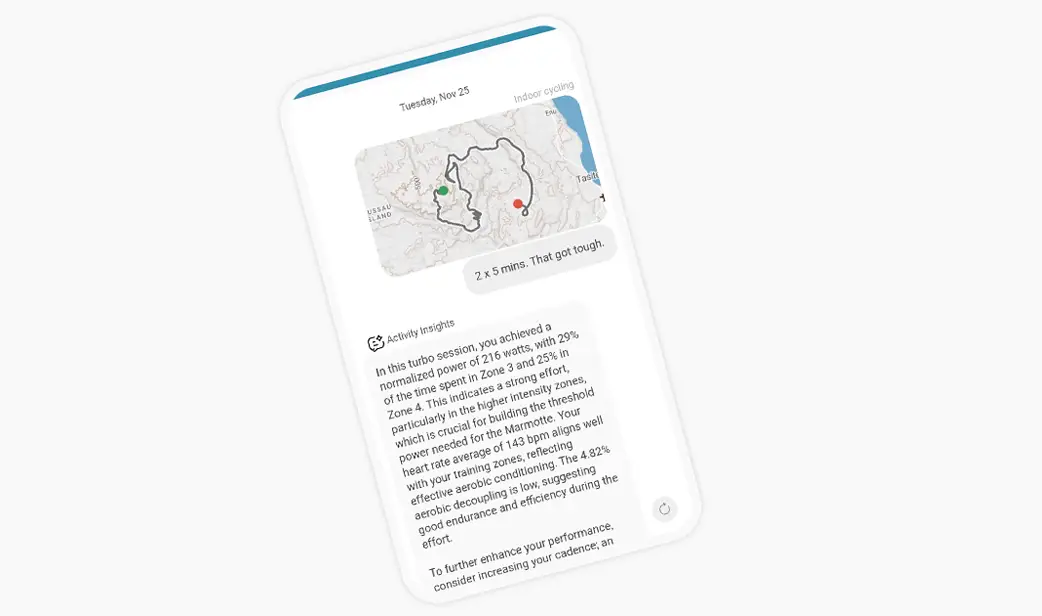
Personalised coaching at scale Map My Tracks Activity Insights uses LLM technology to generate personalised coaching feedback after every activity. The system analyses pace, power, elevation, lap splits, and heart rate data, then produces specific, actionable recommendations tailored to what the athlete actually did. This is not a template engine. Each response reflects the individual session, the athlete's history, and the type of activity recorded.

Automated content generation Activity Insights also generates photo captions and social sharing content from ride data, turning raw GPS files into stories athletes want to share. The AI understands the difference between a recovery spin and a threshold interval session, and adjusts its tone and analysis accordingly. Building this required extensive prompt engineering to prevent repetitive recommendations and ensure contextually appropriate responses across cycling, running, hiking, and other activity types.

Performance pattern recognition Training data contains patterns that athletes and coaches often miss: gradual power decline on climbs over successive weeks, pacing inconsistencies in the second half of long rides, or heart rate drift that suggests fatigue accumulation. AI systems built for endurance sport need to surface these insights without overwhelming the user with noise.

Explore more →

Mobile app development for sport demands performance characteristics that most consumer apps never need to consider. GPS accuracy in remote valleys, background tracking that does not kill the battery, and data integrity when connectivity drops entirely are baseline requirements, not edge cases.

Cross-platform delivery The Hotchillee app was built in React Native to serve both iOS and Android from a single codebase, reducing time to market while maintaining native performance for GPS tracking and push notifications. Sports communities do not split neatly along platform lines, so cross-platform delivery is often essential to reaching the full audience.

Offline-first architecture Athletes training in the Scottish Highlands, cycling through rural France, or running mountain trails cannot rely on mobile data. Map My Tracks was engineered to record full GPS tracks, heart rate data, and lap splits entirely offline, syncing everything once connectivity returns. This is not a nice-to-have feature. For endurance sport, it is the difference between a useful app and a useless one.

App Store performance and compliance Map My Tracks achieved #1 in the App Store Health & Fitness category and has been featured by Apple multiple times. Maintaining that position requires ongoing attention to Apple's evolving performance standards, review guidelines, and platform-specific capabilities like HealthKit integration and Live Activities. Sports apps that ignore platform compliance lose visibility and downloads.

Explore more →

Bespoke web systems in sport serve as the operational backbone that mobile apps alone cannot provide: race management portals, real-time data dashboards for coaches and organisers, and high-traffic community platforms that handle event-day spikes without degradation.

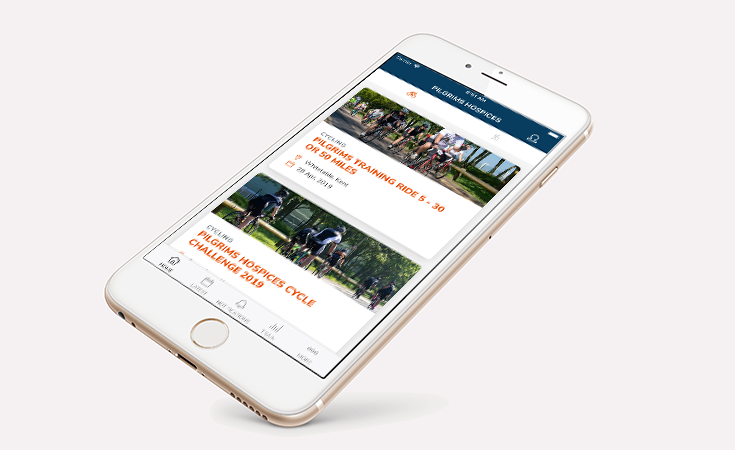
Race and event management Organising a mass-participation event requires more than a registration form. Custom admin portals handle participant management, wave assignments, route configuration, marshal coordination, and real-time tracking dashboards that event directors use on race day. The Pilgrims Hospices project demonstrated how a web-based management system and a participant-facing mobile app work together to deliver a complete event experience.

Data visualisation for coaches and teams The Team Sky partnership required real-time performance dashboards showing rider positions, power output, and biometric data overlaid on stage profiles. Coaches and team directors need web-based tools that display complex data clearly and update in real time, without requiring software installation on race vehicles or team buses. These systems must handle the same concurrent load spikes as the public-facing apps.

High-traffic community platforms Sports brands with active communities need web platforms that scale for event-driven traffic. A cycling event announcement or race result can drive tens of thousands of visitors within minutes. Tinderhouse builds web systems on AWS infrastructure with auto-scaling, CDN distribution, and caching strategies designed for this traffic pattern, where sustained load is modest but spikes are extreme and time-critical.

Explore more →

SaaS development for sports and endurance means building subscription platforms that serve athletes, coaches, event organisers, or sports brands on an ongoing basis, with recurring revenue models and multi-tenant architecture.

Subscription and monetisation models Map My Tracks operates as a SaaS platform with tiered subscription levels, gating premium features like AI coaching insights and advanced analytics behind paid plans. Building effective subscription models for sport requires understanding what athletes will actually pay for: not raw data, which free apps provide, but interpreted data, personalised coaching, and features that save time or improve performance.

White-label event platforms Sports organisations and charities often need their own branded tracking and engagement apps without building from scratch. Tinderhouse has delivered white-label solutions powered by the Map My Tracks platform for organisations like Pilgrims Hospices and Club Peloton, providing full GPS tracking, leaderboards, and participant management under the client's own brand.

API-first architecture Sports SaaS platforms must integrate with the wider ecosystem: Strava, Garmin Connect, Apple Health, and dozens of other services athletes already use. The Team Sky app integrated with both Strava and Map My Tracks. Building API-first means third-party integrations, webhook support, and data portability are part of the core architecture from day one, not bolted on later.

Explore more →

Native app development remains the right choice for sports apps where GPS accuracy, background processing, sensor access, and battery management are non-negotiable performance requirements.

GPS and sensor precision Native development gives direct access to platform-specific GPS chipsets, accelerometers, barometers, and Bluetooth LE connections to external sensors like power meters and heart rate monitors. Map My Tracks uses native iOS and Android capabilities to achieve GPS accuracy and battery efficiency that cross-platform frameworks cannot match in sustained background tracking scenarios. When an athlete records a 12-hour ride, the difference between native and hybrid GPS handling becomes stark.

Platform-specific features iOS and Android each offer capabilities that matter for sport: Apple's HealthKit and Live Activities, Android's foreground service model for background tracking, and platform-specific notification handling for real-time race alerts. Native development means using these features as they were designed, rather than working around framework limitations. The Bike Hub Apple Watch App is a clear example of what native platform access enables on constrained hardware.

Performance under stress Sports apps operate in conditions that stress-test every layer of the stack: low memory warnings from the OS, GPS signal loss in tunnels or dense forest, Bluetooth disconnections from sensors, and users who expect the app to recover gracefully from all of these without losing data. Native code handles these edge cases with the precision and control that the platform provides.

Explore more →

A fractional product team gives sports organisations and startups access to senior product, design, and engineering capability without the cost and commitment of building a full in-house team.

Early-stage sports startups Founders building the next generation of sports technology often have deep domain expertise but limited technical resources. A fractional team from Tinderhouse provides the product strategy, architecture decisions, and development capacity to move from concept to launched product, with the advantage of a team that already understands GPS tracking, real-time data, and App Store requirements for fitness apps.

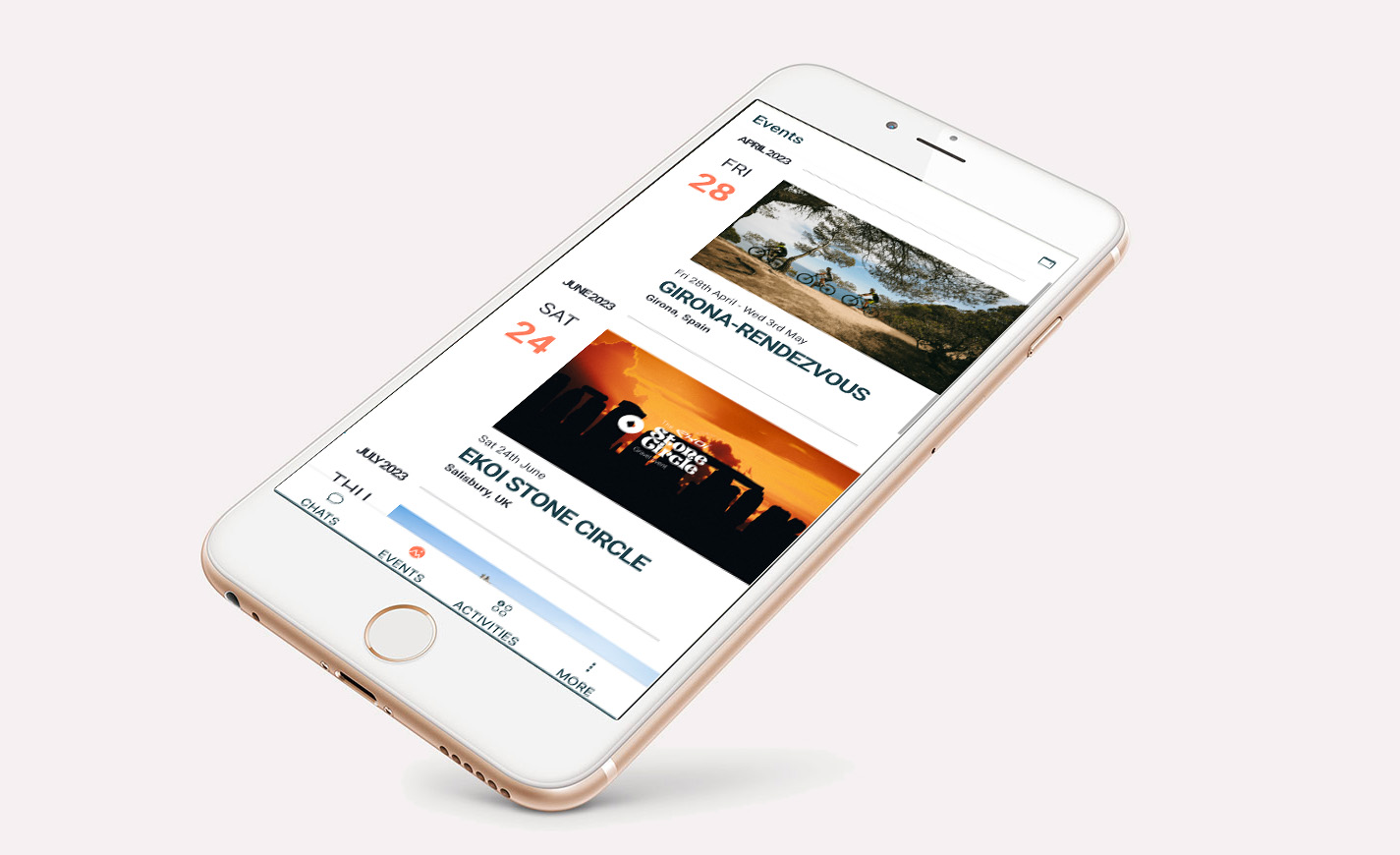
Established brands extending their digital presence Sports brands, event organisers, and governing bodies that need to modernise their digital offering benefit from a team that can assess existing systems, define a product roadmap, and deliver iteratively. The work with Hotchillee and GC Cycling reflects this model: understanding the brand's community, defining what the technology should do for that community, and building it with ongoing involvement rather than handing off a specification.

Ongoing product evolution Sports technology is never finished. New sensors appear, platform capabilities change, athlete expectations evolve, and competitors launch new features. A fractional product team provides continuity, so the people making decisions about the next version of your app are the same people who built the current one and understand why each technical choice was made.

Explore more →

Frequently asked questions

Everything you need to know about working with Tinderhouse, from costs and timelines to our process and expertise.

We implement diverse revenue models tailored to the sports audience, from tiered subscription systems and gated premium content to integrated e-commerce and affiliate modules. By combining UX strategy with secure payment gateway integration (like Stripe or Apple Pay), we turn digital engagement into measurable business growth.

Data integrity is paramount in sports. We specialise in migrating vast historical datasets - such as race results, athlete biometrics, and user training logs - from legacy databases into high-performance, modern architectures. We ensure zero data loss and maintain 100% accuracy during the transition, allowing brands to modernise without losing their historical value.

Protecting personal performance data is a legal and ethical necessity. We build all sports platforms with Privacy-by-Design principles, ensuring full compliance with UK GDPR and health data regulations. Our systems utilise end-to-end encryption, role-based access controls, and secure AWS infrastructure to protect sensitive biometric and location data from unauthorised access.

Yes. We engineer comprehensive web-based ecosystems that serve as the "brain" for sports organisations. This includes custom admin portals for race management, real-time data visualisation dashboards for coaches, and high-traffic community hubs. Our web systems are built to sync seamlessly with our mobile apps, providing a unified experience for both organisers and athletes.

As Official Technology Partner to Team Sky from 2010-2015, we delivered the official fan app with live GPS tracking of professional riders during Tour de France campaigns. The platform handled real-time biometric data streaming from riders' power meters and heart rate monitors. This required robust failover systems to handle the massive traffic spikes when Team Sky riders like Chris Froome and Bradley Wiggins were training for yellow jerseys. The technical challenges of delivering live sports data at this scale - where a 5-second delay means fans miss critical race moments - taught us how to build truly resilient real-time systems that don't fail under pressure.

Our founder Nick Tatt brings first-hand endurance racing experience to every sports development project, having completed multiple ultra-distance cycling events including London-Edinburgh-London and Trans Atlantic Way. This personal experience means we understand what athletes actually need from tracking apps when they're 200km into a ride with failing phone batteries and patchy GPS coverage. We don't just build to technical specifications - we build to survive real-world conditions that only athletes who've ridden through Highland storms at 2am truly understand. This is why our Map My Tracks platform serves over 1 million endurance athletes globally - it's built by people who use it themselves.

Elite sports events operate on impossible timelines - Tour de France stages don't wait for development delays. When we supported Team Sky and Tour of Britain, same-timezone collaboration meant we could push critical GPS fixes during overnight stage transitions, not 12 hours later when offshore teams came online. UK data protection laws also matter for athlete biometric data - GDPR compliance isn't optional when you're handling professional cyclists' power output and heart rate data. More importantly, working with UK sports federations and governing bodies requires understanding British Cycling protocols, UCI regulations, and anti-doping data handling requirements that offshore developers simply don't encounter. The higher upfront cost of UK development pays for itself when your app doesn't fail during a live UCI WorldTour broadcast.

During our work with Tour of Britain and charity mass-participation events like Pilgrims Hospices challenges, we've handled up to 10,000 concurrent GPS streams with position updates every 5 seconds. The technical challenge isn't just database write capacity - it's maintaining sub-second API response times for live leaderboards and spectator tracking maps when everyone checks the app simultaneously at the start line. We solve this through geographic load balancing, aggressive caching strategies for leaderboard data, and WebSocket connections that push updates rather than polling. 

We're proud to have worked with...

Team Sky: Elite Sports Technology Partner Willis re Sky Kent County Council Medway Council London School of Economics: Public Sector Research Systems NHS: Healthcare Digital Transformation Partner Cisco Systems: Enterprise Infrastructure Software Partner The Telegraph: National Election Platform Partner

Tinderhouse is ranked as one of the UK's top 50 mobile app development companies.

TEAM SKY
Tech partner
2010-2015
MAP MY TRACKS
#1 App
App Store (Fitness)
MAP MY TRACKS
Featured
App Store
BABY LED WEANING COOKBOOK
#1 App
App Store (Lifestyle)