Established 2003. Still delivering.

Hospitality & Retail

Conversion-focused retail platforms and high-performance operations technology.

Tinderhouse: Specialist Hospitality & Retail UK for startups and enterprise teams

Tinderhouse provides specialist software engineering for the Hospitality and Retail sectors, where seamless user experiences must be backed by robust, high-traffic infrastructure. We recognise that modern retail is no longer just about a storefront; it is about an integrated ecosystem that connects customer interactions with real-time inventory, logistics, and payment data. For over two decades, we have partnered with global brands and local hospitality groups to build digital products that drive revenue and automate complex operations. From high-concurrency e-commerce platforms to bespoke mobile ordering systems, our team delivers the technical stability required to handle peak trading periods without compromise. We focus on building resilient software that enhances customer loyalty, streamlines the path to purchase, and provides total operational control.

From global e-commerce stores to localised ordering systems, we build scalable retail infrastructure that integrates seamlessly with existing POS and inventory management workflows.

Discuss your project
Our team is ready to begin new projects.

What we build for hospitality and retail businesses

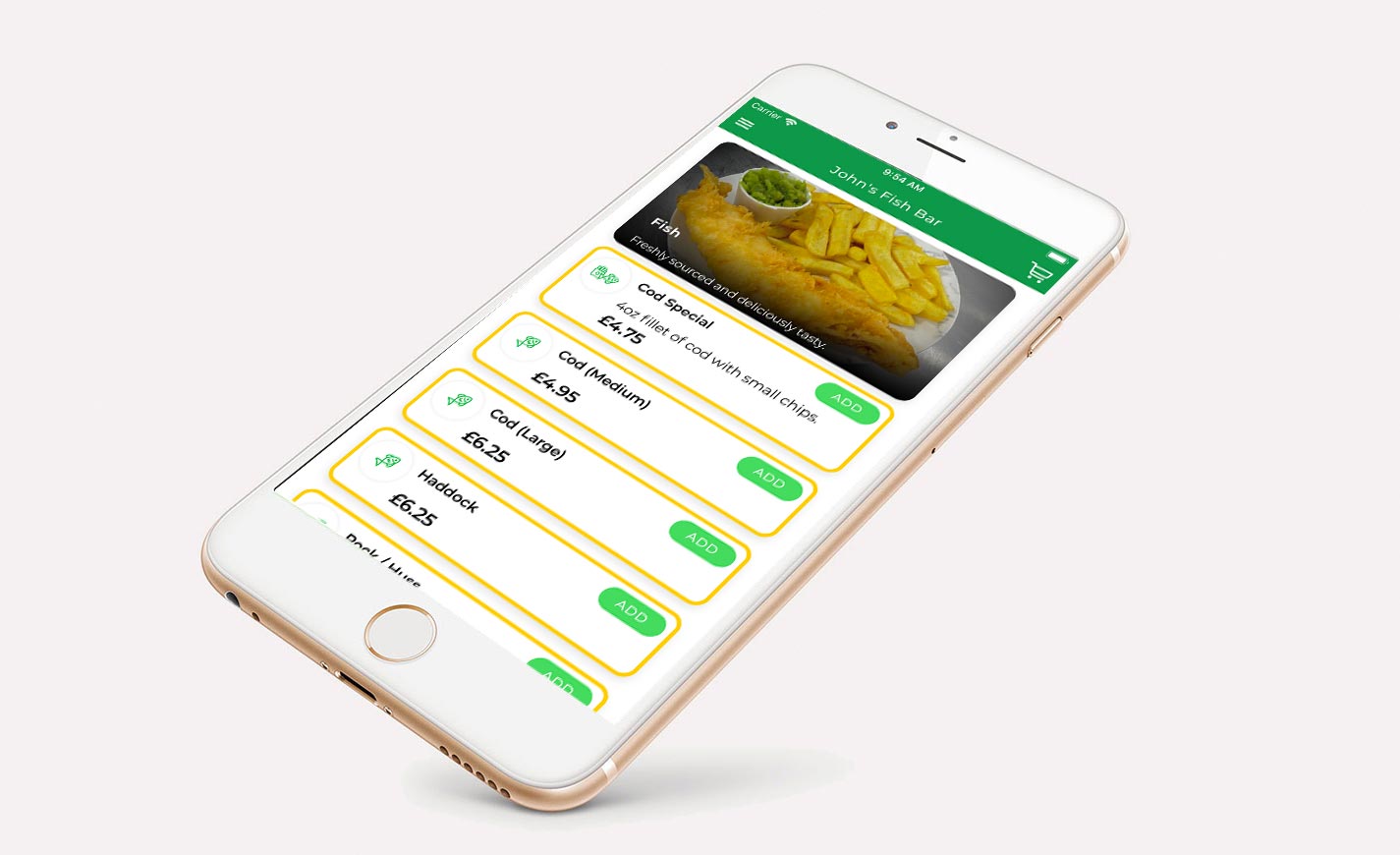
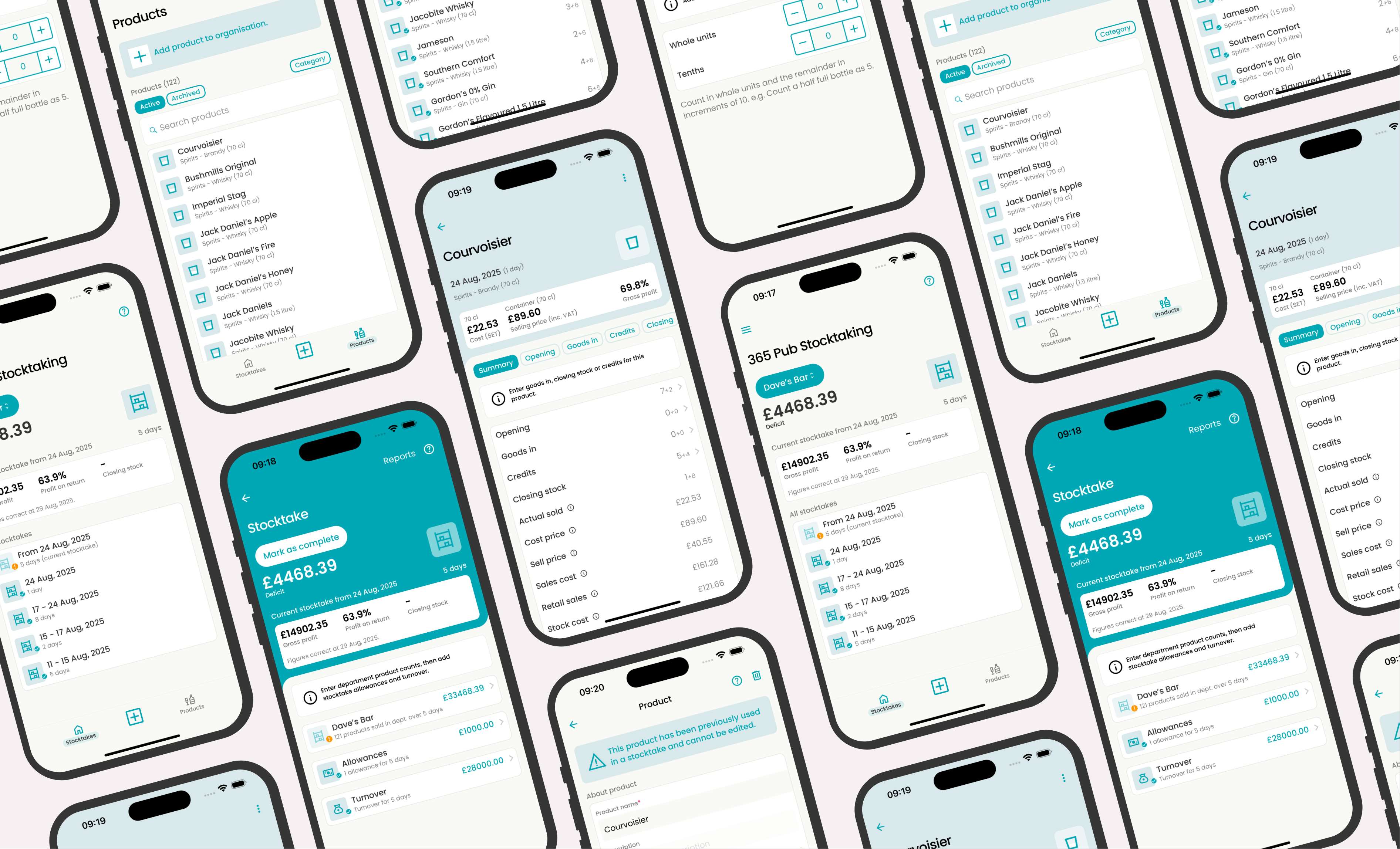
Running a hospitality or retail operation means managing real-time inventory, payment processing, customer loyalty, and multi-channel ordering, often simultaneously and under pressure. The technical demands are specific: PCI DSS compliance for payment handling, allergen and food safety data management, GDPR considerations for customer databases, and infrastructure that holds up during peak trading. Tinderhouse has delivered production systems across this sector, from the John's Fish Bar Shopify-powered native app to the 365 Pub Stocktaking platform that replaced expensive external stocktaking services with a mobile-first solution publicans can run themselves.

For hospitality and retail brands, e-commerce app development goes well beyond putting products on a screen. The platform needs to handle payment gateway orchestration, real-time stock synchronisation, and traffic volumes that can spike dramatically during promotional events or seasonal peaks.

High-concurrency commerce infrastructure Retail platforms fail when they matter most: during flash sales, Black Friday, or a viral social media moment. Tinderhouse engineers e-commerce systems using elastic cloud infrastructure and intelligent caching strategies that maintain checkout performance under load. This is not theoretical. The architecture decisions around database patterns, CDN configuration, and queue management are made specifically to prevent cart abandonment during your highest-revenue windows.

POS and inventory synchronisation Most retail businesses already have back-of-house systems managing stock, pricing, and order fulfilment. The challenge is connecting a customer-facing digital platform to those systems without creating data lag or manual reconciliation work. Tinderhouse builds secure middleware that keeps stock levels, pricing updates, and order data synchronised in real time across channels, whether you are running Oracle Micros, Shopify Plus, or a proprietary system.

Payment compliance and customer data Every transaction involves PCI DSS obligations, and every customer account involves GDPR. These are not afterthoughts bolted on at launch. Payment gateway integration, tokenisation, and data handling architecture are designed into the platform from the start, reducing compliance risk and the cost of remediation later.

Explore more →

Shopify app development is one of the most requested services in hospitality and retail, particularly for businesses that want the speed and ecosystem of Shopify without being limited by its out-of-the-box functionality.

Custom apps on Shopify's backend The John's Fish Bar project is a clear example: a native iOS and Android ordering app powered entirely by Shopify's commerce backend. This approach gives operators the reliability of Shopify's payment processing, inventory management, and order handling while delivering a branded mobile experience that looks and feels nothing like a template store. The app handles menu management, order customisation, and collection scheduling, all synced back to Shopify in real time.

Extending Shopify for operational needs Standard Shopify themes and plugins cover generic retail well. They tend to fall short when a hospitality business needs allergen data displayed per menu item, time-slot-based ordering for collection or delivery, or integration with kitchen display systems. Tinderhouse builds custom Shopify apps and integrations that fill these gaps without replacing the parts of Shopify that already work.

Loyalty and repeat ordering Hospitality businesses live on repeat custom. Shopify's native loyalty tools are limited, so Tinderhouse develops custom solutions: digital stamp cards, points-based reward schemes, and personalised reorder flows that reduce friction for returning customers and give operators data on purchasing patterns.

Explore more →

In hospitality and retail, the mobile app is often the primary customer touchpoint, not a companion to a website. Mobile app development for this sector means building something fast, reliable, and designed around repeat use.

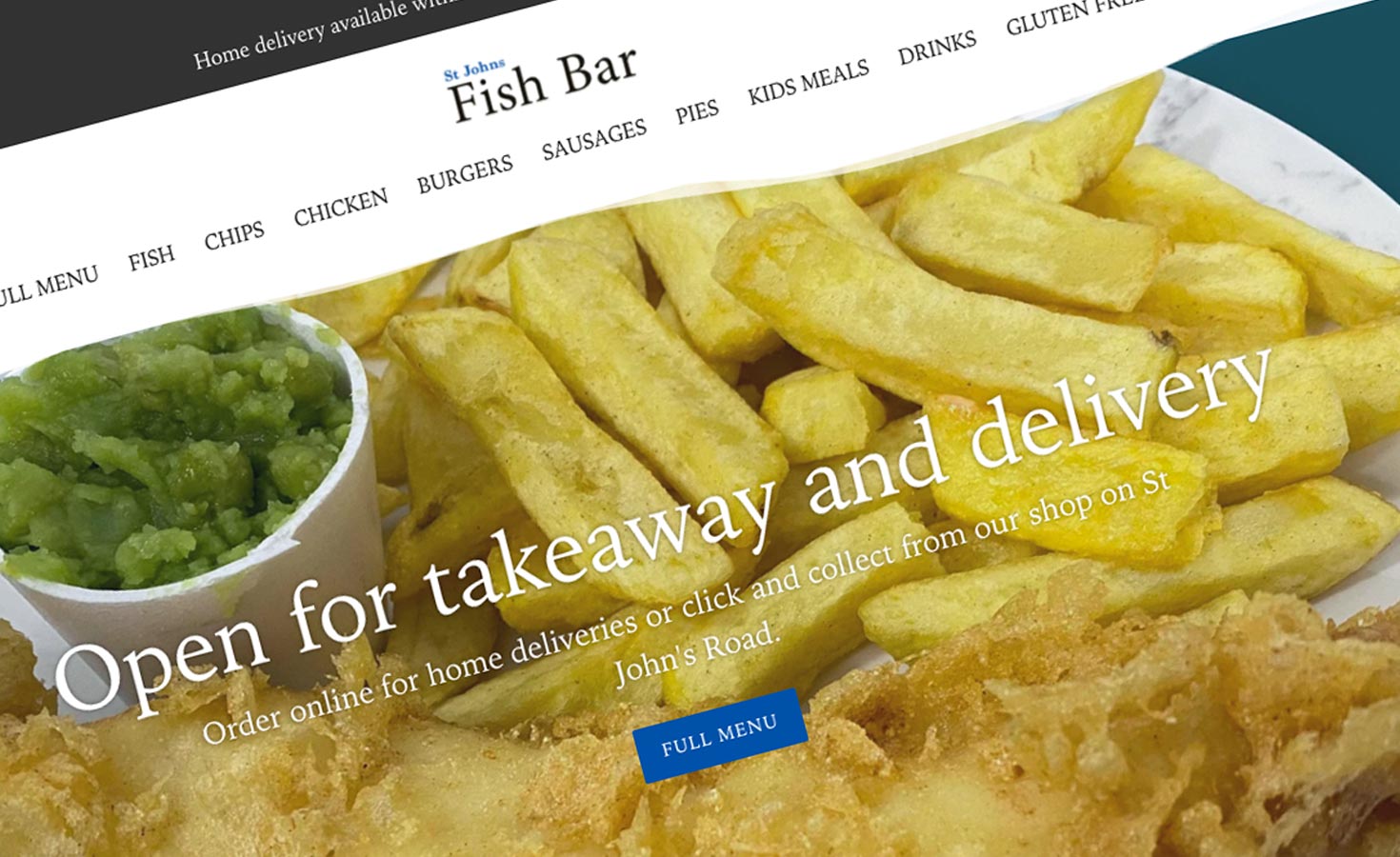
Ordering and collection apps The St John's Fish Bar project was a rapid deployment during the Covid-19 pandemic: click-and-collect and home delivery functionality built and launched under pressure for two fast food outlets. That kind of delivery requires clean UX, reliable payment processing, and tight integration with kitchen workflows. Tinderhouse builds ordering apps with one-tap payments, real-time order tracking, and time-slot management that reduce friction for the customer and operational overhead for staff.

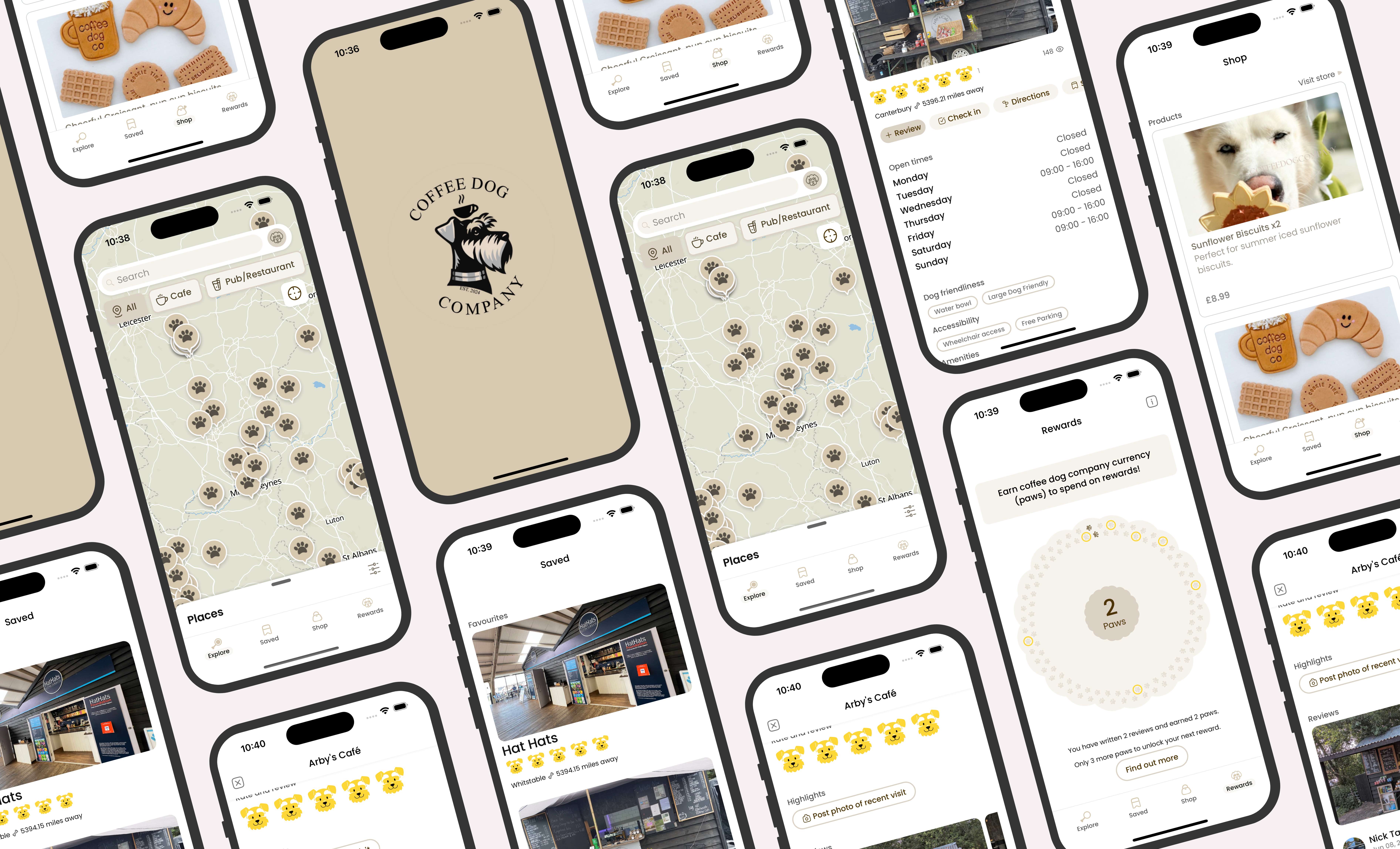
Venue and discovery apps The Coffee Dog Company app connects dog owners with dog-friendly cafes across the UK, combining interactive maps, user reviews, and a rewards programme. This type of location-based discovery app requires accurate geolocation, performant map rendering, and a content management layer that venue owners can update themselves.

Retention-first design A hospitality app that gets downloaded once and forgotten is a wasted investment. Tinderhouse focuses on habit-forming UX: push notification strategies that are useful rather than annoying, digital loyalty schemes that reward genuine engagement, and lightweight performance that means the app loads instantly even on older devices or patchy mobile connections.

Explore more →

Not every hospitality or retail business needs a native app in the App Store. Progressive web apps offer an alternative that works across all devices, requires no download, and can still deliver offline functionality, push notifications, and fast performance.

Menu and ordering without an app download For restaurants, cafes, and quick-service outlets, a PWA can serve as the ordering interface: customers scan a QR code, land on a fast-loading web app, browse the menu, and place an order without installing anything. This removes the biggest barrier to adoption for casual or first-time customers.

Lower development and maintenance cost A single PWA codebase serves iOS, Android, and desktop users. For smaller hospitality businesses or those testing digital ordering for the first time, this is a practical route to market that avoids the cost and approval timelines of native app store submissions. Tinderhouse builds PWAs that meet the same UX and performance standards as native apps, with the added benefit of instant updates deployed without user action.

Offline resilience Retail environments with inconsistent connectivity, including pop-up shops, outdoor markets, and event venues, benefit from PWA service workers that cache critical content and allow basic functionality even when the network drops.

Explore more →

AI and intelligent automation in hospitality and retail is most valuable where it removes repetitive operational work or surfaces insights from data that already exists but is not being used.

Demand forecasting and stock management Hospitality businesses waste money on overstocking perishable goods and lose revenue from understocking popular items. AI-driven demand forecasting, trained on historical sales data, seasonal patterns, and external factors like weather and local events, can reduce both problems. Tinderhouse builds these systems to integrate with existing POS and inventory platforms rather than replacing them.

Customer behaviour analysis Loyalty programme data, ordering history, and browsing patterns contain signals about what customers want next. Intelligent automation can segment customers, personalise offers, and trigger retention campaigns without requiring a marketing team to manage every interaction manually.

Operational workflow automation From automated supplier reordering when stock hits threshold levels, to staff scheduling suggestions based on predicted footfall, automation reduces the administrative burden on operators. The key is building these systems to support human decision-making rather than replacing it, flagging recommendations for approval rather than acting autonomously on high-stakes decisions.

Explore more →

On-demand app development covers the real-time, request-and-fulfil systems that hospitality and retail businesses increasingly rely on: delivery, collection, table booking, and service scheduling.

Delivery and collection logistics Building a delivery or click-and-collect system involves more than accepting orders. It requires time-slot management, driver or courier assignment, real-time status updates for customers, and integration with kitchen or warehouse preparation workflows. Tinderhouse builds these systems with the operational detail that generic delivery platforms often lack, including configurable prep times, delivery radius rules, and cut-off scheduling.

Table reservation and service booking For restaurants, salons, and appointment-based retail, on-demand booking systems need to handle capacity management, no-show policies, and calendar integration. The goal is reducing phone calls and manual diary management while giving customers a booking experience that feels instant and reliable.

Multi-location management Retail and hospitality groups operating across multiple sites need on-demand systems that work at the group level, with centralised reporting and configuration, while allowing per-location customisation of menus, availability, and pricing.

Explore more →

Some hospitality and retail businesses are not just buying software; they are building it. SaaS development for this sector typically involves turning a proven operational process into a subscription platform that other businesses in the same industry can use.

Productising operational expertise The 365 Pub Stocktaking platform is a direct example. What started as a solution for pub stocktaking became a mobile SaaS product that empowers publicans to manage inventory with professional-grade accuracy, eliminating the cost of external stocktaking services. Tinderhouse builds these platforms with multi-tenancy architecture, subscription billing, and the data isolation required for each customer's commercial information to remain private.

Hospitality management tools Staff scheduling, supplier management, compliance tracking, and menu costing are all areas where a well-built SaaS platform can serve hundreds of venues from a single codebase. The technical challenge is balancing the flexibility each operator needs with the standardisation that makes the platform maintainable and scalable.

API-first architecture for integrations Hospitality SaaS products rarely exist in isolation. They need to connect to POS systems, accounting software, delivery aggregators, and payment processors. Tinderhouse designs SaaS platforms API-first, ensuring that third-party integrations are a core capability rather than an afterthought.

Explore more →

MVP app development is relevant for hospitality and retail founders testing a new concept: a loyalty platform, a marketplace for independent food producers, a venue management tool, or a niche ordering system for an underserved market.

Validating before building fully The cost of building a complete hospitality platform before proving demand is significant. An MVP strips the concept to its core value proposition, typically the ordering flow, the booking mechanism, or the data insight, and puts it in front of real users. Tinderhouse builds MVPs that are production-quality from day one, not throwaway prototypes that need rebuilding.

Sector-specific user testing Hospitality and retail users are not patient with clunky software. Kitchen staff, bar managers, and shop floor teams will abandon a tool that slows them down. MVP testing in this sector needs to happen in the actual operating environment, with real service pressure, not in a demo room. Tinderhouse designs MVPs with that context in mind: fast, focused, and built for the conditions where they will actually be used.

Explore more →

For many hospitality and retail businesses, the website remains the front door: the place where customers check menus, find opening hours, make reservations, or browse products before visiting in person or ordering online.

Performance and local SEO A slow-loading restaurant website loses customers to the next search result. Tinderhouse builds hospitality websites with performance as a priority: optimised images, minimal render-blocking resources, and structured data markup that helps Google surface opening hours, menus, reviews, and location information directly in search results.

Integration with ordering and booking systems The website should not exist separately from the ordering or reservation platform. Tinderhouse builds sites where the digital commerce layer, whether that is a Shopify storefront, a custom ordering system, or a third-party booking widget, is embedded natively rather than bolted on as an afterthought.

Content management for non-technical teams Menus change, seasonal promotions rotate, and event listings need updating weekly. The CMS behind a hospitality website needs to be simple enough for front-of-house staff to manage without developer involvement, while maintaining the design consistency and performance standards that protect the brand.

Explore more →

Frequently asked questions

Everything you need to know about working with Tinderhouse, from costs and timelines to our process and expertise.

We engineer for scalability using elastic cloud infrastructure and intelligent caching strategies. By utilising auto-scaling server environments and high-performance database patterns, we ensure your platform remains fast and stable during high-pressure events such as Black Friday or seasonal launches. This proactive approach prevents checkout abandonment and protects your brand reputation during your most critical trading windows.

Yes. We specialise in deep API orchestration to connect your customer-facing apps with back-of-house software. Whether you use enterprise systems like Oracle Micros or modern platforms like Shopify Plus, we build secure middleware that ensures your stock levels, pricing, and order data are synchronised in real time across all channels, reducing manual errors and improving operational efficiency.

Headless architecture decouples the front-end user experience from the back-end commerce engine. This gives you total creative freedom over your storefront while allowing for faster load times and a more secure environment. Our engineering team focuses on building bespoke front-end experiences that sync via API to powerful commerce back-ends, ensuring your brand stays agile and can pivot quickly to new market trends.

We focus on building ‘habit-forming’ UX that removes friction from the ordering process. By integrating features such as one-tap payments, digital loyalty schemes, and real-time order tracking, we encourage repeat usage. Our mobile solutions are engineered to be lightweight and fast, ensuring that customers can interact with your brand effortlessly, whether they are on-site or ordering for delivery.

We're proud to have worked with...

Team Sky: Elite Sports Technology Partner Willis re Sky Kent County Council Medway Council London School of Economics: Public Sector Research Systems NHS: Healthcare Digital Transformation Partner Cisco Systems: Enterprise Infrastructure Software Partner The Telegraph: National Election Platform Partner

Tinderhouse is ranked as one of the UK's top 50 mobile app development companies.

TEAM SKY
Tech partner
2010-2015
MAP MY TRACKS
#1 App
App Store (Fitness)
MAP MY TRACKS
Featured
App Store
BABY LED WEANING COOKBOOK
#1 App
App Store (Lifestyle)