Established 2003. Still delivering.

Health & MedTech

Secure, compliant digital health solutions for clinicians and patients.

Tinderhouse: Specialist Health & MedTech UK for startups and enterprise teams

Tinderhouse provides specialist engineering for the healthcare sector, where security, precision, and compliance are non-negotiable. With over two decades of experience, we bridge the gap between complex medical requirements and user-centric digital products. We understand that MedTech is more than just code; it is about patient safety, data integrity, and regulatory adherence. From developing voice-analysis AI for clinical diagnostics to building habit-forming mental health platforms, our team ensures your software meets the highest standards of the UK healthcare landscape. We partner with both ambitious startups and established healthcare providers to deliver resilient systems that clinicians trust and patients rely on daily.

From voice-analysis AI to mental health habit-forming platforms, we develop regulated MedTech software that prioritises data security, clinical accuracy, and accessibility.

Discuss your project
Our team is ready to begin new projects.

Our services

Healthcare App Development

Build secure, compliant medical software designed for clinicians and patients

Explore more →

What we build for NHS and healthcare organisations

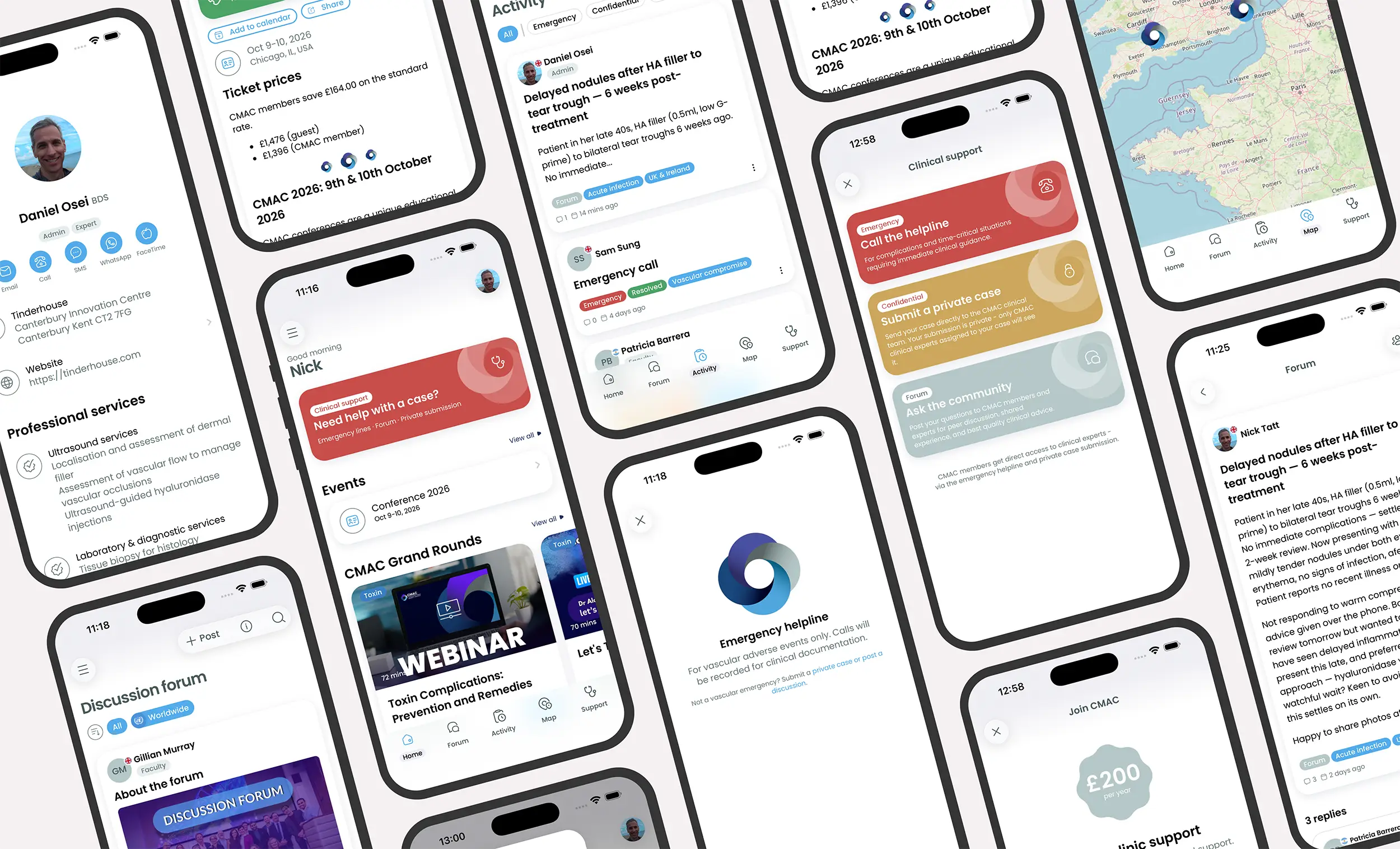
Healthcare software carries obligations that most digital projects never encounter. Patient data governance, NHS Digital standards, clinical safety requirements, and the practical realities of how clinicians actually use technology on a ward or in a consultation all shape the engineering decisions from day one. Tinderhouse has been delivering in this space for over two decades, and the work on projects like NHS Patients in Control and Verenigma's voice-analysis AI reflects what that depth of experience looks like in practice.

The application of AI in healthcare demands a level of rigour that consumer AI products rarely require. AI product engineering in this sector means building systems where accuracy is a clinical safety matter, not just a performance metric.

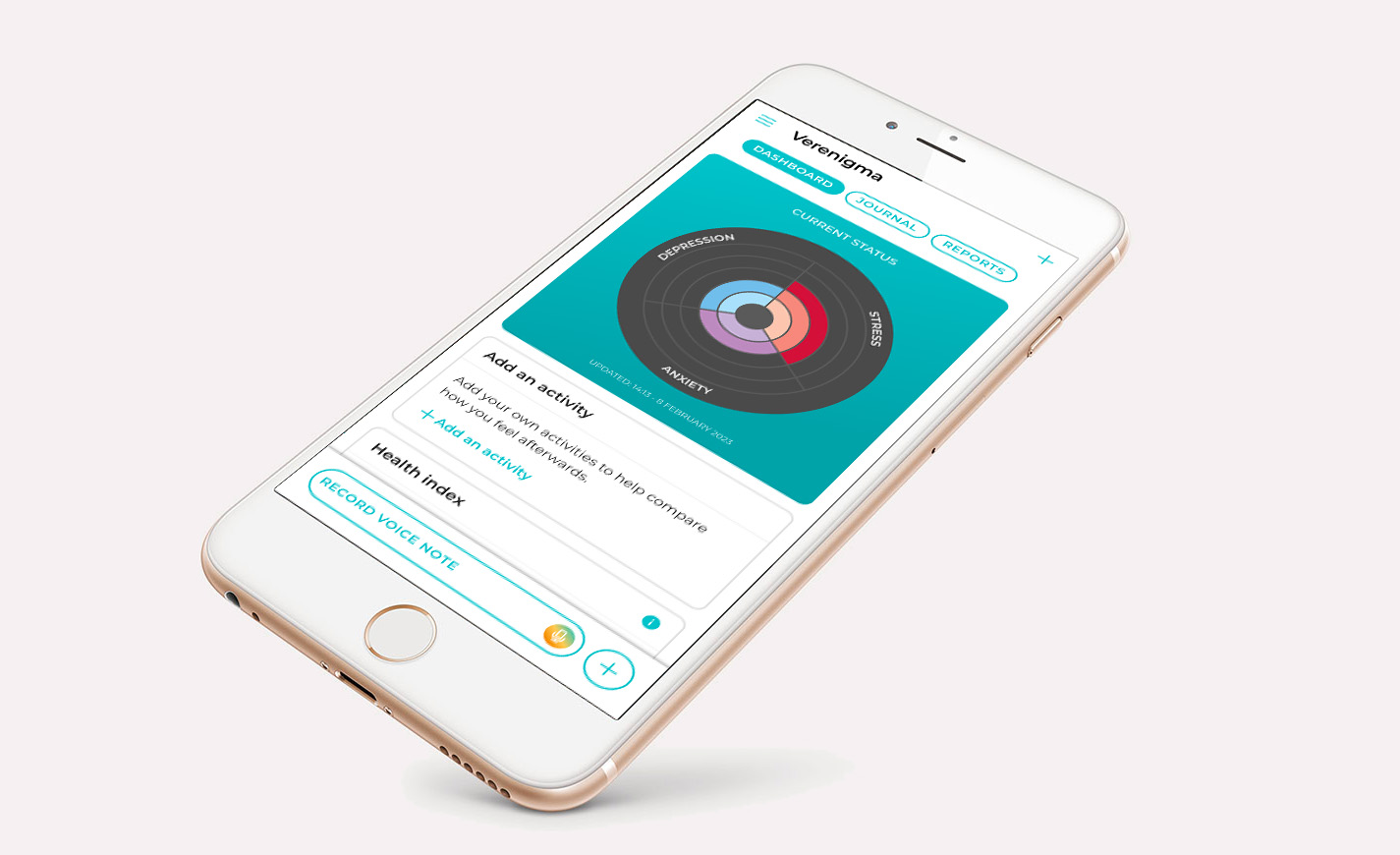
Diagnostic and screening tools Tinderhouse has direct experience building AI that operates in clinical contexts. Verenigma uses voice analysis to detect emotional states in real time, a technology with clear applications in mental health screening and patient monitoring. This type of work requires careful model validation, transparent decision-making processes, and integration with existing clinical pathways rather than replacement of them.

Intelligent triage and workflow automation Administrative burden is one of the most persistent problems in UK healthcare. AI-powered triage systems can route patients to appropriate services faster, flag urgent cases for clinician review, and reduce the volume of manual data processing that clinical staff currently handle. Tinderhouse builds these systems with human oversight at every decision point, because fully autonomous clinical decisions are neither appropriate nor permitted under current regulatory frameworks.

Data governance for AI systems Training and deploying AI models on patient data introduces specific obligations around data minimisation, purpose limitation, and the right to explanation. Tinderhouse engineers AI healthcare products with these constraints built in from the architecture level, not bolted on as a compliance exercise.

Explore more →

Healthcare professionals use mobile devices in ways that differ significantly from general consumer use, and mobile app development for this sector has to reflect those realities.

On-ward and in-consultation use A clinician checking an app between patients needs information in seconds, not minutes. Mobile apps for healthcare settings must load quickly, present data clearly, and support one-handed operation. Tinderhouse has built mobile platforms for NHS trusts where these seemingly small design decisions directly affect whether staff adopt the tool or abandon it within a week.

Cross-platform reach NHS organisations and healthcare providers typically support a mix of iOS and Android devices, often including older hardware. A mobile strategy that targets only the latest devices excludes a significant portion of the workforce. Tinderhouse builds cross-platform applications that maintain performance across device generations whilst meeting the security requirements that healthcare data demands.

Secure data handling on device Patient data stored on a mobile device, even temporarily, must be encrypted at rest and in transit. Session management, biometric authentication, and remote wipe capability are standard requirements for any healthcare mobile application. Tinderhouse implements these as foundational features rather than optional additions.

Explore more →

Wearable technology is increasingly relevant to patient monitoring, rehabilitation tracking, and preventive health programmes. Wearable app development for healthcare requires deep integration with both consumer devices and clinical-grade sensors.

Remote patient monitoring Wearables allow clinicians to monitor patients outside of clinical settings, reducing the need for frequent in-person appointments. Tinderhouse connects wearable data streams to clinical platforms through HealthKit, Google Fit, and proprietary Bluetooth protocols for medical devices. The Born to Move project, an NHS parental companion app, demonstrated how mobile and wearable integration can support ongoing health tracking in everyday life.

Biometric data accuracy Consumer wearables and clinical-grade sensors produce data at different levels of reliability. Healthcare wearable apps need to account for this, applying appropriate validation and filtering before data reaches a clinician's dashboard. Tinderhouse has extensive experience in biometric data processing through its work on Map My Tracks, where GPS and physiological data accuracy are critical to the product's value.

Battery and connectivity constraints Wearable devices operate under strict power and bandwidth limitations. Efficient data batching, background sync protocols, and graceful handling of intermittent connectivity are essential for any healthcare wearable application that needs to function reliably throughout a patient's day.

Explore more →

Many healthcare organisations rely on internal web platforms for clinical administration, patient record management, and inter-departmental communication. Bespoke web systems in this sector must meet standards that off-the-shelf tools rarely satisfy.

Clinical administration platforms NHS trusts and private healthcare providers often need systems tailored to their specific clinical pathways and reporting requirements. Generic project management or CRM tools do not accommodate the data governance, audit trail, and access control requirements of healthcare. Tinderhouse builds bespoke platforms that align with how clinical teams actually work, including integration with existing NHS systems where HL7 or FHIR interoperability is required.

Legacy system migration A significant challenge across UK healthcare is the volume of critical data held in ageing systems. Migrating patient records, clinical datasets, and administrative archives to modern infrastructure without data loss or downtime requires rigorous validation at every stage. Tinderhouse manages these migrations with strict audit trails and integrity checks, ensuring that records remain 100 percent accurate and accessible throughout the transition.

Secure hosting and access control Healthcare web systems must be hosted in environments that meet NHS data residency and security requirements. Tinderhouse deploys to secure private cloud infrastructure with role-based access controls, encryption at rest and in transit, and comprehensive logging for audit purposes.

Explore more →

Healthcare SaaS products face a unique set of challenges: multi-tenancy must not compromise data isolation, subscription models must work within NHS procurement frameworks, and uptime expectations are higher than in most other sectors. SaaS development for health and MedTech requires architecture decisions that prioritise compliance alongside scalability.

Multi-tenant data isolation A SaaS platform serving multiple NHS trusts or clinical organisations must guarantee that one tenant's patient data is never accessible to another. This goes beyond database-level separation. It requires isolated authentication, tenant-specific encryption keys, and comprehensive audit logging that can demonstrate compliance to each organisation independently.

NHS procurement readiness Selling into the NHS means meeting DTAC requirements, demonstrating DSP Toolkit compliance, and providing evidence of clinical safety where applicable. Tinderhouse builds SaaS products with these procurement requirements in mind from the start, ensuring that the platform is ready for NHS evaluation processes without a costly retrofit.

Scalable infrastructure Healthcare SaaS platforms can experience significant demand variation, particularly during seasonal surges or public health events. The infrastructure must scale without degrading performance or compromising the security controls that the platform depends on.

Explore more →

MedTech startups often need to validate a clinical hypothesis or demonstrate a concept to investors and NHS innovation teams before committing to a full build. MVP app development in healthcare is more constrained than in other sectors, because even an early-stage product must handle patient data responsibly.

Regulatory-aware prototyping A healthcare MVP that ignores data governance from the start creates problems that are expensive to fix later. Tinderhouse builds early-stage MedTech products with appropriate security and compliance foundations, so that the path from prototype to production does not require a complete architectural rebuild. The Verenigma voice-analysis platform began as a focused MVP that was engineered to scale into a full clinical product.

Clinical validation support An MVP in healthcare is not just about proving product-market fit. It often needs to demonstrate clinical validity or safety to gain traction with NHS innovation teams, accelerators, or regulatory bodies. Tinderhouse structures MVP builds to produce the evidence and documentation that these stakeholders require.

Investor and grant readiness Many MedTech startups are funded through NIHR grants, Innovate UK programmes, or health-focused venture capital. The MVP needs to demonstrate both technical capability and an understanding of the regulatory landscape. Tinderhouse's experience in this sector means the product tells the right story to the right audience from day one.

Explore more →

Smaller healthcare organisations, MedTech startups, and NHS innovation units often need experienced product development capability without the overhead of a full-time team. Tinderhouse's fractional product team model provides senior engineering, design, and product strategy on a flexible basis.

Embedded healthcare expertise A fractional team that understands healthcare does not need weeks of onboarding to grasp the regulatory environment, the clinical workflow constraints, or the data governance requirements. Tinderhouse's team brings two decades of healthcare delivery experience, which means the engagement produces value from the first sprint rather than the third.

Continuity across funding cycles Healthcare startups and NHS-funded projects often operate in phases tied to grant milestones or procurement cycles. A fractional model allows organisations to scale their development team up or down as funding permits, without losing the institutional knowledge that a fully outsourced project handover would sacrifice.

Strategic and technical leadership Not every healthcare organisation needs more developers. Some need someone to define the product roadmap, evaluate build-versus-buy decisions, or prepare the technical documentation required for NHS procurement. The fractional model covers strategic advisory work alongside hands-on engineering.

Explore more →

Frequently asked questions

Everything you need to know about working with Tinderhouse, from costs and timelines to our process and expertise.

Security is integrated into our entire development lifecycle. We align our engineering with UK GDPR and NHS security standards, utilising end-to-end encryption, role-based access controls, and secure private cloud deployments. Our approach ensures that sensitive patient data and biometric information are protected by the most robust modern encryption protocols.

Yes. We specialise in deep integration between software and hardware. We connect platforms to the broader health ecosystem through HealthKit, Google Fit, and proprietary Bluetooth protocols for medical devices. This allows for real-time monitoring and accurate data streaming from clinical-grade sensors and consumer wearables alike.

We have engineered advanced AI solutions within healthcare, including sophisticated voice-analysis tools used for diagnostic purposes. Our expertise covers predictive modeling, intelligent patient triaging, and automated clinical workflows that reduce administrative burden while maintaining high accuracy and clinical safety.

We manage complex data migrations for healthcare providers, ensuring that vast historical datasets are moved into modern, high-performance architectures without loss of integrity. We maintain strict audit trails and validation processes to ensure that clinical records remain 100 percent accurate and accessible throughout the transition.

We're proud to have worked with...

Team Sky: Elite Sports Technology Partner Willis re Sky Kent County Council Medway Council London School of Economics: Public Sector Research Systems NHS: Healthcare Digital Transformation Partner Cisco Systems: Enterprise Infrastructure Software Partner The Telegraph: National Election Platform Partner

Tinderhouse is ranked as one of the UK's top 50 mobile app development companies.

TEAM SKY
Tech partner
2010-2015
MAP MY TRACKS
#1 App
App Store (Fitness)
MAP MY TRACKS
Featured
App Store
BABY LED WEANING COOKBOOK
#1 App
App Store (Lifestyle)