Established 2003. Still delivering.

Construction & Field Ops

Operational software for the mobile workforce and remote site teams.

Tinderhouse: Specialist Construction & Field Ops UK for startups and enterprise teams

Tinderhouse provides specialist engineering for Construction and Field Operations, where software must be as resilient as the teams using it. We recognise that field-based technology operates under unique constraints, often in environments with limited connectivity and high-stakes timelines. For over two decades, we have built digital products that bridge the gap between the head office and the site. From offline-first data synchronisation to real-time GPS asset tracking, our team ensures your operations remain seamless regardless of the location. We partner with logistics leaders and construction firms to deliver ruggedised, high-performance systems that increase operational efficiency, protect data integrity, and provide total visibility over your mobile workforce.

Our field operations technology solves "real-world" logistics challenges through offline-first data syncing, GPS asset tracking, and ruggedised workflow management for construction and site teams.

Discuss your project
Our team is ready to begin new projects.
Our services

Field worker app development

Trusted by Wagtail (UK Border Force), Construction Teams & Retail for 10 Years

Explore more →

Property App Development

Scalable digital solutions for property management, artist planning, and real estate investment

Explore more →

What we build for construction and field operations businesses

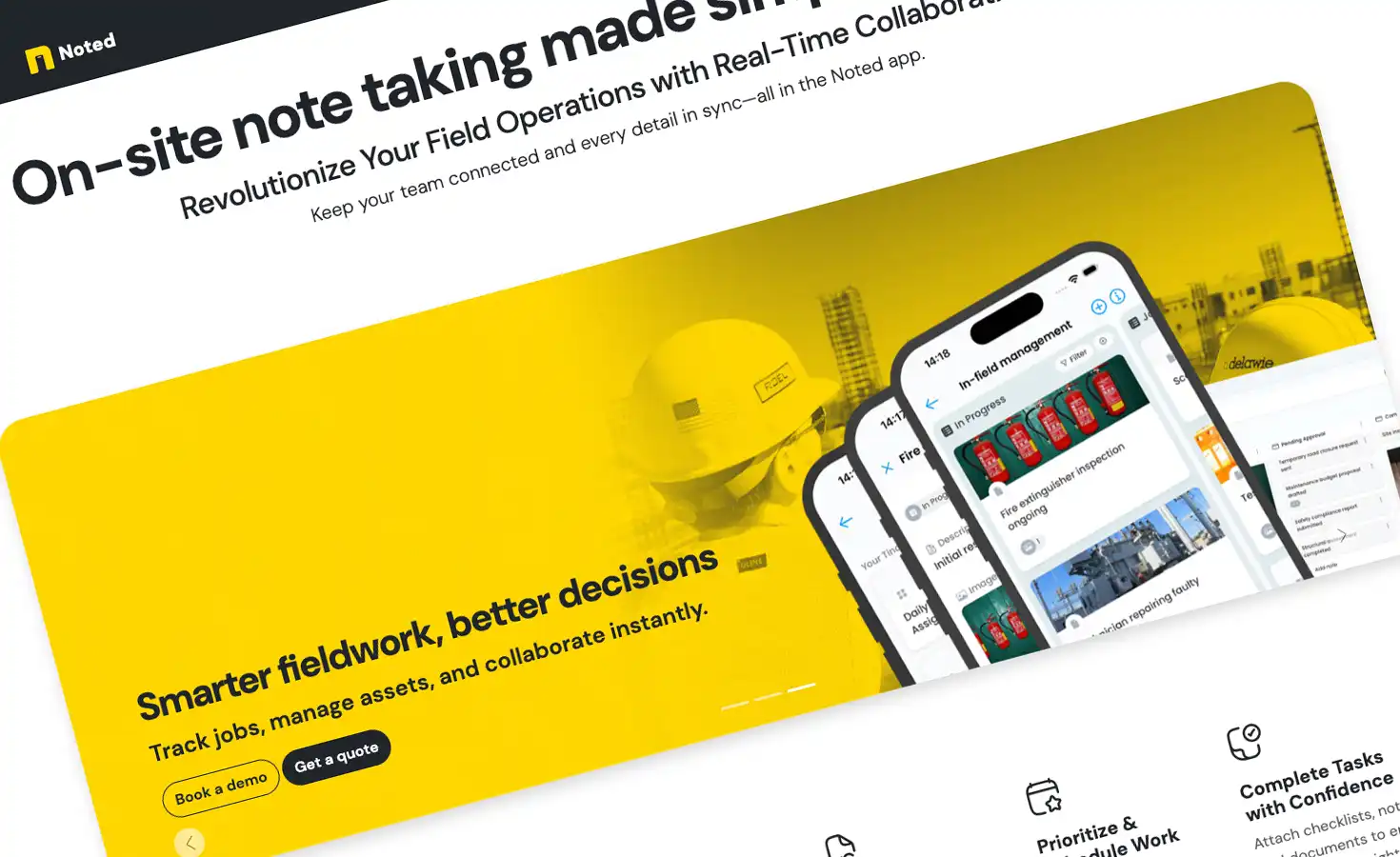
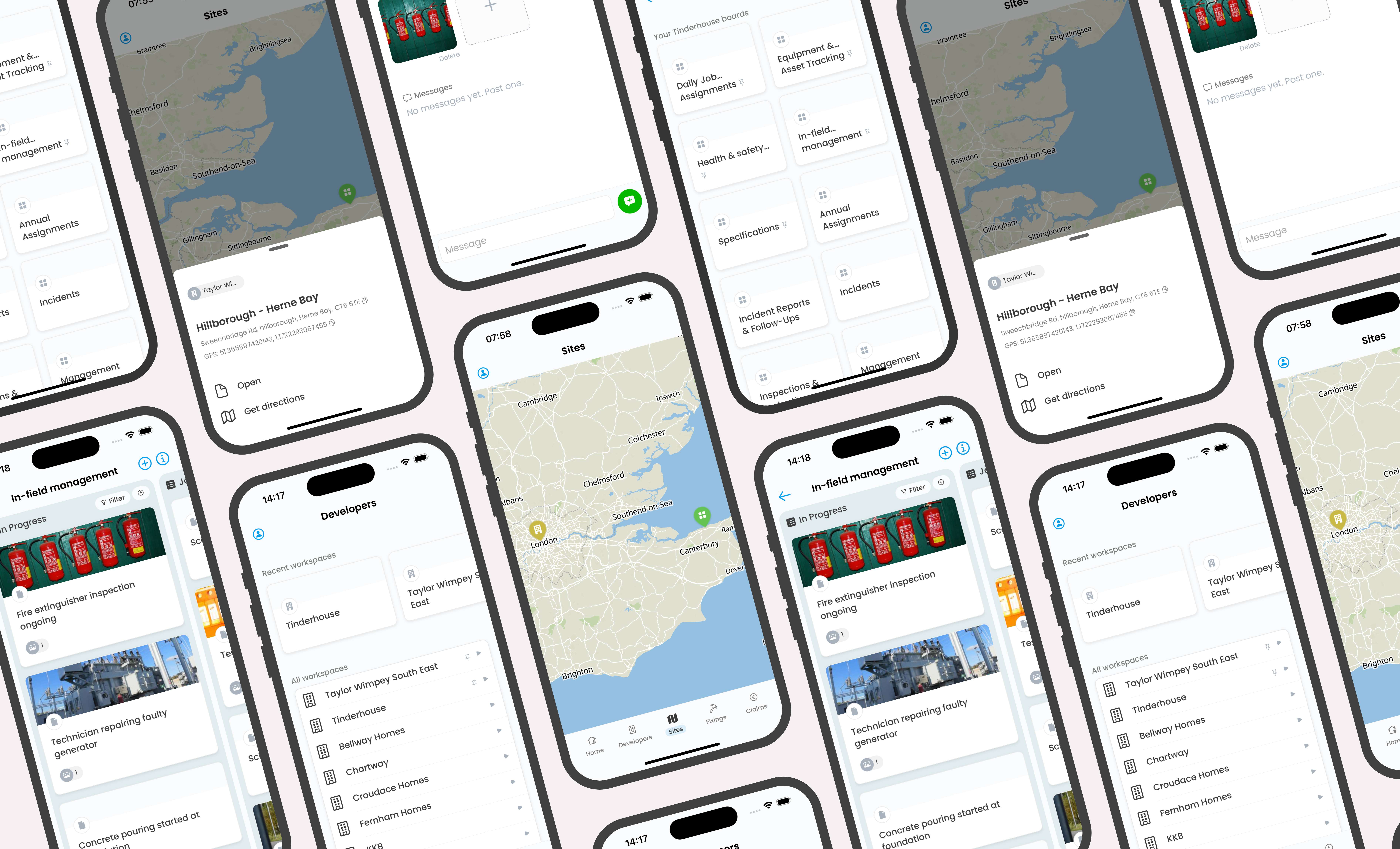
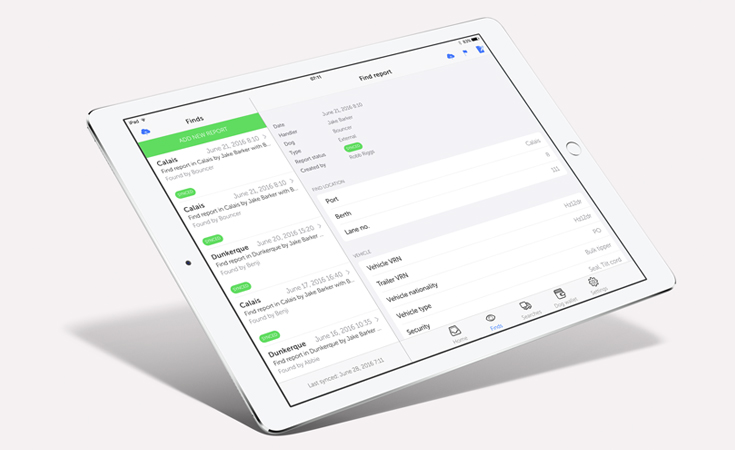
Construction and field operations software fails when it is designed by teams who have never dealt with a site that has no signal, a workforce that changes weekly, or a compliance regime that demands real-time documentation. Tinderhouse has been building for this sector for over a decade. The work on Noted, a full SaaS field operations platform, and Wagtail UK, an offline-capable tablet system for border security canine handlers, reflects the kind of engineering these environments actually require.

Most construction teams need a mobile app that works reliably in places where connectivity is patchy at best. Mobile app development for field operations starts with that constraint and builds outward from it.

Offline-first architecture Field workers cannot pause a safety inspection because a 4G signal has dropped. Tinderhouse builds apps using local database persistence with SQLite, capturing all data on-device and synchronising automatically when a connection returns. This approach underpins Wagtail UK, where handlers operating at international border crossings needed complete reliability regardless of network availability. The same principles apply to site inspections, defect logging, and daily progress reporting.

Ruggedised interface design Site workers use devices in rain, dust, and while wearing gloves or PPE. Large touch targets, high-contrast layouts, and simplified data entry workflows are not optional extras. Tinderhouse field-tests interfaces against these conditions, reducing error rates and the time it takes to complete a form entry on site.

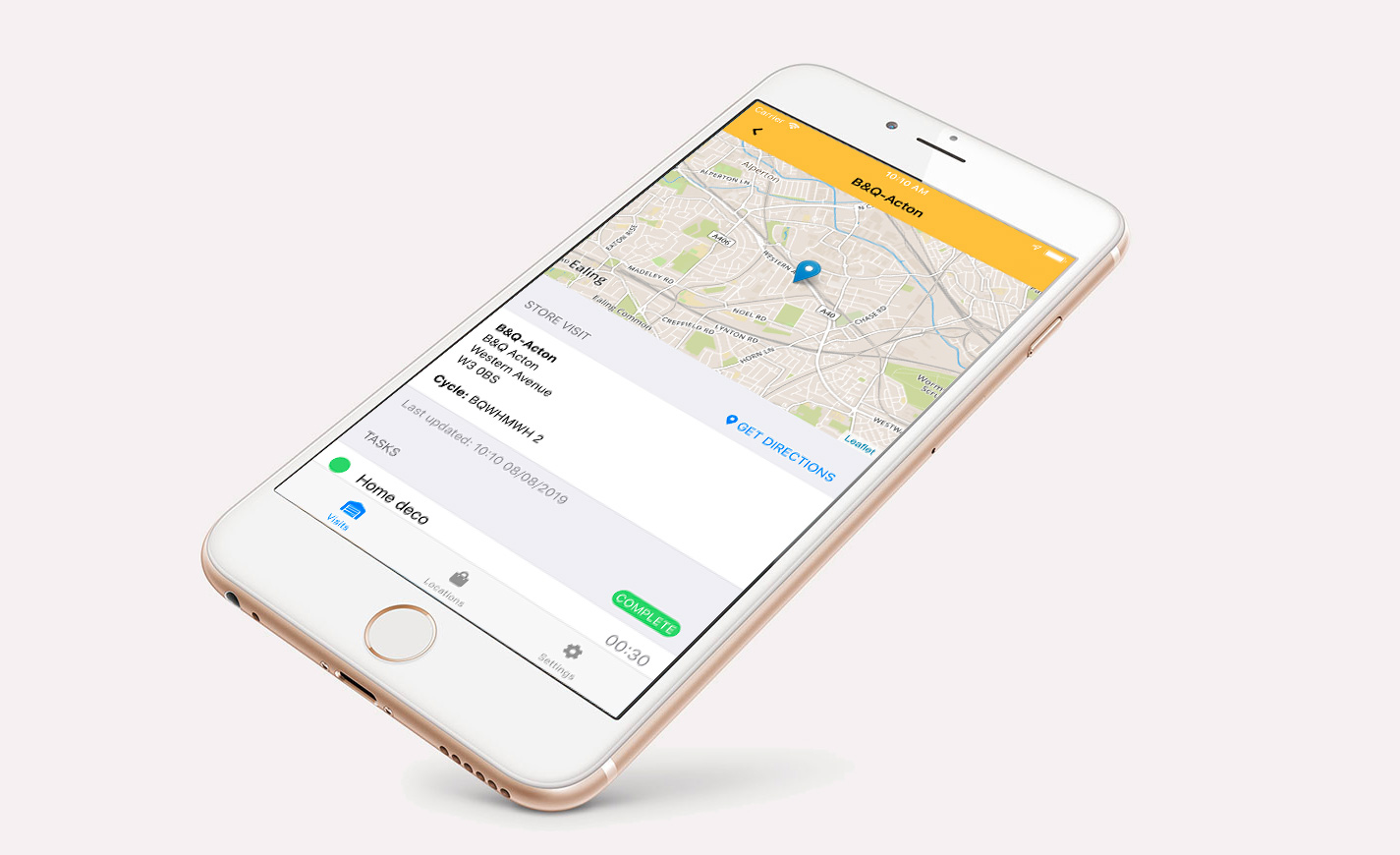
Multi-site workforce coordination Construction sub-contractors often operate across several active sites simultaneously. D&D Carpentry required a mobile solution that streamlined job allocation, communication, and administration across multiple locations, keeping site managers and operatives aligned without relying on phone calls or spreadsheets.

Explore more →

A single construction firm rarely operates in isolation. Main contractors manage sub-contractors, compliance teams manage certifications, and project managers need a consolidated view across every active site. SaaS development in this sector means building multi-tenant platforms that serve these overlapping needs.

White-label field platforms Noted is a comprehensive SaaS solution combining branded mobile apps with a web-based admin portal. It allows construction businesses to deploy their own field operations tools under their brand, with real-time collaboration between site and office. The platform handles multi-tenancy, role-based access, and data isolation between client organisations.

Subscription and onboarding models Construction SaaS products often need to support rapid onboarding of new sub-contractors or project teams. Tinderhouse builds subscription billing, tiered access, and self-service provisioning into the platform architecture, so scaling the user base does not require manual intervention.

Compliance dashboards Centralised reporting across sites, certifications, and workforce records is where a SaaS platform earns its value. Automated alerts for expiring certifications, overdue inspections, or incomplete safety documentation keep compliance teams ahead of problems rather than reacting to them.

Explore more →

Certain field applications demand performance and hardware access that cross-platform frameworks cannot reliably deliver. Native app development is the right choice when the app needs tight integration with device sensors, cameras, or GPS hardware.

GPS and geospatial tracking Monitoring the location of plant machinery, vehicles, or personnel across a construction site requires consistent GPS accuracy and low-latency data reporting. Native development provides direct access to device location services without the abstraction layers that can introduce lag or inaccuracy. Tinderhouse builds custom API layers that ingest this geospatial data and present it through dashboards designed for project managers.

Camera-based evidence capture Defect reporting, progress photography, and compliance evidence all rely on the device camera. Native apps handle image compression, metadata tagging with GPS coordinates and timestamps, and offline queuing of photo uploads more reliably than web-based alternatives, particularly on older or ruggedised devices common on construction sites.

IoT and telematics integration Connecting to Bluetooth beacons, environmental sensors, or telematics hardware fitted to plant and fleet vehicles is considerably more stable through native platform APIs. This matters when the data being collected feeds directly into safety or compliance reporting.

Explore more →

Not every field operations tool justifies a native app install, particularly for sub-contractors or temporary workers who need access for the duration of a single project. Progressive web app development provides an alternative that reduces onboarding friction.

No app store, no install barrier A PWA runs in the browser and can be saved to the home screen. For a main contractor onboarding dozens of sub-contractors to a new project management or reporting tool, eliminating the App Store download step saves time and avoids device compatibility issues. Workers can be operational within minutes of receiving a link.

Offline capability Service workers and local caching mean a well-built PWA can still function without a network connection. Forms can be completed, data stored locally, and synced when the device reconnects. This is not as comprehensive as a fully native offline-first architecture, but for lighter-weight tools such as time sheets, daily logs, or toolbox talk sign-offs, it is more than sufficient.

Cross-device access Site managers may use a tablet on site and a desktop in the office. A PWA adapts to both without requiring separate applications, keeping the interface consistent and the data unified.

Explore more →

Construction generates enormous volumes of repetitive documentation: daily reports, safety checklists, snag lists, progress updates. AI and intelligent automation can reduce the administrative burden on site teams without compromising the quality or completeness of records.

Automated report generation Site supervisors spend hours writing daily progress reports. An AI layer trained on the structure and language of construction reporting can draft these from structured input data, photos, and sensor readings, leaving the supervisor to review and approve rather than write from scratch.

Compliance monitoring Machine learning models can flag anomalies in submitted documentation: missing signatures, expired certifications, incomplete inspection records. This shifts compliance from periodic audits to continuous monitoring, reducing the risk of issues being discovered too late.

Predictive maintenance alerts For firms managing fleets or heavy plant, AI models trained on telematics data can identify patterns that precede equipment failure. Early warnings allow scheduled maintenance rather than reactive downtime, which on a construction site can delay an entire programme of works.

Explore more →

Large construction firms and national contractors operate at a scale where off-the-shelf tools break down. Enterprise app development addresses the integration, security, and workflow complexity that comes with managing thousands of workers across hundreds of sites.

ERP and back-office integration Enterprise construction firms run on systems like SAP, Oracle, or sector-specific ERPs. Tinderhouse builds middleware and API layers that connect field data capture directly into these systems, eliminating manual data re-entry and ensuring the back office has real-time visibility of what is happening on site.

Role-based access and data governance A site operative, a project manager, a compliance officer, and a board-level executive all need different views of the same data. Enterprise applications require granular role-based access controls, audit trails, and data retention policies that comply with both GDPR and sector-specific health and safety record-keeping requirements.

Multi-region deployment National contractors operating across regions need applications that handle localised compliance requirements, different sub-contractor pools, and regional reporting structures while maintaining a single consolidated view at head office level.

Explore more →

Construction businesses often rely on a collection of disconnected spreadsheets, email chains, and legacy databases. Bespoke web systems replace this patchwork with purpose-built platforms designed around the way the business actually operates.

Subcontractor management portals Onboarding, certification tracking, insurance verification, and performance scoring for sub-contractors can be consolidated into a single web portal. Bee-Vizible demonstrated this approach for field merchandisers, combining a native mobile app for data capture with a sophisticated web-based analysis portal. The same architecture applies to managing a supply chain of construction sub-contractors.

Document management and audit trails Health and safety documentation, method statements, risk assessments, and inspection records all need to be stored, versioned, and retrievable. A bespoke system can enforce document workflows, ensuring nothing is approved without the required sign-offs and nothing is lost when a project manager moves on.

Real-time project dashboards Consolidating data from mobile apps, IoT sensors, and manual inputs into a single dashboard gives project directors the visibility they need without requiring them to chase updates from individual site managers.

Explore more →

Construction technology is a sector where new product ideas frequently emerge from people who have spent years on site and can see exactly where the inefficiencies are. MVP app development helps these founders and internal innovation teams test their concept before committing to a full build.

Validating a field workflow The fastest way to prove a construction tech idea works is to put a functional prototype in the hands of site workers and see whether it survives contact with reality. Tinderhouse builds MVPs that focus on the core workflow, stripped of secondary features, so the concept can be validated quickly and cheaply.

Investor-ready demonstration Construction tech startups seeking funding need more than a pitch deck. A working MVP that demonstrates the offline capability, the data capture flow, or the reporting output gives investors something tangible to evaluate. Super Subbie is an example of a construction-focused product that moved from concept to functional platform.

Iterating from feedback The first version of a field app is almost never the right version. An MVP approach builds in the expectation that site testing will reveal changes needed to the interface, the data model, or the workflow sequence, and structures the codebase to accommodate those changes without a costly rebuild.

Explore more →

Construction technology products often stall not because the idea is wrong, but because the founder or internal team lacks the product management, design, and engineering capacity to move from concept to delivery. A fractional product team provides that capacity without the overhead and commitment of building a full in-house team.

Early-stage product leadership Many construction tech founders are domain experts: site managers, quantity surveyors, or logistics coordinators who understand the problem intimately but have never shipped a software product. A fractional product team brings the disciplines needed to translate that domain knowledge into a structured roadmap, a prioritised backlog, and a realistic delivery timeline. This is not consultancy that produces a report and walks away. The team stays embedded through build and launch.

Scaling without permanent headcount Construction is cyclical. A business that needs a full product squad during an intensive build phase may not need that same capacity six months later. Fractional engagement lets companies scale their product team up for delivery sprints and back down for maintenance periods, keeping costs aligned with actual need rather than fixed payroll.

Cross-discipline coordination Field operations software touches mobile development, offline data architecture, API design, compliance workflows, and interface design for harsh environments. Coordinating these disciplines is where projects typically lose time. Tinderhouse has run this kind of coordination across builds like Noted, where a branded mobile app, a web admin portal, and a multi-tenant backend all had to ship as a single coherent product. A fractional team that has done this before avoids the false starts that come from assembling freelancers who have not worked together.

Continuity through product evolution Construction SaaS products are rarely finished at v1. Regulatory changes, client feedback from site deployments, and new hardware integrations all drive ongoing development. A fractional product team provides continuity across these iterations, retaining the context and architectural understanding that would otherwise be lost each time a contract developer rolls off.

Explore more →

Frequently asked questions

Everything you need to know about working with Tinderhouse, from costs and timelines to our process and expertise.

We utilise ‘Offline-First’ engineering principles to ensure your teams can work without interruption. By using local database persistence, such as SQLite, data is captured on-device and automatically synchronised with the central server the moment a connection is restored. This prevents data loss and ensures that site reports and safety checks are never delayed by poor connectivity.

Yes. We specialise in connecting software platforms with real-time tracking hardware and IoT sensors. Whether you are monitoring high-value plant machinery or tracking the movement of a fleet, we build custom API layers that ingest geospatial data and present it through intuitive, actionable dashboards for project managers.

We focus on ‘Ruggedised UX,’ which prioritises high-contrast interfaces, large touch targets, and simplified workflows. We understand that site workers are often using devices in difficult conditions or while wearing PPE. Our design process involves field-testing to ensure that data entry is fast, accurate, and requires minimal cognitive load.

We engineer comprehensive web portals that serve as a central hub for compliance, onboarding, and subcontractor management. These systems allow you to automate the verification of site certifications, manage health and safety documentation, and track project progress across multiple locations in real time, ensuring 100 percent operational transparency.

We're proud to have worked with...

Team Sky: Elite Sports Technology Partner Willis re Sky Kent County Council Medway Council London School of Economics: Public Sector Research Systems NHS: Healthcare Digital Transformation Partner Cisco Systems: Enterprise Infrastructure Software Partner The Telegraph: National Election Platform Partner

Tinderhouse is ranked as one of the UK's top 50 mobile app development companies.

TEAM SKY
Tech partner
2010-2015
MAP MY TRACKS
#1 App
App Store (Fitness)
MAP MY TRACKS
Featured
App Store
BABY LED WEANING COOKBOOK
#1 App
App Store (Lifestyle)