Trusted by Wagtail (UK Border Force), Construction Teams & Retail for 10 Years
From Government security to construction sites, we've built field worker applications for Wagtail serving UK Border Force operations (10 years continuous), construction workforce management (D&D Carpentry, Noted SaaS), retail field merchandising (Bee-Vizible), and operate our own multi-tenant field operations platform serving companies across the UK.
Powering Wagtail's UK Border Force operations and our own field worker SaaS: we've proven offline-first reliability from government security missions to construction sites and retail operations. In field worker tech, offline isn't optional - it's survival.
Our app and website design and development areas of expertise
AI integration specialists
Web service connections
Back-end database integration
Innovative UX/UI design
Our app and website solutions are helping businesses grow, be more efficient and sell more. Let's talk about your project. Call us on +44 (0)1227 811771 or send us an email.
Why field worker app development matters
The remote workforce has fundamentally changed how businesses operate. Construction sites span dozens of locations simultaneously, retail merchandisers audit hundreds of stores weekly, and government field operations require real-time data from secure, disconnected environments. Traditional office-based software cannot serve teams working in basements with no mobile signal, remote construction sites miles from connectivity, or classified government operations where standard cloud platforms are prohibited.
Field worker app development addresses these challenges through offline-first architecture, a technical approach where applications function entirely without internet connectivity. Data is captured locally on the device, queued for transmission, and synchronised automatically once a connection is re-established. This is not a fallback feature but the foundation of how field worker apps operate.
We have built field worker applications across three distinct operational contexts. For UK Border Force canine search handlers, we delivered iPad applications that record security-critical data in ferry port environments where connectivity is unreliable. Our work has operated continuously for 10 years, processing thousands of shift reports and find logs without data loss. For D&D Carpentry, we built construction workforce management tools handling timesheets, fire safety compliance, and sub-contractor payment processing across dispersed sites. For retail operations with Bee-Vizible, we created merchandising audit platforms that capture stock data and high-resolution photography in large stores where mobile signals drop out in rear storage areas.
What unites these projects is the understanding that field workers cannot wait for connectivity to do their jobs. A construction sub-contractor on a basement site cannot complete their timesheet "when they get signal". A Border Force handler documenting a security find cannot defer recording until they reach an office. A retail merchandiser auditing shelf compliance in a steel-framed supermarket cannot pause their work until the signal returns. The application must function immediately, reliably, and without technical friction.
We don't just build field worker apps - we run one
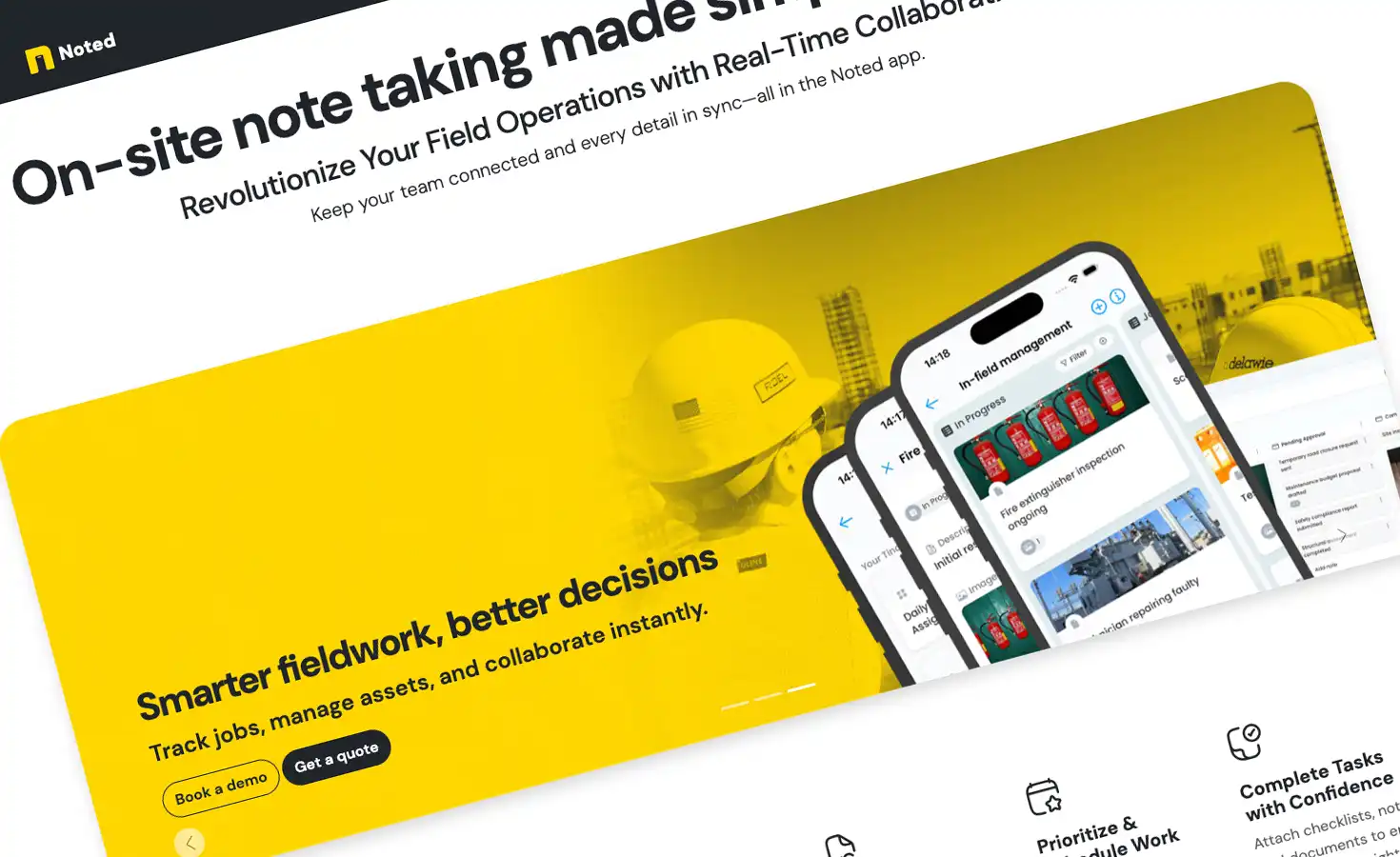
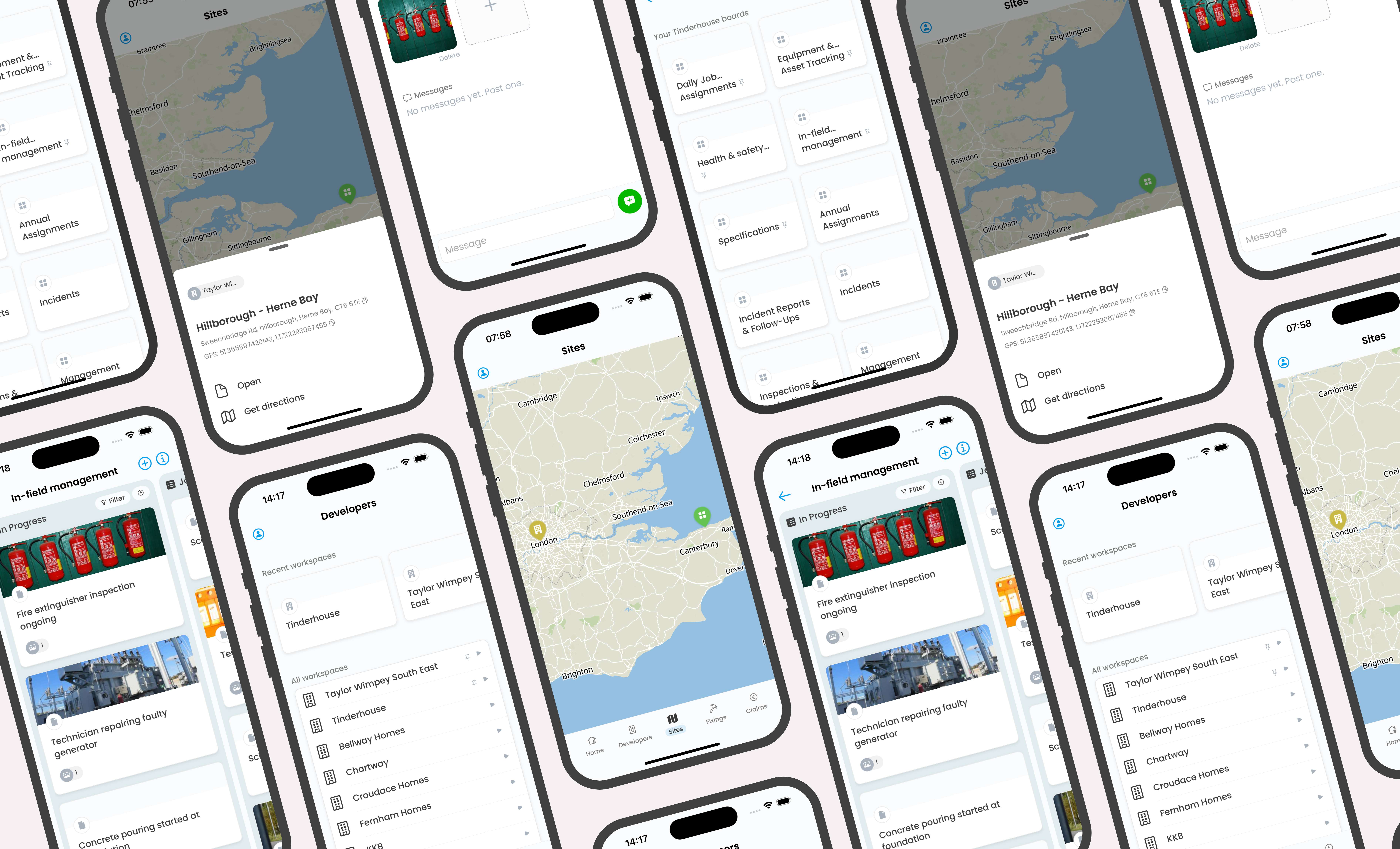
Noted: A comprehensive SaaS solution combining branded mobile apps with a powerful web-based admin portal, enabling construction teams to streamline field operations and real-time collaboration.
Tinderhouse operates Noted, our own SaaS platform serving construction companies and field service organisations across the UK. This positions us differently from agencies who only build custom applications. We understand field operations at the product level because we manage our own platform with live clients, recurring revenue, and ongoing operational responsibility.
Noted provides branded mobile applications for iOS and Android, delivering field teams with company-specific tools rather than shared multi-tenant platforms. Each client organisation receives apps distributed through official app stores under their own branding, managed entirely through Noted's subscription service. Monthly pricing ranges from £375 to £890, supporting organisations from small contractors to enterprise operations.
The platform architecture demonstrates multi-tenant SaaS infrastructure at scale, where complete data isolation between clients is essential. Construction firms using Noted hold confidence that their project information, client data, and operational details remain entirely separate from other organisations. This is not theoretical knowledge but production infrastructure we maintain and support daily.
Our work on Noted taught us the realities of field worker app development that cannot be learned through single projects. We discovered how battery drain from constant GPS polling affects all-day usage. We learned which data synchronisation strategies prevent conflicts when multiple team members edit shared projects offline. We identified which UI patterns work when field workers wear safety gloves or operate in direct sunlight. These insights now inform every custom field worker application we build.
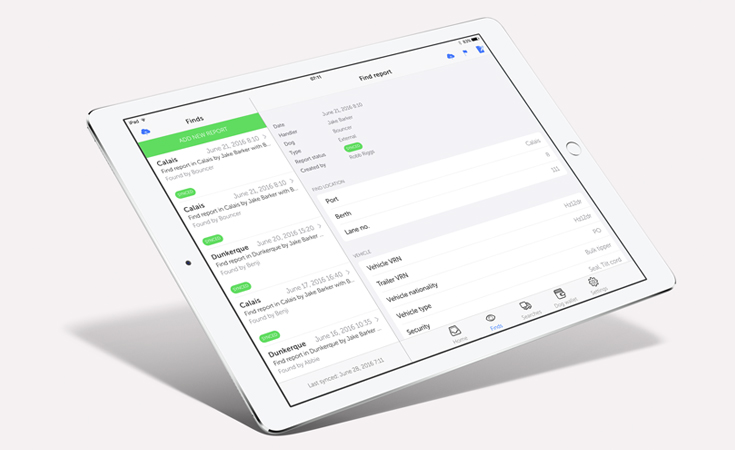
Wagtail: A rugged, offline-capable tablet application and management system for canine search handlers operating at international border crossings.
Since 2016, we have maintained the Wagtail application serving UK Border Force canine search handlers operating at international ferry ports between the UK and France. This partnership represents one of the longest-running field worker app deployments in our portfolio, with continuous operation across 10 years and ongoing active use.
The Wagtail application replaced paper-based processes for documenting security searches, canine welfare tracking, and shift reporting. Handlers work in challenging conditions including the holds of ships, remote port perimeters, and night operations where connectivity is sporadic or absent. The application must function reliably regardless of network availability, with 100% data integrity essential for security compliance and legal audit trails.
We built the system as a rugged iPad application with high-contrast UI legible in low-light conditions and interface elements large enough to operate whilst wearing gloves. Find reports include vehicle type selection and visual grid location marking, digitising previously manual processes. The application maintains comprehensive medical history, condition checks, and training logs for every canine team, ensuring operational readiness meets required standards.
Behind the field application, we implemented a secure ExpressionEngine CMS acting as the administrative control system. Management uses this portal to configure handler accounts, manage dog profiles, and monitor medical records. The centralised hub aggregates data synced from all devices, providing real-time operational summaries and detailed CSV exports for external stakeholders.
The project achieved 100% digital adoption across all port handlers, eliminating paper logs entirely. Management receives sync notifications as soon as handlers reach connectivity, dramatically reducing reporting lag from days to minutes. The system provides a permanent, searchable history of all searches and finds, essential for legal and security compliance. This level of mission-critical reliability, maintained continuously for a decade, demonstrates our capability to deliver when failure is not an option.
D & D Carpentry: Mobile workforce management solution streamlining communication, job allocation and administration for construction sub-contractors across multiple sites.
Construction companies operate across dispersed worksites with sub-contractors moving between multiple locations daily. D&D Carpentry needed digital transformation to eliminate paper-based timesheets, streamline compliance documentation, and accelerate payment processing for field workers.
We deployed a customised version of our Noted platform, providing native iOS and Android applications built on a cross-platform framework. This approach ensured consistent functionality across devices whilst maintaining native performance and offline capabilities critical for construction environments. Field workers access job lists, submit timesheets, upload compliance photography, and communicate with office staff without requiring internet connectivity.
The system extends beyond basic time tracking. Construction-specific modules include snag lists for documenting defects with photo evidence, fire safety compliance with digital authentication for fire door and fire sock installations, site maps providing visual job allocation, fixings orders streamlining material requests, and sub-contractor claims with automated processing to accelerate payments.
Office administrators manage operations through a web-based portal built with ExpressionEngine and PHP, providing complete control over job allocation, user management, customer care ticketing, and reporting. The comprehensive administration interface gives visibility into field operations whilst maintaining workflow flexibility for different project types.
Results included eliminated payment delays through streamlined claims processing, improved communication between office and field teams, enhanced compliance through digital fire safety documentation, reduced administrative burden from paper process digitisation, and increased workforce productivity with offline functionality maintaining operations in all connectivity conditions.
Retail merchandising: Bee-Vizible field operations
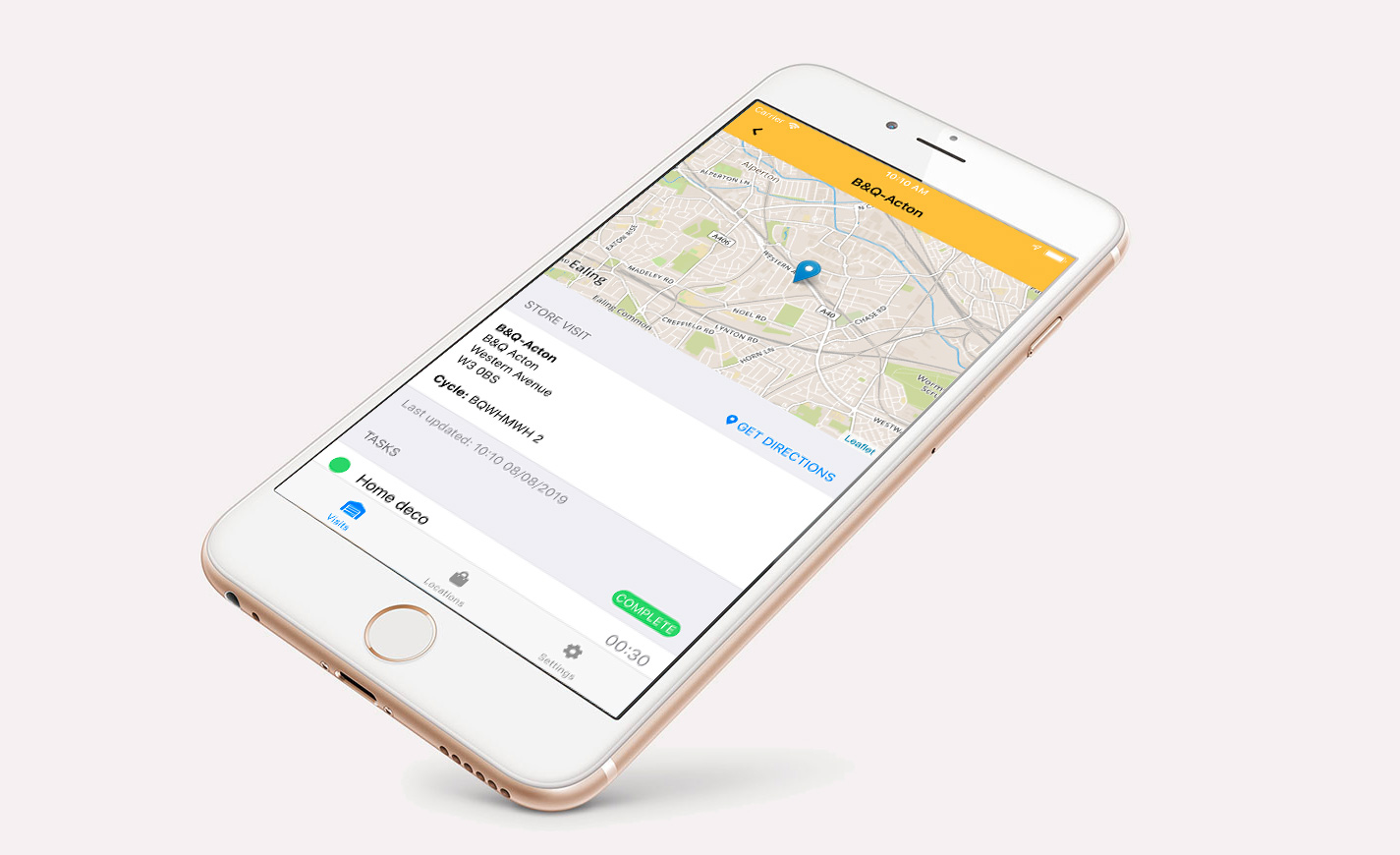
Bee-Vizible: A comprehensive data capture and reporting ecosystem featuring a native mobile application for field merchandisers and a sophisticated web-based analysis portal.
Retail field marketing faces unique technical challenges. Merchandisers work in large supermarkets where mobile signals drop out in storage areas, steel-framed buildings create connectivity dead zones, and time pressures demand rapid data capture without technical friction. Bee-Vizible required a platform transforming how brands monitor retail presence across hundreds of locations.
We developed native applications for iOS and Android with sophisticated offline-first architecture. The platform allows merchandisers to complete entire workflows without internet connection, capturing high-quality photography, recording stock tallies, and documenting display compliance. All data stores locally on the device, queuing for automatic synchronisation once stable connectivity is detected.
The technical implementation prioritised battery efficiency alongside offline capability. Merchandisers conduct multiple store visits daily, requiring applications that function reliably throughout extended shifts without draining device batteries. We optimised code to reduce energy consumption whilst maintaining data capture quality, techniques proven through production deployment handling hundreds of concurrent users.
A companion web portal serves as command centre for field operations, built with focus on high-performance data management. Managers assign tasks, track merchandiser locations, and review incoming data in real-time. Custom dashboards provide high-level summaries and detailed analytics, enabling filtering by store, region, or specific product lines.
Since deployment in 2019, Bee-Vizible has transformed operations for Gem Merchandising. Clients now receive in-store data and photography within minutes of visit completion rather than days. The robust offline synchronisation mechanism eliminated data loss, providing complete and accurate records for every store visit. Merchandisers report significant time reduction for completing store reports, allowing more visits per day. The professional reporting portal became a key competitive advantage, helping secure and retain high-profile retail brands.
Field worker app development creates mobile software for teams operating outside traditional office environments. This encompasses diverse industries including construction site management, retail field merchandising, utility maintenance operations, healthcare home visiting, government field operations, and facilities management. The common requirement is reliable functionality where connectivity cannot be assumed.
The technical foundation is offline-first architecture. Unlike consumer applications assuming constant connectivity, field worker apps must queue data locally, handle synchronisation conflicts when multiple users edit shared resources offline, maintain data integrity without server validation, and provide clear user feedback about sync status. These capabilities require fundamentally different architectural approaches from standard mobile development.
Beyond offline functionality, field worker applications typically integrate GPS tracking without excessive battery drain, photo capture with location and timestamp metadata, digital forms replacing paper checklists, real-time team communication when online, and admin portals for office staff visibility. The technical challenge is combining these features whilst maintaining all-day battery life and intuitive interfaces usable whilst wearing protective equipment.
Our work demonstrates this across operational contexts. The Wagtail Border Force application operates on iPads in all weather conditions, often at night, with interfaces legible in low-light and controls large enough for gloved operation. The D&D Carpentry platform handles sub-contractor timesheets, fire safety compliance, and payment processing across remote construction sites. The Bee-Vizible system processes high-resolution photography and stock data in retail environments with unreliable signals. The Noted SaaS platform serves multiple organisations simultaneously with complete data isolation and branded applications for each client.
Why businesses choose Tinderhouse for field worker technology
Organisations select us because we have proven capability across government security operations, commercial field services, and our own SaaS product platform.
Validated at Government Level: We have maintained the Wagtail application serving UK Border Force operations for 10 years continuously, handling mission-critical security documentation at international ferry ports. This partnership demonstrates our capability to deliver where reliability is essential and failure creates security risk. Government deployment at this level requires technical standards, security protocols, and operational reliability that cannot be compromised.
Product-Level Understanding: We operate Noted, our own field worker SaaS platform serving construction companies across the UK. This positions us beyond typical development agencies who only build custom applications. We manage live clients, recurring revenue, ongoing support, and continuous platform evolution. This product experience informs every custom application we build because we understand field operations from the operator perspective, not just the developer perspective.
Multi-Industry Deployment: Our work spans construction workforce management (D&D Carpentry), retail field merchandising (Bee-Vizible), government security operations (Wagtail/Border Force), and SaaS platform operations (Noted). This breadth demonstrates adaptability whilst maintaining core technical expertise in offline-first architecture, ExpressionEngine backend systems, and rugged environment optimisation.
Offline-First Specialists: All four major field worker projects prove our specialisation in offline-first architecture. The Wagtail application has processed thousands of shift reports and security finds across 10 years without data loss despite operating in environments with no connectivity. The Noted platform handles construction site data capture in basements and remote locations. The Bee-Vizible system maintains 100% data integrity in retail stores with connectivity dead zones. This is not theoretical capability but production-proven reliability.
Long-Term Operational Commitment: The Wagtail Border Force application has operated continuously since 2016, demonstrating our commitment extends beyond project delivery into long-term product stewardship. The Noted platform requires ongoing maintenance, feature development, and client support. We build systems designed for sustained operation, not just successful launches.
The field worker app development process
Our process adapts MVP development methodology to field operations requirements, prioritising offline functionality and rugged environment reliability from project inception.
Discovery and Requirements Definition
We begin by understanding the operational context where your field teams work. For D&D Carpentry, this meant understanding construction site environments including basements with no signal, steel-framed buildings blocking connectivity, and rural locations requiring GPS without excessive battery drain. For Bee-Vizible, we mapped retail store environments identifying connectivity dead zones in storage areas and time pressures requiring rapid data capture. For Wagtail Border Force, we understood security protocols, rugged operational conditions, and compliance requirements for audit trails.
This phase identifies which features are essential for launch versus future iterations. When we developed Noted, we prioritised core shift plotting and job allocation before expanding to comprehensive medical records and training logs. This MVP approach ensures the application delivers immediate operational value whilst establishing scalable technical foundation.
Technical Architecture and Offline Strategy
We design the data synchronisation strategy determining how offline edits merge when connectivity returns. For multi-user scenarios where team members edit shared resources offline, this requires conflict resolution logic ensuring no data loss. The Noted platform implements intelligent merge strategies handling scenarios where multiple field workers update the same project simultaneously from different locations.
Battery optimisation receives equal priority with offline functionality. Field workers cannot charge devices mid-shift, requiring applications that function reliably throughout 8-12 hour operational periods. We implement adaptive GPS polling adjusting location update frequency based on movement patterns, efficient photo compression maintaining quality whilst reducing storage requirements, and background synchronisation minimising active screen time.
Native Development and Admin Portal
We build using native iOS and Android development or cross-platform frameworks depending on requirements. The Wagtail Border Force application uses native iOS development optimised specifically for iPad devices. The D&D Carpentry and Bee-Vizible use a hybrid development with native-like performance ensuring optimal performance for high-frequency photo capture.
Parallel to mobile development, we build administration portals using ExpressionEngine CMS, PHP, and MySQL. These provide office staff with comprehensive control over user management, job allocation, reporting, and operational visibility. The portals integrate with mobile applications through REST API architecture enabling flexible scaling and future feature expansion.
Deployment and Long-Term Support
Following launch, we provide technical support necessary for operational stability. We monitor synchronisation performance identifying edge cases where conflict resolution requires refinement. We manage technical debt documenting trade-offs made during development and planning time to address them as the user base expands. Our 10-year partnership with Border Force and ongoing Noted platform operations demonstrate commitment extending beyond project delivery into sustained product stewardship.
Common mistakes to avoid
In our experience building field worker applications across government operations, construction, and retail, several pitfalls consistently derail projects.
Treating Offline as Optional: Many development teams build field worker apps assuming connectivity as the default state with offline as fallback. This produces applications that fail precisely when field workers need them most. When Bee-Vizible merchandisers enter retail store storage areas, connectivity drops immediately. When D&D Carpentry sub-contractors work in building basements, there is no signal to "fall back" to. When Border Force handlers operate in ship holds, connectivity is absent for hours. Offline-first architecture is not a feature but the foundation.
Ignoring Battery Constraints: Constant GPS polling and screen usage drain batteries rapidly. Field workers cannot pause their jobs to charge devices. The Wagtail Border Force application must function reliably throughout full shifts including night operations. The D&D Carpentry platform serves construction workers on site from morning through evening. We implement adaptive polling rates, efficient background synchronisation, and screen timeout strategies ensuring devices last full operational periods.
Oversimplifying Synchronisation Logic: Data synchronisation appears straightforward until multiple field workers edit shared resources offline simultaneously. Without proper conflict resolution, last-write-wins strategies cause data loss. Time-based merging fails when device clocks drift. Field-level merging becomes complex when related data spans multiple tables. We learned these lessons through production deployments handling thousands of concurrent users, not theoretical architecture discussions.
Neglecting Rugged Environment Requirements: Border Force handlers wear gloves making small touch targets unusable. Construction sites present direct sunlight washing out low-contrast interfaces. Retail merchandisers work in crowded store aisles where accidental touches are frequent. These operational realities require deliberate UI design decisions that office-optimised applications ignore.
Underestimating Admin Portal Complexity: Office staff require comprehensive visibility into field operations including user management, job allocation, progress tracking, reporting, and communication. The administrative interface often represents equal complexity to the mobile application. We use ExpressionEngine CMS providing flexible content management, robust access control, and efficient database operations for handling high-volume field data.
Missing Security Requirements: Government field operations like Border Force deployments require security standards exceeding typical business applications. Data encryption, access control, audit logging, and compliance documentation are not optional enhancements but essential requirements. Our 10-year partnership with Border Force demonstrates our understanding of these standards.
Cost and timeline
Investment for field worker app development ranges from £15,000 to £120,000 depending on complexity, offline requirements, and administrative portal sophistication. Projects with basic offline data capture and simple admin interfaces occupy the lower range. Systems requiring multi-tenant SaaS architecture, complex synchronisation logic, and comprehensive reporting occupy the higher range.
Our Noted SaaS platform demonstrates this spectrum. Monthly subscriptions range from £375 to £890, reflecting different feature sets and user limits. Custom development costs reflect similar complexity factors including the number of concurrent users the system must support, sophistication of offline conflict resolution required, administrative portal feature requirements, integration with existing business systems, and security standards for sensitive operations.
Timeline typically spans 8 to 16 weeks from initial discovery to App Store submission. The Wagtail Border Force application launched within this timeframe despite government security requirements. The D&D Carpentry deployment used our existing Noted platform as foundation, enabling rapid customisation and deployment. Projects requiring completely custom architecture or complex integrations extend toward the longer timeline.
We provide transparent cost factors based on your specific requirements during discovery phase. For reference, a basic field worker app with offline data capture, photo evidence, and simple admin portal typically requires 8-12 weeks and £25,000-£45,000 investment. A comprehensive platform with multi-tenant architecture, complex workflow automation, and enterprise-grade reporting requires 12-16 weeks and £60,000-£120,000 investment.
Is this right for you?
Our approach to field worker app development works well if you:
Require technical partners with proven experience delivering for UK Government operations (Border Force), operating your own SaaS platform (Noted), and scaling across construction and retail sectors
Understand that offline-first architecture is essential, not optional, for field teams working in challenging environments
Value long-term operational stability over rapid deployment, as demonstrated by our 10-year Border Force partnership
Need expertise in rugged environment optimisation including battery efficiency, glove-friendly interfaces, and low-light visibility
Recognise that ExpressionEngine administration portals provide the flexibility and security required for field operations management
This may not be right if:
You require consumer-facing social features or gamification rather than operational reliability
Your budget prioritises low initial cost over long-term technical debt and operational stability
How Tinderhouse works
We operate as extension of your team using agile methodology with two-week sprints providing clear deliverables and regular progress visibility. Our base is the Innovation Centre in Canterbury and offices in London, providing the stability that comes from over 20 years of successful delivery.
We integrate the same technical approaches proven across Border Force security operations, Noted SaaS platform operations, construction workforce management, and retail field merchandising. This means your field worker application benefits from production-tested offline synchronisation strategies, battle-hardened conflict resolution logic, and battery optimisation techniques refined across thousands of device deployments.
Our team includes specialists in native iOS development, native Android development, cross-platform frameworks, ExpressionEngine CMS implementation, REST API architecture, and offline-first data synchronisation. This breadth ensures we select appropriate technologies for your operational requirements rather than forcing every project into identical technical approaches.
We maintain ongoing relationships with clients beyond project launch. Our 10-year partnership with Border Force demonstrates commitment to long-term success, not just successful deployments. The Noted platform requires continuous evolution responding to client feedback, operating system updates, and emerging field operations requirements. We build systems designed for sustained operation and ongoing improvement.
Ready to Discuss Your Project?
We've helped businesses across the UK turn technical challenges into working solutions. Whether you're at the planning stage or ready to start development, we're here to provide honest advice and clear guidance.
Scalable software solutions designed to integrate with complex organisational workflows and legacy systems.
Explore more →
Frequently asked questions
Everything you need to know about working with Tinderhouse, from costs and timelines to our process and expertise.
Field worker app development creates mobile applications for teams operating outside traditional office environments, including construction sites, retail locations, utility maintenance, healthcare home visits, government field operations, and facilities management. These applications must function reliably where internet connectivity cannot be assumed.
The technical foundation is offline-first architecture, where applications work entirely without connectivity. Data is captured locally on the device, queued for transmission, and synchronised automatically once connection is re-established. This is not a backup feature but the primary operational mode.
We have built field worker applications across three distinct contexts. For UK Border Force canine search handlers, we delivered applications operating continuously for 10 years at international ferry ports. For D&D Carpentry, we built construction workforce management handling timesheets, fire safety compliance, and payment processing. For Bee-Vizible, we created retail merchandising platforms capturing stock data in large stores where mobile signals drop out. Additionally, we operate Noted, our own field worker SaaS platform serving construction companies across the UK.
Offline functionality requires fundamentally different architecture from standard mobile applications. When a field worker completes a task, takes a photograph, or updates a record without connectivity, the application stores this data locally on the device using SQLite databases or similar local storage mechanisms.
All changes are queued in a synchronisation buffer with metadata tracking the order of operations, user identity, and timestamp. When connectivity returns - whether through WiFi at the office, mobile data on the journey home, or sporadic signal on site - the application automatically initiates background synchronisation.
The technical challenge is conflict resolution when multiple users edit shared resources offline simultaneously. We implement intelligent merge strategies that preserve all changes whilst maintaining data integrity. For example, if two D&D Carpentry sub-contractors update different fields on the same project whilst offline, the system merges both changes correctly rather than overwriting one with the other.
Our Wagtail Border Force application has processed thousands of shift reports and security finds across 10 years using this approach, achieving 100% data integrity despite operating in environments with no connectivity for extended periods.
Our expertise stems from three distinct proof points that most development agencies cannot claim.
UK Border Force Operations (10 Years): Since 2016, we have maintained mission-critical field operations software for UK Border Force canine search handlers operating at international ferry ports. This partnership demonstrates our capability to deliver government-grade security, 100% data integrity, and sustained operational reliability where failure creates security risk. Few UK technology companies can claim decade-long continuous deployment with government security operations.
Our Own SaaS Platform: We operate Noted, our own field worker SaaS platform serving construction companies across the UK with monthly pricing from £375 to £890. This positions us beyond typical agencies who only build custom applications. We understand field operations at the product level because we manage live clients, recurring revenue, and ongoing platform responsibility. Product-level experience informs every custom application we build.
Multi-Industry Deployment: Our work spans construction workforce management (D&D Carpentry with timesheets and fire safety compliance), retail field merchandising (Bee-Vizible with offline store audits), government security (Border Force with classified operations), and commercial SaaS operations (Noted platform). This breadth demonstrates adaptability whilst maintaining core technical expertise in offline-first architecture and ExpressionEngine backend systems.
Photo evidence capture is essential for field worker applications across construction compliance, retail merchandising, and government operations. However, implementing this reliably requires addressing several technical challenges.
Photographs must include location stamps (GPS coordinates), timestamp metadata, and user identification embedded in image metadata. For D&D Carpentry fire safety compliance, this provides verifiable audit trails proving when and where fire doors were authenticated. For Bee-Vizible retail audits, location-stamped photography proves merchandisers visited specific stores at required times.
The technical challenge is handling high-resolution images whilst maintaining offline functionality and battery efficiency. A field worker capturing 50-100 photographs during a shift generates substantial data requiring local storage until synchronisation. We implement efficient compression maintaining quality whilst reducing file sizes, progressive upload strategies that synchronise images incrementally as bandwidth allows, and thumbnail generation for quick preview in admin portals whilst full resolution images upload in background.
The Bee-Vizible platform processes high-resolution photography across hundreds of retail locations daily, maintaining 100% data integrity despite store environments with unreliable connectivity. The Wagtail Border Force application has captured thousands of security-related photographs across 10 years without data loss.
Investment ranges from £15,000 to £120,000 depending on several key factors including offline synchronisation complexity, administrative portal requirements, number of concurrent users, integration with existing systems, and security standards for sensitive operations.
Basic Field Worker App (£15,000-£35,000): Single-tenant deployment with straightforward offline data capture, photo evidence, basic forms, and simple admin portal. Timeline 8-10 weeks. Suitable for small teams (5-20 users) with simple workflows.
Advanced Field Operations Platform (£35,000-£70,000): Multi-user deployment with complex offline conflict resolution, comprehensive admin portal, GPS tracking, custom reporting, and integration with existing business systems. Timeline 10-14 weeks. Suitable for medium organisations (20-100 users) with sophisticated workflows.
Enterprise/Government Grade System (£70,000-£120,000): Multi-tenant architecture with complete data isolation, government-grade security standards, sophisticated workflow automation, comprehensive analytics, and enterprise integrations. Timeline 12-16 weeks. Suitable for large organisations or government operations requiring highest reliability and security.
Our Noted SaaS platform demonstrates this spectrum with monthly subscriptions from £375 to £890 reflecting different feature sets and user limits. Custom development costs reflect similar complexity factors with the advantage of complete ownership and no recurring subscription fees.
The terms "field worker apps" and "field service apps" are often used interchangeably, but they can indicate different operational contexts and user expectations.
Field Worker Apps typically emphasise the human aspect of mobile work, focusing on teams working in challenging environments including construction sites, retail locations, government operations, and utility maintenance. The terminology suggests applications built for frontline workers who may not be technology-focused, requiring intuitive interfaces, rugged environment optimisation, and reliable offline functionality. Our Border Force, D&D Carpentry, and Bee-Vizible projects exemplify this category.
Field Service Apps often indicate more corporate or enterprise software contexts, emphasising service delivery, customer scheduling, and business process automation. The terminology suggests applications built for service organisations managing technician dispatch, work order completion, and customer relationship management. These systems typically integrate with enterprise resource planning (ERP) and customer relationship management (CRM) platforms.
In practice, the technical requirements overlap substantially. Both require offline-first architecture, GPS tracking, photo evidence capture, and administrative visibility. Both serve mobile teams working in environments without reliable connectivity. The distinction is often more about market positioning and user expectations than fundamental technical differences.
Our approach addresses both contexts. The terminology "field worker" emphasises our understanding of challenging operational environments and frontline user needs, whilst our technical capability serves enterprise field service requirements including the multi-tenant SaaS architecture demonstrated by our Noted platform.
Yes. Construction sites present some of the most demanding environments for mobile applications. Our D&D Carpentry deployment demonstrates specific solutions for construction operational requirements.
Connectivity Challenges: Construction sites frequently exist in locations with poor mobile coverage - rural areas, steel-framed buildings blocking signals, basement work with no connectivity. Our offline-first architecture ensures sub-contractors complete timesheets, document work completion, and capture compliance photography regardless of signal availability.
Fire Safety Compliance: The D&D Carpentry platform includes digital authentication for fire door and fire sock installations, replacing paper-based documentation with verifiable digital records including location stamps and photographic evidence. This compliance documentation meets building regulation requirements whilst eliminating administrative overhead of manual record-keeping.
Snag Lists and Defect Management: Field workers document defects with photo evidence, location data, and severity classification. Office staff track remedial work completion through the admin portal, ensuring nothing falls through administrative gaps.
Sub-Contractor Payment Processing: Digital timesheet capture with photographic proof of work completed accelerates payment processing. The D&D Carpentry deployment eliminated payment delays that previously frustrated sub-contractors and created administrative burden.
Site Maps and Job Allocation: Visual site representation enables intuitive job allocation and progress tracking, providing office staff with clear understanding of which areas have been completed and where work remains outstanding.
Our 10-year partnership with UK Border Force demonstrates our capability to deliver government-grade security standards for sensitive field operations.
The Wagtail application handles security-critical data including shift reports from international border crossings, find reports documenting security searches, and operational intelligence from canine teams. This requires security protocols exceeding typical business applications including data encryption both at rest (when stored on devices) and in transit (during synchronisation), secure authentication with role-based access control, comprehensive audit logging tracking all user actions for compliance review, and data retention policies meeting government standards for sensitive operations.
Government field operations also require careful consideration of data sovereignty and hosting location. The Wagtail backend infrastructure operates on UK-based servers ensuring data never leaves UK jurisdiction, essential for compliance with government security protocols.
Additionally, the application must function in classified or restricted environments where standard cloud platforms are prohibited. The offline-first architecture ensures handlers can complete their full operational workflow without requiring real-time connectivity to cloud services, with data synchronisation occurring only when devices reach approved network zones.
Our continuous 10-year deployment demonstrates not just initial security implementation but sustained security maintenance including regular security updates, penetration testing, vulnerability assessment, and compliance with evolving government security standards. This level of ongoing commitment distinguishes serious government technology partners from agencies treating security as a one-time implementation task.
Yes. Retail environments present unique connectivity challenges that our Bee-Vizible deployment addresses specifically for field merchandising operations.
Connectivity Dead Zones: Large supermarkets and retail stores frequently have areas where mobile signals drop out completely - rear storage areas, steel-framed sections, basement stockrooms. Merchandisers cannot pause their audits when signal disappears. The Bee-Vizible platform captures stock data, shelf photography, and compliance documentation entirely offline, synchronising automatically when connectivity returns.
High-Volume Photography: Retail audits require capturing multiple high-resolution photographs per visit documenting shelf displays, promotional placements, and competitor positioning. The technical challenge is handling these large files whilst maintaining battery efficiency throughout multi-store visit days. We implement efficient compression maintaining quality whilst reducing storage requirements and progressive upload strategies synchronising images as bandwidth allows.
Rapid Data Capture: Merchandisers work under time pressure completing multiple store visits daily. The interface prioritises speed with one-handed operation, intuitive navigation, and minimal typing requirements. The Bee-Vizible platform significantly reduced time required for store report completion compared to previous paper-based processes.
Real-Time Client Reporting: Despite offline field capture, clients receive data within minutes once merchandisers reach connectivity. The Bee-Vizible deployment transformed reporting lag from days (with paper-based processes) to minutes (with digital capture and automatic synchronisation). Custom dashboards provide high-level summaries and detailed analytics enabling filtering by store, region, or product line.
Field worker applications require comprehensive administrative portals providing office staff with operational visibility and control. The mobile application is only half of the solution - without robust admin systems, organisations cannot effectively manage field operations at scale.
User Management: Office administrators onboard new field workers, configure access permissions, manage team assignments, and deactivate departing users. For our Noted platform serving multiple construction companies, this includes tenant-level isolation ensuring complete data separation between client organisations.
Job Allocation and Scheduling: Managers create projects, assign tasks to specific field workers, set deadlines, and track completion status. The D&D Carpentry platform provides visual site maps enabling intuitive job allocation. The Wagtail Border Force system manages shift assignments for handlers across multiple port locations.
Real-Time Progress Monitoring: As field workers complete tasks and synchronise data, admin portals provide real-time updates. Managers see which jobs are in progress, which have been completed, and which are overdue. The Bee-Vizible platform provides live visibility into merchandiser locations and store visit status.
Reporting and Analytics: Comprehensive data export capabilities enable integration with existing business intelligence tools. The Wagtail system provides CSV exports of all security searches for external stakeholder reporting. The Noted platform generates client reports, timesheet summaries, and compliance documentation.
Communication Tools: Integrated messaging enables office staff to communicate with field teams without requiring separate applications. Push notifications alert field workers to new job allocations or urgent messages.
We build these admin portals using ExpressionEngine CMS, PHP, and MySQL, providing flexible content management, robust access control, and efficient database operations for handling high-volume field data. The Wagtail, D&D Carpentry, Bee-Vizible, and Noted platforms all demonstrate this architecture at production scale.