Established 2003. Still delivering.

Public Sector & Civic

Trusted digital services for government, local authorities, and democratic engagement.
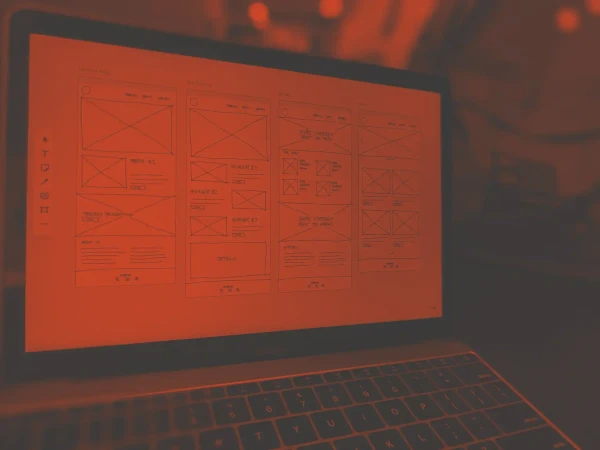
Tinderhouse: Specialist Public Sector & Civic UK for startups and enterprise teams

Tinderhouse provides specialist software engineering for the Public Sector, where accessibility, security, and adherence to strict standards are the core requirements. We recognise that civic technology must serve every citizen equally, requiring a deep commitment to GDS (Government Digital Service) standards and robust data protection. For over two decades, we have partnered with public bodies, NGOs, and local authorities in London, Kent, and across the UK to modernise legacy systems and launch inclusive digital services. From secure data collection portals for the Hansard Society to high-traffic civic platforms for Kent County Council, our team delivers the technical stability and operational scale that the public sector demands. We focus on building transparent, user-centric systems that enhance democratic engagement and streamline essential public services.

We deliver secure, accessible, and standards-compliant software for NGOs and public bodies, designed to handle complex datasets and high-traffic civic interactions.

Discuss your project
Our team is ready to begin new projects.

Our services

Government & Public Sector App Development

Secure, accessible digital services built to meet GDS standards and user needs

Explore more →

How we work with government, councils, and civic organisations

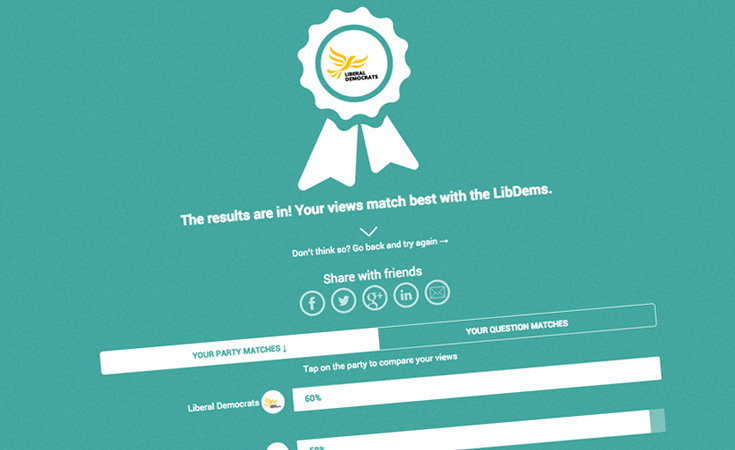
Delivering software for government and civic organisations carries constraints that most agencies never encounter. Procurement processes, GDS assessments, accessibility audits, and the political sensitivity of public-facing data all shape the technical decisions from day one. Tinderhouse has been building for this sector since 2003, and the work on the VoteMatch platform for the 2015 General Election, handling over 100,000 concurrent users on election night, is a clear example of what that experience produces at scale.

The public sector has specific expectations for how digital services are built, tested, and maintained. Website development for councils, NGOs, and government bodies means building to GDS design principles from the outset, not retrofitting compliance after launch.

Accessible, standards-compliant public services Every public-facing website must meet WCAG 2.2 Level AA as a minimum. This is not a checkbox exercise. It means designing navigation structures that work with screen readers, ensuring form inputs are properly labelled, and testing with real assistive technologies rather than relying on automated scanners alone. Tinderhouse builds accessibility into the information architecture from the first wireframe, not as a remediation task at the end of a project.

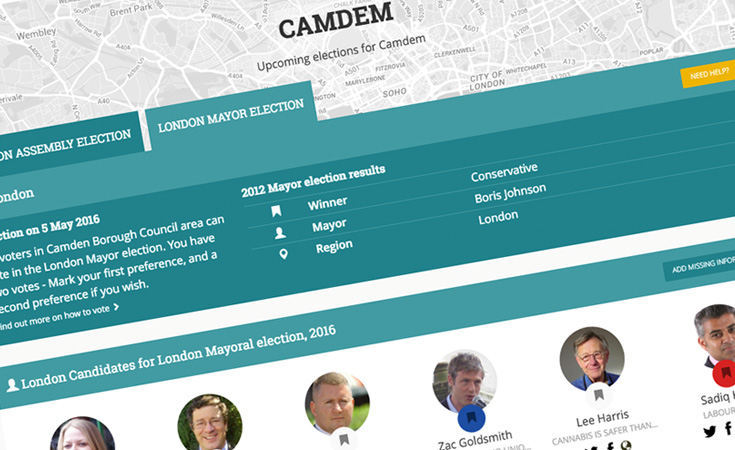
Content-rich portals for public engagement Council and civic websites often serve dozens of distinct user groups, from residents checking planning applications to professionals submitting statutory returns. The Democratic Dashboard for the London School of Economics is a good example: a multi-phased voter information portal that had to present complex democratic data in a format that was genuinely usable by non-specialist audiences. That kind of information design requires understanding the subject matter, not just the technology.

Performance under public scrutiny Public sector launches attract attention. A council website that goes down on the day a controversial planning decision is published creates a political problem, not just a technical one. Tinderhouse builds for the traffic spikes that civic services inevitably face, using UK-based cloud hosting and caching strategies designed for unpredictable demand patterns.

Explore more →

Many civic services need to work on low-specification devices, in areas with poor connectivity, and for users who will not install a native app.Progressive web app development is particularly well suited to this sector because it removes the barrier of app store distribution while still delivering reliable, offline-capable functionality.

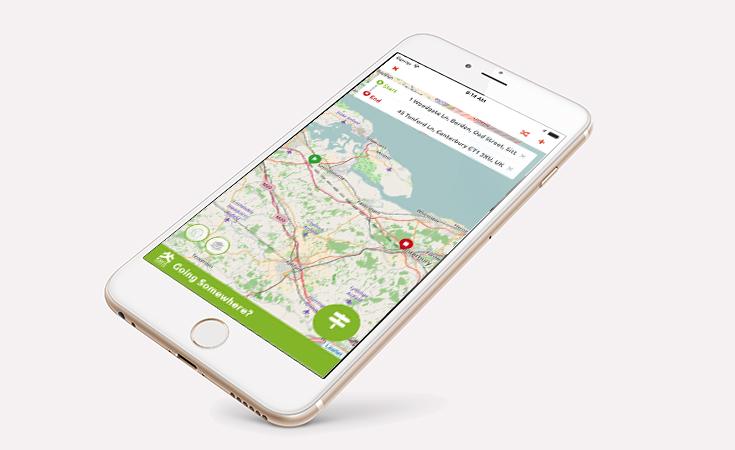
Citizen-facing tools without app store friction A council providing a journey planner, waste collection lookup, or service request form benefits from progressive web app architecture. Users access the service through a browser, and the app can be saved to a home screen without requiring a download. The Kent Connected project for Kent County Council demonstrated the value of multi-platform delivery for promoting sustainable travel across the county, reaching users across devices without mandating a specific platform.

Offline reliability for fieldworkers and outreach teams Public sector staff working in community settings, from housing officers to outreach workers, frequently operate in areas where mobile signal is unreliable. A progressive web app can cache essential data locally and sync when connectivity returns, ensuring that a housing inspection form or safeguarding report is never lost because of a dropped signal.

Lower maintenance, broader reach Maintaining separate native apps across iOS and Android adds cost and complexity that many public bodies cannot justify. A single progressive web app codebase reduces the ongoing maintenance burden while still meeting the accessibility and performance standards that the sector requires.

Explore more →

Government departments and large public bodies operate enterprise-scale systems with complex user hierarchies, legacy integrations, and strict data governance requirements. Enterprise app development in this context means building software that can operate within existing IT estates, pass security assessments, and serve thousands of internal and external users simultaneously.

Legacy system integration Many councils and NHS trusts still rely on databases and back-office systems built decades ago. Replacing them entirely is often not politically or financially viable. Tinderhouse specialises in building secure API layers that bridge the gap between legacy infrastructure and modern user-facing applications, allowing organisations to modernise incrementally without risking the integrity of historical public data.

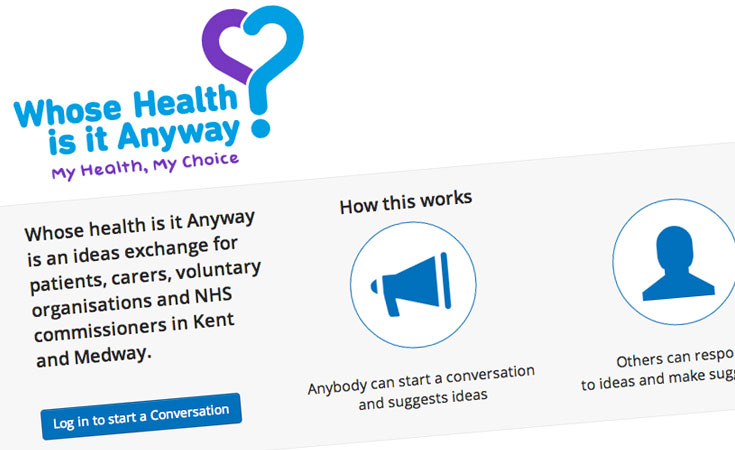
Multi-stakeholder platforms Public sector platforms frequently serve multiple user types with different permission levels: commissioners, service providers, citizens, and oversight bodies. The NHS Patients in Control platform is a direct example, a collaborative digital service connecting patients and NHS Commissioners across Kent and Medway, with each group accessing different views of shared data under strict governance controls.

Security and compliance at scale Enterprise systems handling citizen data must comply with UK GDPR, and in many cases Cyber Essentials or Cyber Essentials Plus certification is a procurement prerequisite. Tinderhouse builds with a Secure by Design approach: end-to-end encryption, penetration testing, and UK-based hosting are standard, not optional extras.

Explore more →

Administrative processes in government and civic organisations are frequently manual, repetitive, and resource-intensive. AI and intelligent automation offers practical opportunities to reduce that burden, but the constraints around public sector data mean the implementation must be carefully governed.

Document processing and classification Councils handle enormous volumes of correspondence, applications, and statutory documents. Intelligent automation can classify incoming submissions, extract key data fields, and route items to the correct team without manual triage. The efficiency gains are significant, but the system must be transparent and auditable, particularly where automated decisions affect citizens' rights or entitlements.

Citizen service automation Routine enquiries about council tax, bin collection schedules, or planning application status can be handled by AI-powered assistants that operate within strict guardrails. The key requirement is accuracy: a citizen receiving incorrect information from an automated service erodes trust in the institution. Tinderhouse builds these systems with human oversight loops and clear escalation paths to live support.

Data sovereignty and transparency Public bodies have a particular obligation to explain how automated systems make decisions. Any AI implementation must be explainable, auditable, and compliant with the public sector's data sovereignty requirements. This is not an afterthought; it shapes the architecture from the start.

Explore more →

Public sector organisations manage vast volumes of policy documents, legislation, procedural guidance, and historical records. Retrieval-augmented generation (RAG) systems make this information genuinely searchable and usable, without requiring staff to know which document contains the answer they need.

Policy and guidance retrieval A council officer answering a question about planning law, housing regulations, or social care eligibility currently has to search across multiple document repositories, each with its own structure and terminology. A RAG system indexes these sources and returns accurate, cited responses drawn from the authoritative documents. The citation is critical: staff need to verify the source, and the system must never present generated text as if it were established policy.

Parliamentary and democratic research Tinderhouse's work with the Hansard Society on tracking statutory instruments demonstrates how structured retrieval systems serve democratic accountability. A RAG approach applied to parliamentary records, committee reports, or consultation responses allows researchers, journalists, and engaged citizens to find relevant material without manually reviewing hundreds of pages.

Internal knowledge management Large public organisations lose institutional knowledge when experienced staff leave. A well-built RAG system preserves and surfaces that knowledge across teams, reducing the time new staff spend searching for precedents and procedures.

Explore more →

Many civic projects do not fit neatly into a standard website or off-the-shelf platform. Bespoke web systems are often the only viable option when the requirements involve complex data relationships, unusual user flows, or integration with specialist third-party services.

Civic data platforms The Democratic Dashboard is a clear example of a bespoke system built to serve a specific civic purpose. It required custom data ingestion from multiple sources, a presentation layer designed for non-technical users, and an architecture that could evolve across multiple project phases. No off-the-shelf CMS could have delivered this without significant, fragile customisation.

Consultation and engagement tools Public consultations need to collect structured responses, often from thousands of participants, and present the results in a format that decision-makers can act on. Bespoke systems allow the data model to match the consultation's specific requirements rather than forcing the questions into a generic survey tool's limitations.

Secure data collection for research bodies Organisations like the Hansard Society and the London School of Economics require systems that handle sensitive research data with full audit trails and access controls. Tinderhouse builds these systems to meet the specific governance frameworks of each institution, rather than applying a one-size-fits-all security model.

Explore more →

There are specific scenarios where a native or cross-platform mobile app is the right choice for a public sector project, particularly where GPS, camera access, push notifications, or offline storage are essential to the service. Mobile app development for this sector carries additional requirements around accessibility, device compatibility, and data handling.

Multi-modal transport and civic utility apps The Kent Connected project delivered native mobile applications alongside a web portal, creating a journey planning ecosystem that promoted sustainable travel across the county. The native apps provided GPS-based route tracking, real-time journey updates, and push notifications for service disruptions, features that required direct access to device capabilities.

Accessible design as a non-negotiable Any public sector mobile app must meet WCAG standards and work reliably on the widest possible range of devices, including older handsets that are common among digitally excluded populations. Tinderhouse tests across a broad device matrix, not just current flagship phones, to ensure civic apps are genuinely inclusive.

App Store compliance and ongoing maintenance Publishing a public sector app to the App Store and Google Play introduces additional review and compliance requirements. Tinderhouse manages the full lifecycle, from initial submission through ongoing updates required by platform policy changes, ensuring the app remains available and functional without placing that operational burden on the commissioning organisation.

Explore more →

Not every public body or NGO has the budget or the need for a full-time in-house development team, but many have ongoing digital products that require consistent technical oversight, iterative improvement, and responsive maintenance. A fractional product team from Tinderhouse provides that continuity without the overhead of permanent hires.

Sustained development for multi-phase civic projects Projects like the Democratic Dashboard were delivered across multiple phases, each building on the last. A fractional team model allows the commissioning organisation to maintain momentum between funding rounds, keeping the codebase healthy and the product roadmap moving without restarting the procurement process for each phase.

Technical leadership for non-technical teams Many NGOs and smaller public bodies have subject-matter expertise but no in-house technical leadership. A fractional arrangement gives them access to senior engineering guidance for architecture decisions, vendor management, and technical due diligence, the kind of oversight that prevents costly mistakes in procurement and development.

Responsive support within public sector timescales Public sector digital services cannot wait weeks for a bug fix when a service is live and citizens are relying on it. A fractional team with established knowledge of the codebase can respond quickly, triage effectively, and deploy fixes without the ramp-up time that a new contractor would require.

Explore more →

Frequently asked questions

Everything you need to know about working with Tinderhouse, from costs and timelines to our process and expertise.

We integrate GDS principles into the heart of our development process. This involves a focus on user needs rather than government needs, building for accessibility from day one, and ensuring that all code is secure and sustainable. Our experience working with central and local government bodies means we understand the rigorous testing and peer-review phases required to pass GDS assessments and launch successful public services.

Security is non-negotiable in the public sector. We build all civic platforms with a ‘Secure by Design’ approach, ensuring compliance with UK GDPR and specific public sector security protocols. Our systems utilise end-to-end encryption, regular penetration testing, and secure UK-based cloud hosting to protect citizen data against unauthorised access and ensure total privacy.

Yes. We are committed to digital inclusivity and build all public sector platforms to meet or exceed WCAG 2.2 Level AA standards. Our design and engineering teams focus on clear navigation, screen-reader compatibility, and high-contrast interfaces, ensuring that essential public services are accessible to all citizens, regardless of their physical or cognitive abilities.

We have extensive experience helping public bodies move away from restrictive legacy technology. We specialise in creating secure API layers to bridge the gap between old databases and modern user-facing applications, or performing total system migrations. Our goal is to improve operational efficiency and user experience without compromising the integrity of historical public data.

We're proud to have worked with...

Team Sky: Elite Sports Technology Partner Willis re Sky Kent County Council Medway Council London School of Economics: Public Sector Research Systems NHS: Healthcare Digital Transformation Partner Cisco Systems: Enterprise Infrastructure Software Partner The Telegraph: National Election Platform Partner

Tinderhouse is ranked as one of the UK's top 50 mobile app development companies.

TEAM SKY
Tech partner
2010-2015
MAP MY TRACKS
#1 App
App Store (Fitness)
MAP MY TRACKS
Featured
App Store
BABY LED WEANING COOKBOOK
#1 App
App Store (Lifestyle)