Government & Public Sector App Development | NHS & Council Solutions

Experienced government and public sector app developers in Kent & London. We build secure apps for NHS trusts, local councils, and public agencies. Trusted by Kent Community Health NHS Foundation Trust, Kent County Council, and Medway Council.

We're government and public sector app development specialists based in Kent, serving NHS trusts, local councils, and public agencies across the UK. With 20+ years of experience building secure applications for demanding environments, we understand public sector requirements - data protection, accessibility compliance, complex stakeholder management, and integration with existing systems. We've delivered apps and digital solutions for Kent Community Health NHS Foundation Trust, Kent Connected for Kent County Council, and Medway Council, demonstrating our ability to navigate public sector procurement, security requirements, and governance processes while delivering solutions that improve services for citizens and staff.

We've built digital solutions for Kent Community Health NHS, Kent County Council, and Medway Council. We understand public sector complexity and deliver apps that improve citizen services while meeting strict security and compliance requirements.

Tinderhouse - At a glance

Government & Public Sector App Development

Everything you need to know about working with us.

Experience
20+ years | Kent Community Health NHS | Kent & Medway councils
Investment
£30K-£200K depending on scope
Timeline
16-36 weeks from approval to launch
Technologies
iOS, Android, healthcare systems, council platforms, secure APIs
Specialties
NHS apps, council services, citizen portals, workforce management, accessibility
Location
Canterbury, Kent & London
MAP MY TRACKS
Featured
App Store
BABY LED WEANING COOKBOOK
#1 App
App Store (Lifestyle)
MAP MY TRACKS
#1 App
App Store (Fitness)

Our app and website design and development expertises

AI integration specialists
Web service connections
Back-end database integration
Innovative UX/UI design

Our app and website solutions are helping businesses grow, be more efficient and sell more. Talk to us about your project. Call us on +44 (0)1227 811771.

Why choose Tinderhouse for government app development?

Here's why NHS trusts, local councils, and public sector organisations choose us to build their applications.

Proven Public Sector Track Record - We have real experience delivering for government and public sector organisations. We've worked with Kent Community Health NHS Foundation Trust developing healthcare applications, built Kent Connected app and website for Kent County Council connecting citizens with council services, and delivered digital solutions for Medway Council improving service accessibility. These projects demonstrate our ability to work within public sector constraints including procurement processes, budget accountability, stakeholder governance, and stringent security requirements. We understand the difference between commercial development and public sector delivery - longer approval processes, multiple stakeholder sign-offs, transparency requirements, and the need to demonstrate value for public money. When you work with us, you're working with a team that's successfully navigated these challenges before.

Healthcare & NHS Experience - Our work with Kent Community Health NHS Foundation Trust gives us direct experience of NHS requirements. We understand clinical workflows and how digital tools must support rather than disrupt patient care, data protection requirements for patient information and clinical records, integration challenges with healthcare systems and infrastructure, accessibility needs ensuring healthcare apps work for patients of all abilities, and clinical safety considerations ensuring apps don't introduce patient safety risks. Healthcare apps require extra care - they handle sensitive medical data, must be reliable when patients depend on them, and need to work within complex NHS organisational structures. Our NHS experience means we understand these requirements from day one, not learning on your project. We know the questions to ask, the risks to mitigate, and how to build healthcare apps that clinical staff will actually use.

Council & Local Authority Expertise - Kent Connected for Kent County Council and our work with Medway Council demonstrate our understanding of local authority needs. We build citizen service apps helping residents access council services from waste collection schedules to council tax accounts, parking permits to planning applications, and library services to environmental issue reporting. We create workforce apps for council staff conducting field work including environmental health inspections, building control assessments, housing repairs, and social care visits. We understand local authority challenges including limited IT budgets requiring careful prioritisation, diverse citizen digital skills requiring accessible design, legacy systems requiring pragmatic integration approaches, and political scrutiny requiring careful stakeholder management. Our council experience means realistic timelines, practical solutions, and outcomes that improve services for residents while reducing operational costs.

Security & Data Protection - Public sector apps handle sensitive citizen data requiring robust security. We implement secure authentication with password policies and multi-factor options, role-based access control ensuring users only see appropriate data, data encryption protecting information in transit and at rest, audit logging tracking who accessed what data and when, secure development practices including code review and security testing, and GDPR compliance with privacy by design throughout development. We work with your Information Governance teams to complete Data Protection Impact Assessments (DPIAs), document data flows showing how personal data is processed, implement appropriate retention policies, and ensure citizen rights (access, rectification, deletion) are supported. For healthcare apps, we implement additional controls protecting patient confidentiality and meeting NHS Digital guidance. We take security seriously because public trust depends on government services protecting citizen data.

Accessibility as Standard - Government services must work for everyone including those with disabilities. We build apps meeting Web Content Accessibility Guidelines (WCAG 2.1) Level AA standards including screen reader compatibility for visually impaired users, keyboard navigation for users unable to use touchscreens, high contrast modes and adjustable text sizes for users with visual impairments, clear language and simple interfaces for users with cognitive disabilities, and captions and transcripts for video and audio content. We test with assistive technologies throughout development, not just at the end, ensuring accessibility is built in rather than retrofitted. Our Kent Connected work demonstrates accessible design helping diverse citizen groups access council services. Accessibility isn't just regulatory compliance - it's ensuring your service works for all citizens regardless of ability, age, or digital confidence.

Stakeholder Management & Governance - Public sector projects involve complex stakeholder groups. We work effectively with elected members (councillors, board members) who oversee service delivery, senior executives accountable for budget and outcomes, service managers who understand operational needs, frontline staff who will use the apps daily, IT teams responsible for infrastructure and security, procurement teams managing contracts and compliance, and citizen groups representing service users. We provide clear progress reporting showing status, risks, and decisions needed, facilitate workshops bringing diverse stakeholders together, manage expectations about what's possible within budget and timelines, and navigate organisational politics with diplomacy and professionalism. Our experience with Kent councils and NHS trusts means we understand public sector governance, can work within committee cycles and approval processes, and know how to keep projects moving despite complex decision-making structures.

User-Centred Design for Citizens - Government apps serve diverse populations with varying digital skills. We conduct user research with representative citizens not just digitally confident early adopters, test with users of different ages ensuring apps work for elderly and young users, consider users with limited English through clear language and multilingual support where needed, and design for users with low digital literacy through intuitive interfaces and helpful guidance. For citizen-facing apps, we ensure services are inclusive not just accessible, testing with diverse communities to identify barriers. Our Kent Connected work demonstrates citizen-focused design making council services easier to use. We balance efficiency (digital by default) with inclusion (ensuring those who struggle digitally aren't excluded), often recommending assisted digital support for vulnerable groups alongside app development.

Workforce & Field Worker Apps - Many public sector staff work in the field, not at desks. We build workforce apps with offline capability allowing apps to work without constant connectivity, GPS and mapping for navigating to appointments and site visits, photo and signature capture for evidence and sign-offs, task management showing work queues and priorities, time recording and mileage tracking for payroll and billing, and synchronisation uploading data when connectivity returns. Council staff conducting inspections, health visitors seeing patients at home, and maintenance workers attending sites need apps that work reliably in real-world conditions - poor mobile signal, hands occupied, challenging weather. Our field worker apps are designed for these contexts, not office environments, ensuring staff can do their jobs effectively using mobile technology.

Practical Integration Approach - Public sector organisations run complex existing systems. We take a pragmatic approach to integration working with what you have, not requiring wholesale system replacement. We connect with council CRM systems capturing citizen enquiries and service requests, finance systems for billing and payment processing, GIS mapping systems for location-based services, and asset management systems for equipment and property. For healthcare, we work with patient administration systems, clinical systems where integration is feasible, and administrative systems supporting operations. We're honest about integration complexity - some legacy systems have limited integration options requiring manual processes or alternative approaches. We work with your IT teams to understand existing architecture, assess integration feasibility realistically, and design solutions that work with your infrastructure not against it. Sometimes the right answer is building a standalone app with manual data transfer rather than expensive, risky integration projects.

Agile Delivery with Public Sector Governance - We use agile development adapted for public sector governance requirements. Our approach includes regular sprint reviews showing working software to stakeholders every two weeks, incremental delivery allowing early testing and feedback before full rollout, transparent progress reporting with risks and issues visible to sponsors, change control processes meeting financial governance requirements, and flexible scope management within agreed budget envelopes. We create documentation meeting audit requirements without bureaucracy that slows delivery. We work within approval cycles and committee schedules, providing papers and presentations when governance gates require formal sign-off. Our Kent council experience means we understand local authority financial regulations, procurement rules, and the need to demonstrate value for taxpayers' money throughout delivery.

Mobile-First Citizen Services - Citizens expect to access services on their smartphones like they do with commercial apps. We build citizen service apps for waste and recycling showing collection days and reporting missed collections, council tax providing account balance, payment, and direct debit management, parking offering permit applications, renewals, and pay-and-display, planning enabling application tracking and neighbour notification responses, libraries with catalogue search, reservations, and account management, environmental services for reporting potholes, fly-tipping, and graffiti with GPS location and photos, housing repairs with issue reporting, photos, and progress tracking, and benefits and support with eligibility checking and application guidance. These apps reduce call centre volumes, enable 24/7 access (not just 9-5 office hours), and improve citizen satisfaction by making services convenient. Our Kent Connected work demonstrates effective citizen service apps that are actually used by residents.

Internal Operations & Efficiency - Government apps aren't just citizen-facing - internal operational apps deliver efficiency savings. We build employee self-service apps for absence booking, expense claims with receipt capture, payslip access, and training records, inspection and compliance apps with checklist-based assessments, photo evidence, instant reports, and risk scoring, case management apps for social workers, housing officers, and environmental health, asset management apps tracking vehicles, equipment, and buildings with maintenance schedules, and meeting management apps with agenda distribution, minute-taking, and action tracking. These apps reduce administrative burden, improve data quality (captured at source, not transcribed later), speed up processes, and enable evidence-based decision-making. Efficiency savings from operational apps often exceed development costs within 18-24 months, providing clear return on investment.

Democratic & Transparency Services - Democratic engagement benefits from digital tools. We build councillor contact apps showing ward representatives with contact details and surgery times, meeting and decision apps with committee calendars, agendas, minutes, and decision notices, consultation apps enabling citizen feedback on proposals with comment submission and petition signing, election information with polling station finder, candidate information, and results, and Freedom of Information apps for request submission, tracking, and published responses. These apps improve transparency making government more open and accessible, increase engagement helping citizens participate in local democracy, and reduce administrative burden on democratic services teams. Transparency isn't just regulatory compliance - it's building public trust by making government activity visible and understandable.

Healthcare Beyond Clinical Apps - Healthcare apps serve patients, families, and healthcare professionals. We build patient engagement apps with appointment booking and reminders reducing did-not-attend rates, medication reminders supporting treatment adherence, test results access with secure messaging to clinicians, health information and self-care guidance, and symptom tracking for chronic condition management. Family and carer apps provide care planning with shared decision-making, appointment coordination across multiple services, medication management for dependent relatives, and safeguarding alerts when concerns arise. For healthcare professionals, we develop clinical decision support tools, care pathway guidance, referral management, and professional development tracking. These apps improve outcomes by supporting patients between appointments, reduce service demand through better self-management, and help professionals work more effectively. Our Kent Community Health NHS work demonstrates healthcare apps that genuinely support clinical teams.

Safeguarding & Vulnerable Users - Some government services support vulnerable people requiring extra care in design. We build apps with trauma-informed design avoiding triggers for users with difficult experiences, clear privacy controls allowing users to control what's shared, emergency exits allowing quick app closure for safety, simplified interfaces for users with cognitive disabilities or learning difficulties, and crisis resources providing immediate access to helplines and support. For safeguarding apps used by professionals, we implement secure reporting of concerns with appropriate escalation, risk assessment frameworks, multi-agency information sharing with consent management, and audit trails for accountability. We consult safeguarding leads during design ensuring apps support protection rather than introducing new risks. Apps supporting vulnerable people require extra sensitivity - we ensure technology helps rather than harms.

Environmental & Sustainability Services - Environmental services benefit from mobile apps improving service delivery. We build waste management apps with collection calendars for different waste types, missed collection reporting, bulky waste booking, recycling guidance, and garden waste subscriptions, environmental monitoring apps displaying air quality, flood warnings, pollution incidents, and noise complaints, parks and green spaces apps with park finder, event calendars, volunteer coordination, and tree mapping, and licensing apps for environmental permits, fishing licenses, and commercial waste. These apps help councils meet environmental targets, improve citizen engagement with sustainability, and reduce administrative costs. Our understanding of council operations means practical apps that work within operational constraints like collection round schedules and seasonal demand variations.

Training & Change Management - Technology only succeeds if people use it effectively. We provide staff training tailored to technical confidence levels, user guides and video tutorials for self-service support, super-user identification training enthusiastic early adopters, helpdesk handover including common issues and troubleshooting, and change management support helping organisations adapt processes around new technology. For citizen-facing apps, we support launch communications, create promotional materials, and advise on assisted digital support for those needing help using new services. We measure training effectiveness through user confidence surveys and support ticket patterns, refining materials based on actual support requests. Good training ensures your investment delivers expected benefits by ensuring staff and citizens can use apps effectively from day one.

Long-Term Partnership Approach - Public sector organisations need long-term support not just initial development. We provide flexible support arrangements including incident response for user-reported issues, proactive monitoring identifying problems before users notice, security updates maintaining protection against emerging threats, functionality enhancements adding features based on user feedback, compliance maintenance ensuring continued regulatory compliance, and capacity management as usage grows. We work within public sector budget cycles, supporting business cases for enhancements and demonstrating return on investment. Our multi-year relationships with Kent councils and Kent Community Health NHS demonstrate our commitment to long-term partnership supporting your digital services as needs evolve. We're in Kent - you can visit our Canterbury office, meet the team, and build relationships with people supporting your services.

Proven Delivery Credentials - Tinderhouse has 20+ years of experience building secure applications for demanding environments. Our work with Kent Community Health NHS Foundation Trust demonstrates healthcare app capability, Kent Connected for Kent County Council shows citizen service expertise, and Medway Council projects prove our understanding of local authority needs. We built Map My Tracks, a location-based app used by millions, demonstrating our ability to build reliable, scalable mobile applications. We're based in Kent, understand the region, and have established relationships with local public sector organisations. When you work with us, you're working with experienced professionals who have delivered successfully for organisations like yours, understand public sector reality, and are committed to supporting the communities we live and work in.

Our approach to government app development

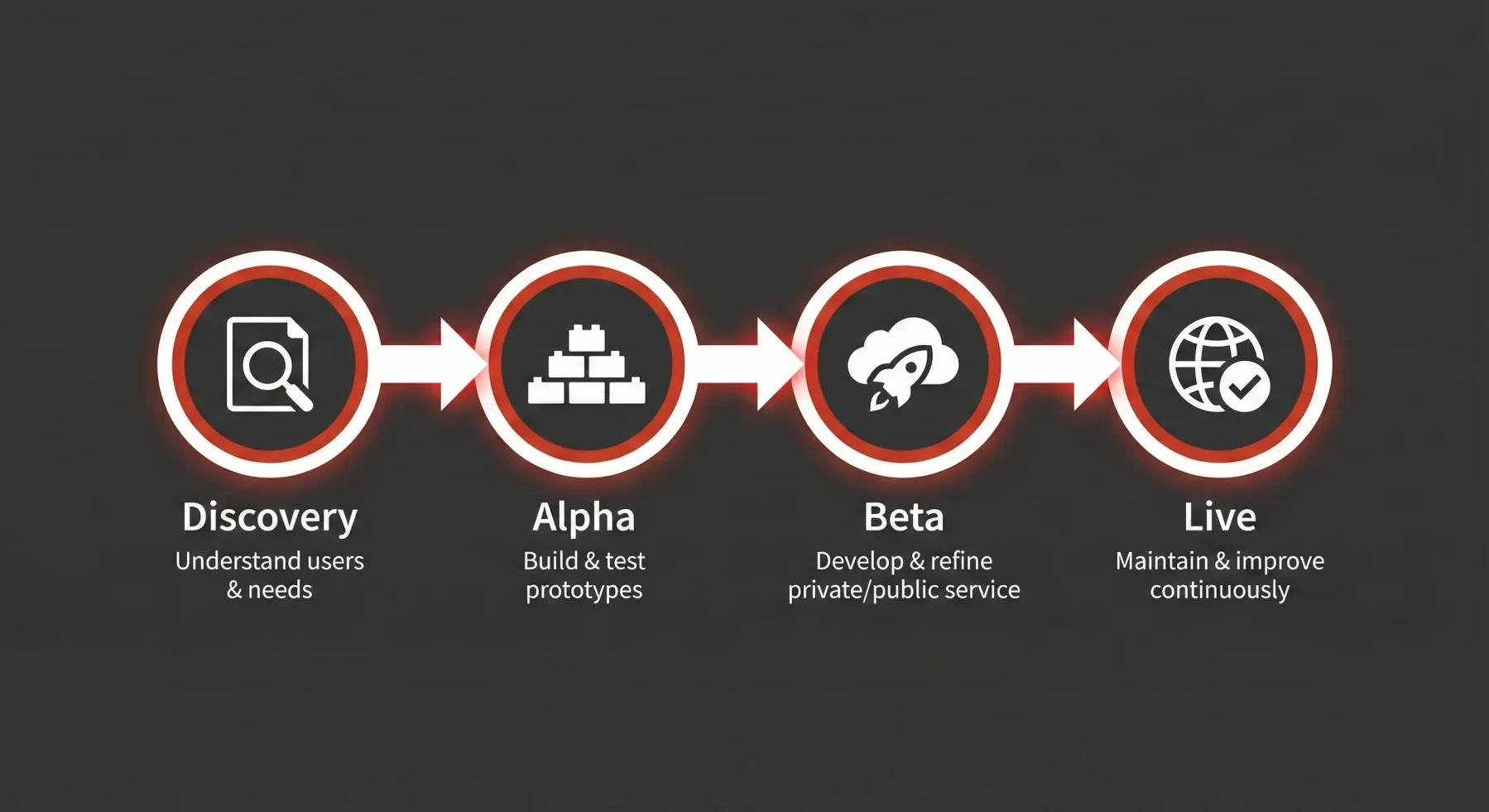
Discovery & Requirements

We start by understanding your organisation, users, and objectives. Through workshops with stakeholders including service users, frontline staff, operational managers, and IT teams, we define user needs through research and observation, map existing service journeys identifying pain points and improvement opportunities, understand technical constraints including existing systems and infrastructure, identify security and compliance requirements specific to your service, and define success measures showing how you'll know the app is working. We help build business cases for budget approval including efficiency saving calculations, service improvement benefits, and implementation costs. Our discovery approach is collaborative, bringing diverse perspectives together while keeping focus on what will actually improve services. We're honest about constraints - if timelines are unrealistic or budgets insufficient, we say so early rather than overpromising.

Design & Prototyping

We design apps iteratively with user feedback at every stage. Our process includes user research with representative users (not just digitally confident staff), wireframes showing layout and navigation before visual design, interactive prototypes allowing testing before development, accessibility review ensuring design works with assistive technologies, and usability testing with real users in realistic contexts. For citizen-facing apps, we test with diverse demographics ensuring services work for all residents. For staff-facing apps, we observe current workflows ensuring apps support rather than disrupt work patterns. We refine designs based on feedback before committing to development, reducing rework costs and ensuring solutions meet actual needs. Good design is invisible - users accomplish tasks without thinking about the interface.

Agile Development

We build apps using agile methods providing visibility and flexibility. Our approach includes two-week sprints delivering working features regularly, sprint reviews demonstrating progress to stakeholders, adaptable scope responding to feedback within budget constraints, transparent reporting showing status, risks, and blockers, and continuous integration testing features as they're built. We create documentation meeting governance requirements including functional specifications, security documentation, test plans and results, and user guides. We work within your approval processes, providing papers for governance boards and presenting at key decision points. Agile doesn't mean uncontrolled - it means building the right thing through regular validation rather than discovering problems only after months of development.

Testing & Quality Assurance

We test thoroughly before launch ensuring apps work reliably. Our testing includes functional testing verifying features work as specified, integration testing confirming connections to other systems, performance testing ensuring apps remain responsive under load, security testing identifying vulnerabilities before hackers do, accessibility testing with assistive technologies and diverse users, and user acceptance testing with service users in realistic scenarios. For citizen-facing apps, we test across different devices (iOS and Android, various models) and network conditions (WiFi, 4G, poor signal). For staff-facing apps, we test offline scenarios and edge cases. We document test results providing assurance that apps meet requirements and are ready for launch.

Launch & Rollout

We launch apps using phased approaches reducing risk. Our strategy includes pilot with limited user group testing in production environment, soft launch with gradual rollout monitoring performance closely, communications supporting user adoption including promotional materials, training ensuring staff can support users effectively, and monitoring watching for issues during early adoption. We provide launch support including extended helpdesk hours, rapid response to issues, and daily monitoring of usage and errors. For citizen-facing apps, we often launch quietly allowing issues to be resolved before major promotional campaigns. Successful launches balance enthusiasm with pragmatism - getting apps into users' hands while being ready to respond quickly when problems arise.

Support & Evolution

Apps need ongoing support after initial launch. We provide incident response fixing user-reported problems, monitoring watching for technical issues proactively, security updates maintaining protection against new threats, functionality updates adding features based on user feedback, compliance updates ensuring continued regulatory alignment, and capacity management as usage grows. We support business case development for major enhancements, showing return on investment and efficiency savings. Our long-term relationships with Kent public sector organisations demonstrate commitment beyond initial delivery - we're here supporting apps years after launch, helping organisations get maximum value from their digital investments.

Our government app development credentials

  • 20+ years experience: Building secure, data-intensive applications
  • Kent Community Health NHS Foundation Trust: Proven NHS app delivery
  • Kent County Council: Kent Connected app and website
  • Medway Council: Local authority digital solutions
  • Map My Tracks: Location-based app used by millions globally
  • UK-based team: Canterbury, Kent and London offices

Frequently asked questions

Government and public sector app development typically costs £30,000-£200,000 depending on scope, integration complexity, and security requirements. Basic citizen service apps with limited backend integration cost £30K-£70K, comprehensive workforce apps with offline capability and system integration cost £80K-£120K, and complex healthcare or multi-service platforms cost £120K-£200K.

Cost factors include platform coverage (iOS and Android adds 60% versus single platform), system integration (connecting to existing council or NHS systems £15K-£40K per integration), security requirements (data protection, secure authentication, audit logging add £10K-£25K), accessibility compliance (WCAG 2.1 testing and remediation £8K-£15K), and offline capability (field worker apps requiring sync £12K-£20K). Our Kent Connected and Kent Community Health NHS work demonstrates cost-effective delivery within public sector budget constraints.

Ongoing costs include hosting (£300-£2K/month), support and maintenance (£2K-£6K/month), security updates and monitoring (£1K-£3K/month), and feature enhancements (£5K-£15K per significant feature). We provide transparent fixed-price quotes after understanding requirements, supporting business case development with efficiency saving calculations showing return on investment over 2-3 years.

Government app timelines vary by scope and organisational approval processes. Basic citizen service apps take 16-20 weeks, comprehensive workforce apps with system integration take 24-30 weeks, and complex healthcare platforms take 30-40 weeks. These timelines include development, testing, and phased rollout but not pre-project procurement which can add 8-16 weeks.

Our process includes 2-3 weeks discovery including stakeholder workshops and user research, 3-4 weeks design and prototyping with user testing, 10-18 weeks agile development with fortnightly sprint reviews, 3-4 weeks integration and security testing, 2-3 weeks user acceptance testing with staff or citizens, 1-2 weeks deployment and launch preparation, and 2 weeks post-launch support monitoring initial adoption.

Public sector governance adds time - committee approval cycles, information governance sign-offs, and stakeholder consultations extend timelines beyond commercial projects. Our Kent council and NHS experience means realistic scheduling accounting for these realities. We use agile delivery providing working software every two weeks for review, ensuring stakeholders see progress and can provide feedback throughout rather than waiting months for final delivery.

Yes, we have experience working through public sector procurement processes. We've delivered projects for Kent Community Health NHS Foundation Trust, Kent County Council, and Medway Council, demonstrating our ability to respond to tenders, complete pre-qualification questionnaires, provide required insurance and compliance documentation, work within framework agreements, and comply with public sector contract terms including payment terms, transparency requirements, and audit provisions.

We support procurement processes by providing detailed specification responses, working with procurement teams to clarify requirements, offering fixed-price proposals for budget certainty, demonstrating social value through local employment and community engagement, and completing due diligence including financial standing, insurance cover, and information security arrangements. Our Kent base means we're a local supplier supporting regional economic growth and can attend meetings easily.

For organisations using framework agreements, we can work as subcontractors to framework suppliers or help you structure direct awards where permitted. We understand the balance between competitive process requirements and pragmatic supplier selection, working within your governance while being responsive and collaborative. Public procurement doesn't have to mean adversarial relationships - we aim for partnership from procurement through delivery to long-term support.

We build accessibility into apps from the start following Web Content Accessibility Guidelines (WCAG) 2.1 Level AA as the baseline. Our approach includes screen reader compatibility testing with VoiceOver (iOS) and TalkBack (Android), keyboard navigation for users unable to use touchscreens, high contrast modes and adjustable text sizes for visual impairments, clear language and simple interfaces for cognitive accessibility, and alternative text for images and meaningful content.

We test with assistive technologies throughout development not just at the end, conduct usability testing with users with disabilities, document accessibility conformance for governance sign-off, and provide accessibility statements explaining how apps meet standards. Our Kent Connected work demonstrates accessible design making council services usable by all residents regardless of ability.

Accessibility isn't just technical compliance - it's ensuring services work for elderly users, people with disabilities, those with temporary impairments (broken arm, eye surgery), and situational limitations (bright sunlight, noisy environments). Good accessibility benefits everyone through clearer design, better navigation, and more robust functionality. We help organisations understand that accessible design is good design, not an expensive regulatory burden.

We take a pragmatic approach to integration working with your existing systems where feasible. For councils, we work with CRM systems (capturing service requests and citizen enquiries), finance systems (for payments and billing), GIS mapping systems (for location-based services), and asset management platforms (for equipment and property). For healthcare, we work with patient administration systems, clinical systems where integration capabilities exist, and administrative systems supporting operations.

Integration feasibility depends on existing system capabilities - modern systems with APIs enable straightforward integration, while older legacy systems may have limited integration options requiring alternative approaches like manual data transfer, file-based exchange, or database-level integration where permitted. We're honest about integration complexity and costs early in projects rather than discovering problems late.

We work closely with your IT teams who know your infrastructure best, conducting integration assessment during discovery, designing integration architecture considering security and performance, implementing robust error handling and retry logic, and testing integration thoroughly before go-live. Sometimes the right answer is building standalone apps with manageable manual processes rather than expensive, risky integration projects. We help you make informed decisions about integration based on costs, benefits, and risks.

We treat data protection seriously, implementing privacy by design throughout development. Our approach includes secure authentication with strong passwords and multi-factor options, role-based access control ensuring users only see data they need, data encryption protecting information in transit and storage, audit logging tracking data access and modifications, data minimisation collecting only necessary information, and retention policies automatically deleting data when no longer needed.

We work with your Information Governance teams completing Data Protection Impact Assessments (DPIAs) for high-risk processing, documenting data flows showing how personal data moves through systems, implementing consent management for optional data collection, supporting citizen rights (access, rectification, deletion) as required by GDPR, and maintaining security documentation for audit and assurance. For healthcare apps, we implement additional controls protecting patient confidentiality meeting NHS requirements.

Our Kent Community Health NHS and council experience demonstrates practical data protection implementation balancing security requirements with usability. We help find the right balance appropriate for your service sensitivity, user base, and risk tolerance.

Our work with Kent Community Health NHS Foundation Trust gives us direct NHS experience. We understand clinical workflows and how technology must support rather than disrupt patient care, data protection requirements for patient information and clinical records, the importance of reliability when healthcare professionals and patients depend on apps, accessibility needs ensuring healthcare apps work for vulnerable populations, and clinical safety considerations ensuring apps don't introduce patient harm risks.

Healthcare apps require extra care due to patient safety implications, medical data sensitivity, diverse user populations (from tech-savvy young people to elderly patients with limited digital skills), and complex organisational environments with multiple stakeholders. Our NHS experience means we ask the right questions about clinical workflows, understand information governance requirements, and design apps that clinical and care staff will actually adopt.

We're realistic about NHS challenges - limited budgets, organisational pressures, competing priorities, and change-weary staff. We focus on apps that solve real problems, demonstrate clear benefits quickly, and work within NHS constraints rather than requiring wholesale change. Our Kent base means we understand the local health economy and can work effectively with Kent and Medway NHS organisations.

Public sector projects involve diverse stakeholders with different priorities and perspectives. We manage this complexity through clear governance structures defining decision-making authority, regular communication providing progress updates and raising issues early, inclusive workshops bringing different viewpoints together, documented decisions recording agreements and rationale, and realistic expectations about what's achievable within constraints.

We facilitate stakeholder discussions helping groups reach consensus, manage conflicting requirements finding pragmatic compromises, escalate blockers when stakeholders can't agree and sponsor decisions are needed, and maintain focus on service users ensuring internal politics don't derail user-centred outcomes. Our Kent council and NHS experience demonstrates stakeholder management navigating complex organisations.

Successful stakeholder management requires diplomacy, patience, and pragmatism. We listen carefully to different perspectives, validate concerns rather than dismissing them, explain technical constraints in non-technical language, and build trust through transparency about progress, problems, and trade-offs. Public sector culture values consultation and consensus - we work with that culture rather than against it while keeping projects moving forward.

Yes, we build field worker apps with offline capability essential for staff working in areas with poor mobile signal. Our approach includes data synchronisation downloading required information before field work begins, local storage caching data on device for offline access, conflict resolution handling changes made offline by multiple users, background sync uploading captured data when connectivity returns, and status indicators showing users what's synced and what's pending.

Field worker scenarios include environmental health officers conducting inspections, building control surveyors assessing sites, housing officers visiting properties, social care workers conducting home visits, and maintenance crews attending repair jobs. These staff need apps that work reliably regardless of signal - in basements, rural areas, inside buildings with poor reception, and locations where mobile networks are overloaded.

Offline apps are more complex than online-only apps requiring careful data management, sync logic, and conflict handling. We design offline capability based on realistic field scenarios not theoretical edge cases, testing in actual field locations not just developer offices. Our practical approach ensures field workers have tools that help rather than frustrate them with "no internet connection" errors at critical moments.

Launch is the beginning of the app lifecycle not the end. Post-launch, we provide monitoring watching for technical issues, user errors, and performance problems, support responding to user questions and technical issues, analytics tracking usage patterns, popular features, and drop-off points, security updates maintaining protection against emerging threats, bug fixes resolving issues discovered after launch, and enhancement planning prioritising improvements based on user feedback and usage data.

We typically provide intensive support for the first month after launch with extended helpdesk coverage and rapid response to issues, then transition to ongoing support arrangements tailored to your needs and budget. Support can include monthly retainers for proactive maintenance and enhancements, incident-based support for reactive issue resolution, or annual support agreements combining both.

Our multi-year relationships with Kent public sector clients demonstrate our long-term partnership approach. Apps need ongoing care - operating systems update requiring compatibility testing, user needs evolve requiring new features, security threats emerge requiring updates, and usage grows requiring performance optimisation. We're here supporting your apps for the long term, helping you maximise value from your investment while ensuring services remain reliable, secure, and useful for citizens and staff.

Some of our latest work

Check out what our clients say about working with Tinderhouse.