In the current 2026 digital landscape, the distinction between simple automation and agentic AI has become the primary pivot point for product strategy. Traditional automation is built on rigid logic (if this happens, then do that). While this is effective for predictable, high-volume tasks, it fails when the software encounters ambiguity or requires a sequence of decisions based on changing context.
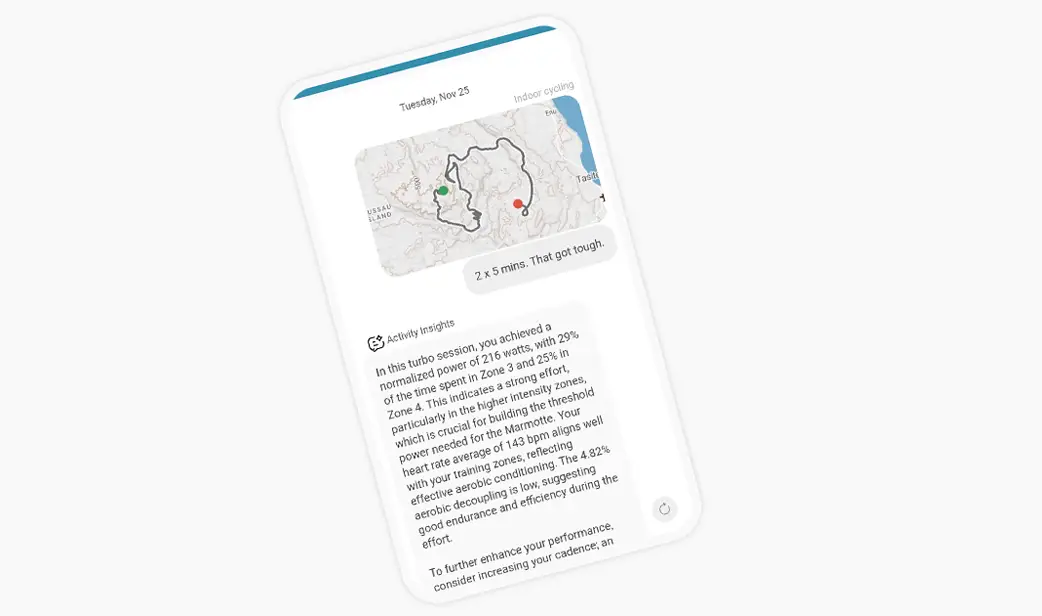
For Map My Tracks, we moved beyond basic automation to build ‘Activity Insights’ - an agentic system that uses a reasoning engine to provide personalised performance coaching. The system interprets complex biometric data to generate natural, context-aware feedback in nine languages. View the full case study: Map My Tracks Activity Insights
At Tinderhouse, our agentic AI development expertise represents the transition from software as a tool to software as a collaborator. This article explains how to determine which approach suits your current business challenge.
The Logic of Ambiguity
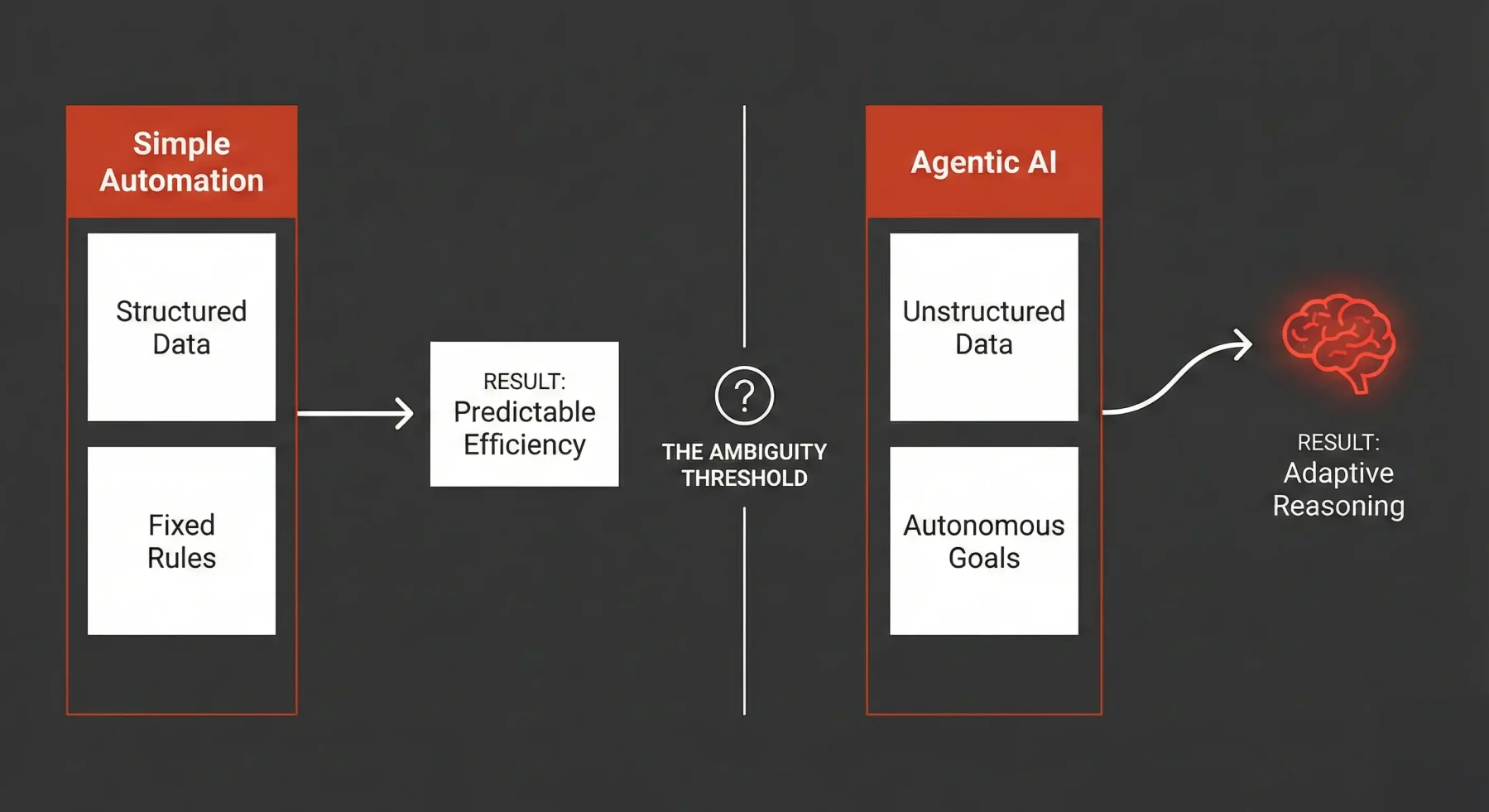
Simple automation follows a pre-defined path that cannot be deviated from. This is ideal for synchronising data between two systems or sending a notification when a field is updated. However, if the data is messy or the next step depends on interpreting a user's intent, standard automation usually breaks.
Agentic AI development uses a reasoning engine (typically powered by a Large Language Model (LLM)) to determine the best path to a goal. Instead of following a script, the agent uses "autonomous loops" to plan, execute, and verify its own work. If a business process requires ten or more decision points, or if the success criteria are clear but the path to get there varies, an agentic approach is required.
Lessons from the field: Personalised coaching at scale
Our work on the Map My Tracks Activity Insights feature provides a clear example of this logic in practice. With over 1 million global users, we needed a system that functioned as a health and fitness coach rather than a basic data reporter.
A simple automation would have provided the same generic summary for every workout. Through sports app development and agentic AI, we created a system where the "Activity Insights" adapt as the user provides more data. Crucially, we learned that for an AI coach to be effective, the user must remain in control of the reasoning parameters.
Users can modify the coach's output based on their specific goals and preferences:
- Tone and Formality: The agent can switch between a professional clinical tone or a more casual conversational style.
- Energy and Encouragement: Users can set the level of "push" they receive, ranging from high-energy motivation to calm, analytical feedback.
- Depth and Detail: The agent adjusts the volume of information provided, from a high-level "TLDR" to a deep dive into physiological metrics.
Lessons from the trenches: Reliability and guardrails
Moving from theory to production-grade agentic AI revealed challenges that simple automation rarely faces. When we integrated the OpenAI API for Map My Tracks, we encountered the risk of "runaway autonomy" (where an agent gets stuck in a loop or makes expensive API calls without finishing the task).
We solved this through the implementation of "circuit breakers" and "cost guardrails." These are accountability frameworks that pause a workflow if it exceeds a certain processing time or budget. We also learned that "human-in-the-loop" protocols are essential for high-stakes decisions. For instance, an agent might suggest an adjustment, but it never modifies user data without explicit confirmation.
Compliance and the UK regulatory environment
As a UK-based agentic AI development agency, we have seen how regulators are placing a higher burden of proof on autonomous systems. Simple automation is easy to audit because the code is static. Agentic AI is more complex because the reasoning is dynamic.
Tinderhouse builds "traceability tools" into every agentic project. These allow you to look back at the agent's "thought process" for every action it took, ensuring your your SaaS & platforms or enterprise app development project remains compliant with UK data protection and AI safety standards.
Making the choice
If your workflow is repetitive and the data is always structured, stick to simple automation. It is cheaper to build and easier to maintain. However, if your business requires software that can interpret intent, handle multi-step decisions, and adapt to individual user goals (like the Map My Tracks coach), then agentic AI is the necessary evolution.
Next Step
If you are weighing up the costs and benefits of autonomous loops for your organisation, we can help. Contact our team to discuss your agentic AI requirements.
Need an app or website?
Get in touch to discuss how we can help create an app of your own or find out how our Fractional Product Team can support your development journey from MVP through to scale.