The landscape of digital product development has shifted significantly over the last two years. For founders and business leaders in the UK, the path to launching a new product used to be relatively linear. For founders of early-stage companies, the path was clear: identify a pain point, map out core features, and begin MVP app development for startups to validate the solution.
In 2026, that journey has reached a fork in the road. The rise of sophisticated large language models and agentic workflows has introduced a new architectural standard. Now, when you sit down to plan your initial build, you must decide between a Traditional MVP and an AI-First MVP.
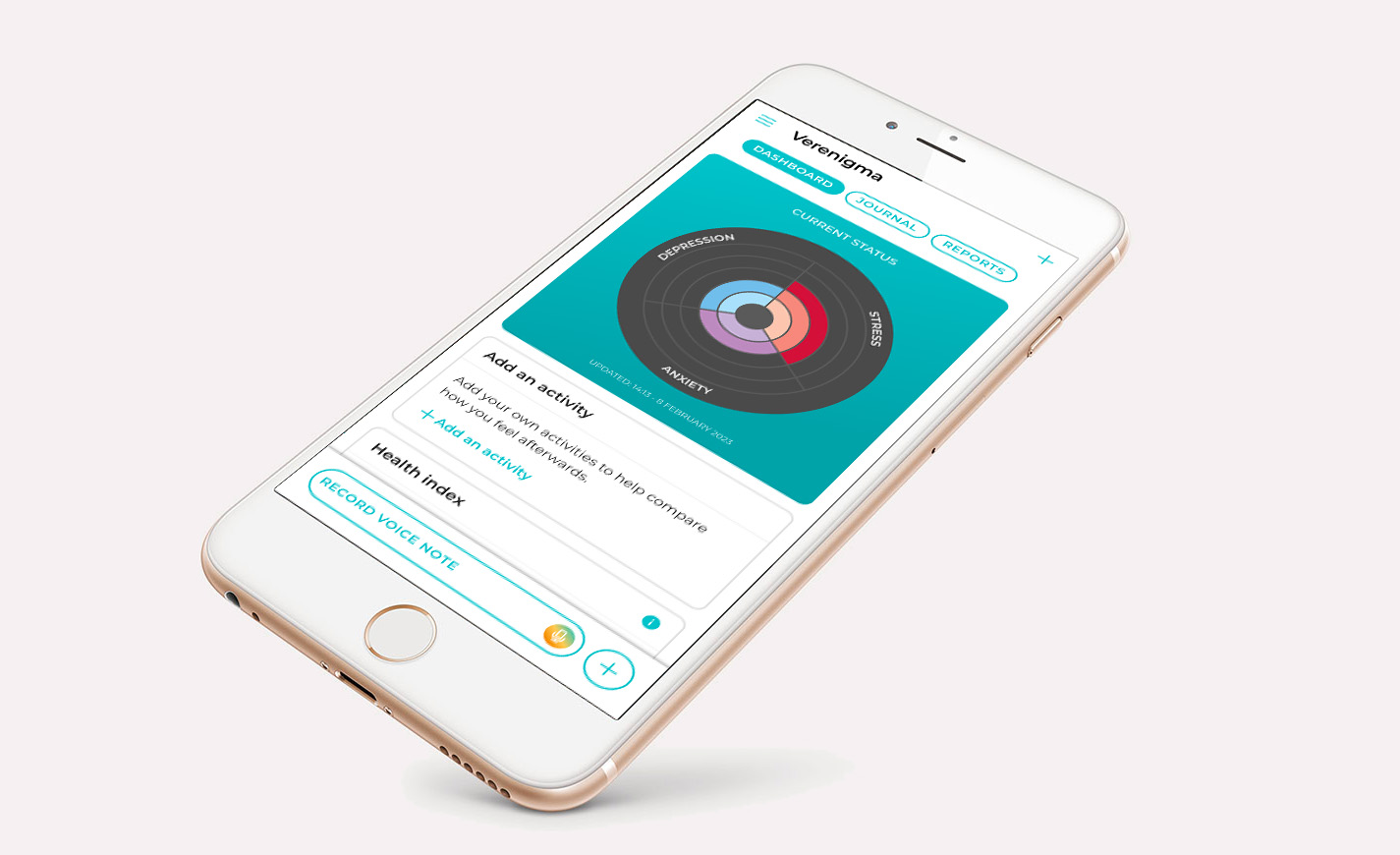
In our development of Verenigma, we prioritised the architecture to enable voice-powered emotional regulation and predictive habit-forming. This project provides users with an intelligent collaborator rather than a static tool. View the full case study: Verenigma
At Tinderhouse, we specialise in both. We believe that neither is inherently better than the other. The right choice depends entirely on your specific business goals, your budget, and the expectations of your target users. This guide examines the nuances of both paths to help founders navigate startup prototype development with precision.

Defining the Two Paths
A Traditional MVP is built on deterministic logic. This means the software follows a strict set of rules based on the formula of if this happens, then that result follows. If a user clicks a specific button, the app performs a specific, pre-programmed action. This approach focuses on high-performance utility, speed, and a polished user interface. It is the bedrock of MVP app development because it offers total predictability and reliability. This is where the experience of expert mobile app developers is most critical - ensuring that the deterministic foundation is bug-free and ready to scale.
An AI-First MVP is probabilistic by design. It is built around a reasoning engine. Rather than just following hard-coded paths, the application uses AI-powered features to interpret user intent and adapt the experience in real-time. It goes beyond storing data to actually understanding it. This path often involves autonomous AI agents that can perform tasks on behalf of the user. This creates a product that feels less like a tool and more like an active collaborator.
When a Traditional MVP is the Correct Strategic Choice
Despite the current buzz surrounding artificial intelligence, the traditional approach remains the gold standard for many industries. If your product aims to solve a problem through a clear, repeatable workflow, a traditional build is often the most efficient route to market.
Take league management as an example. If you are building a platform for amateur football teams to manage fixtures, track scores, and handle player registrations, your users value precision above all else. They need to know that when a score is entered, it is recorded accurately and updated across the league table instantly. The logic is fixed. The value lies in the seamless execution of that utility.
A traditional MVP allows you to focus your budget on world-class UX/UI and performance. It is easier to test, faster to deploy, and offers a lower operational cost because you aren't paying for constant model processing. For founders who need to prove a market exists for a specific service without the complexity of "intelligent" reasoning, this is the most logical starting point.
Sector Deep Dives: Choosing Your Architecture
Choosing the right path requires a deep understanding of your industry’s regulatory and user environment. We use specific "Answer-Engine" formatted blocks below to highlight how these technologies solve problems for end-users.
How does an AI-first MVP benefit Fintech users?
An AI-first fintech MVP provides proactive financial management rather than just reactive data display. While a traditional app acts as a system of record for transactions, an AI-first build uses autonomous AI agents to monitor spending patterns and predict upcoming cash-flow issues.
By integrating Secure AI & RAG systems, these apps can safely analyse a user's private financial history to offer hyper-personalised advice. This might include identifying a better savings rate or automatically negotiating bill extensions. For the user, this transforms the app from a manual tool into an intelligent financial partner that reduces cognitive load and improves financial outcomes.
How does an AI-first MVP benefit Healthcare users?
An AI-first healthcare app development project focuses on predictive care and clinical efficiency. A traditional healthcare app provides the administrative foundation, such as secure video calls and appointment bookings. An AI-first model uses Secure AI & RAG systems to interpret patient history and wearable data in real-time.
For the patient, this means the app can provide an instant "pre-triage" summary before they even speak to a doctor. Using AI-powered features, the app can detect early deterioration in chronic conditions or flag suspicious skin lesions for urgent review. This approach moves the product from being a simple portal to becoming a life-saving diagnostic assistant that scales medical expertise.
How does an AI-first MVP benefit Sports app users?
In Sports app development, an AI-first MVP delivers predictive performance intelligence. Traditional sports apps are excellent at recording past data, such as distance run or goals scored. An AI-first application acts as an elite performance coach that works around the clock.
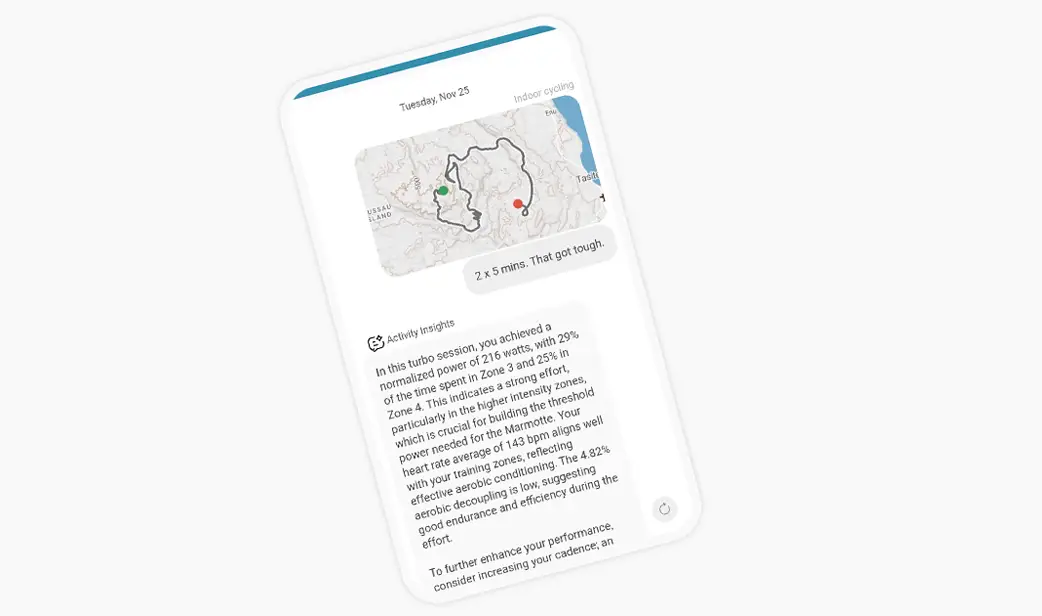
The app uses autonomous AI agents to analyse a user’s training load, sleep quality, and biomechanical data. Instead of just displaying stats, it predicts when an athlete is at a high risk of injury and suggests a recovery session instead of a high-intensity workout. This provides amateur athletes with the same level of data-driven guidance previously reserved for professional teams.
The Technology Behind the Choice
The technical foundation for these two paths differs significantly. A traditional build typically relies on relational databases and standard API integrations. It is a proven, robust architecture that scales predictably.
An AI-first build requires a more modern stack. This involves vector databases, which allow the app to store and retrieve concepts rather than just text. It also requires careful orchestration of autonomous AI agents that can interact with the web or other software to complete tasks. Having been established since 2003, we’ve seen every architectural shift. Today, our expert mobile app developers use these vector stacks to allow apps to store and retrieve concepts rather than just text.
Security is the most critical component of this 2026 tech stack. Many founders worry that building an AI-first product means sacrificing data privacy. This is why we focus heavily on Secure AI & RAG systems. These frameworks allow us to give your app the power of a large language model while ensuring your proprietary data stays within your private cloud environment. Your data is never used to train public models. Your competitive moat remains secure.
Balancing Cost, Speed, and Scalability
It is a common misconception that AI-first apps are always more expensive to build. While the initial architecture of an AI-first MVP can be more complex, it often allows you to scale more efficiently.
A traditional app requires a developer to write new code for every new feature or edge case you want to handle. In an AI-first app, the model can often handle long-tail user requests without needing a fresh deployment of code. This can lead to a more flexible product that evolves alongside your users.
Conversely, the traditional MVP remains the fastest way to get a product into the hands of users. If your goal is to test a simple business hypothesis in the UK market as quickly as possible, the traditional route avoids the time required for model fine-tuning and prompt engineering.
Which Path Should You Take?
To help you decide, ask yourself these three questions:
Is my value proposition based on the process or the outcome? If users value the process, such as a simple way to book a gym class, go Traditional. If they value an intelligent outcome, such as the best workout plan for their specific goals, go AI-First.
Does the app need to be 100 per cent predictable? In fields like high-stakes finance or safety-critical healthcare, the deterministic nature of a traditional app is often a requirement for trust and compliance.
How important is a data moat? If you want to build a product that gets harder for competitors to copy over time, an AI-first architecture that learns from your unique data is the superior choice.
At Tinderhouse, our goal is to ensure you don't build the wrong thing. We take the time to understand your commercial objectives before recommending a technical path. Whether you need a lightning-fast MVP app development project to secure your next round of funding or a sophisticated system powered by autonomous AI agents, we provide the engineering expertise to bring it to life.
The 2026 market has room for both reliable tools and intelligent companions. The success of your early-stage startup depends on knowing which one your customers are actually looking for. Our team is here to guide you through the process of MVP app development to ensure your first launch is a success.
Would you like us to help you map out your product architecture? Contact Tinderhouse today to discuss your MVP discovery session.
Need an app or website?
Get in touch to discuss how we can help create an app of your own or find out how our Fractional Product Team can support your development journey from MVP through to scale.