Established 2003. Still delivering.

Education & EdTech

Expert engineering for scalable education platforms

Tinderhouse: Specialist Education & EdTech UK for startups and enterprise teams

Tinderhouse provides specialist education and EdTech development for schools, colleges, training providers and education technology companies that need robust, scalable digital platforms. We have delivered projects for Hadlow College, Kent School of English and GSL Education, building systems that handle complex enrolment workflows, multilingual content delivery and large-scale user management. With over 20 years of experience in web and app development, and a track record that includes platforms serving over a million users globally, we bring the same technical rigour to education projects that we apply to high-traffic consumer applications and enterprise systems.

Proven education sector expertise, delivering accessible, scalable platforms that institutions and learners depend on daily.

Discuss your project
Our team is ready to begin new projects.

What we build for schools, colleges and EdTech companies

Software for the education sector carries constraints that most agencies underestimate. Accessibility is not optional, content management must work for staff who are not developers, and platforms need to handle sharp traffic spikes around enrolment windows without degrading. Tinderhouse has been building for education organisations since the early 2000s, and the work with Kent School of English and Hadlow College reflects what that experience looks like in practice: platforms that institutions depend on daily, not showcase projects that gather dust after launch.

Website development for education organisations is fundamentally different from building a corporate site. A college website is not a brochure. It is an operational tool that handles course discovery, enquiry management, event promotion and, increasingly, the first point of contact for international students who may never visit in person before enrolling.

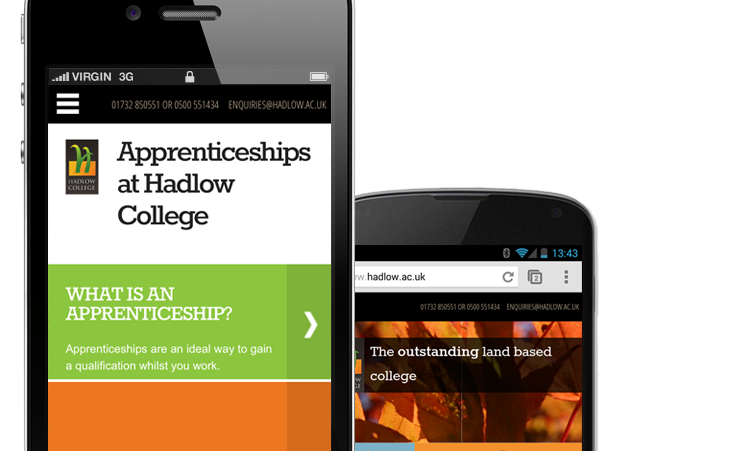
Course catalogues and prospectus systems Most institutions manage hundreds of courses across multiple departments, levels and delivery modes. The site architecture needs to make this navigable for a sixteen-year-old exploring options and an employer searching for apprenticeship partnerships. Tinderhouse built the Hadlow College platform to handle exactly this kind of complexity, structuring course data so that it could be filtered, searched and updated by academic staff without developer involvement.

International student recruitment For language schools and institutions with international cohorts, the website often needs to operate across multiple languages and handle booking workflows that include accommodation, visa documentation and payment in different currencies. The Kent School of English project required precisely this: a multilingual platform serving students arriving from dozens of countries, each with distinct requirements.

Accessibility and compliance Education websites must meet WCAG 2.2 AA standards as a minimum. This is a legal requirement under the Equality Act and a practical necessity for institutions serving students with a wide range of abilities. Tinderhouse builds accessibility into the architecture from the start, covering semantic HTML, keyboard navigation, screen reader compatibility and colour contrast, rather than attempting to retrofit it before an audit.

Enrolment window performance Traffic to education websites is not evenly distributed. Clearing, open day registrations and application deadlines create sharp peaks that can overwhelm platforms not designed for them. We load test for these scenarios during development so that the site performs when it matters most.

Explore more →

Education organisations accumulate disconnected systems over time: one for student records, another for timetabling, a third for finance, and a website that talks to none of them. Bespoke web systems bring these together into platforms that work the way the institution actually operates, rather than forcing staff to bridge the gaps manually.

Student portals and enrolment workflows A student portal is not a login page with a dashboard. It needs to surface timetables, assessment results, attendance records and communication tools in a way that makes sense to someone who may be using it on a phone between classes. The backend must integrate with the institution's student information system, which often means building middleware to connect legacy software that was never designed for modern API communication.

Staff and administration tools Teaching staff, administrators and marketing teams all need different views of the same data. A course coordinator updating module information should not need to navigate the same interface as a finance officer checking enrolment numbers. Role-based access and tailored workflows reduce errors and save significant time across the academic year.

Data integration Most institutions run a mix of commercial software and internal tools that do not communicate well. Tinderhouse designs systems with an API-first approach, building the data layer before the interface so that connections between the student records system, payment gateway, email platform and analytics tools are reliable and maintainable. This is particularly important for organisations preparing for Ofsted inspections or regulatory reporting, where accurate, consolidated data is essential.

Explore more →

Mobile app development in education covers a wide range, from institutional apps that keep students connected to campus life through to standalone EdTech products designed to scale across thousands of schools. The technical requirements differ significantly depending on which of these you are building.

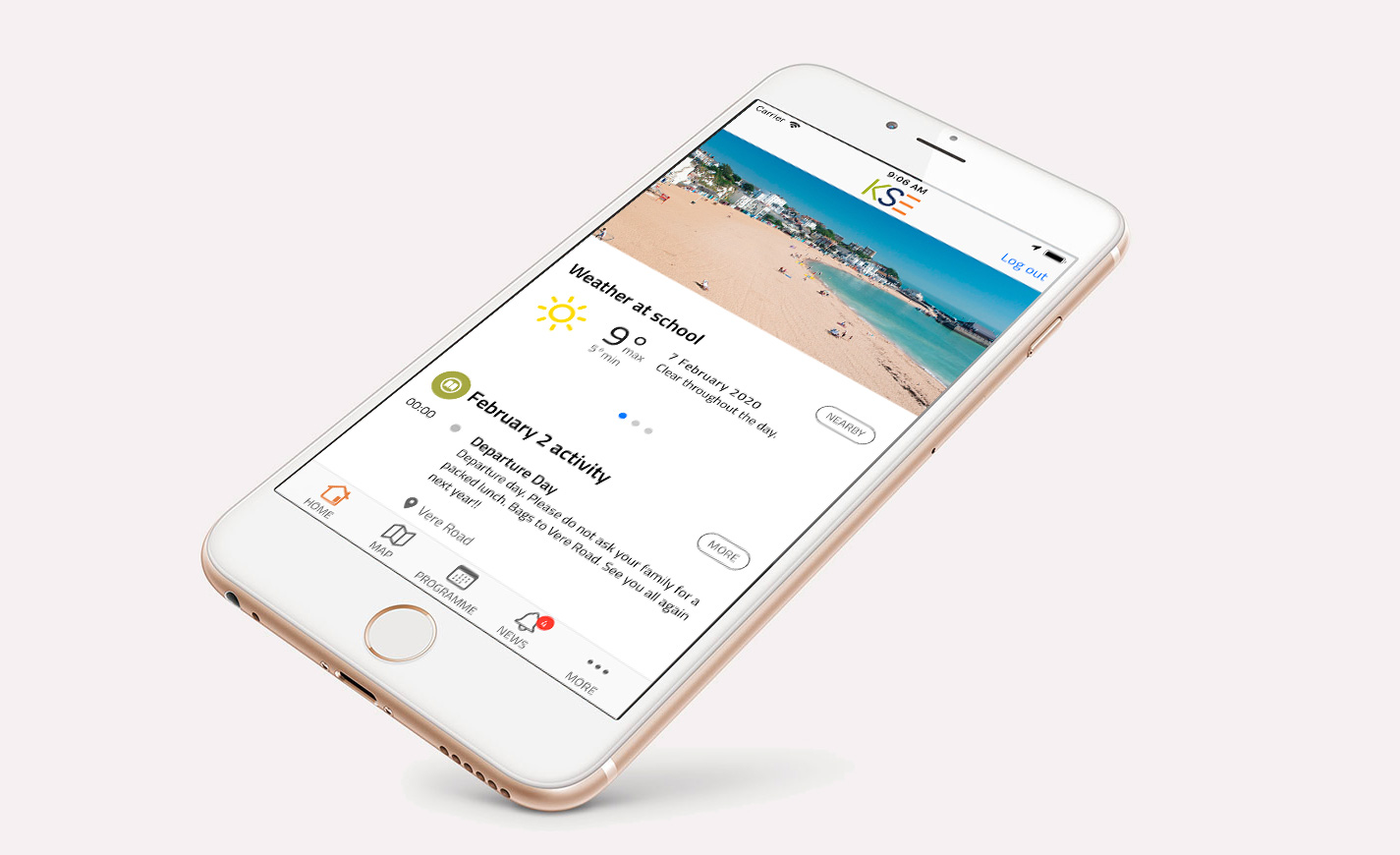
Student engagement apps The Kent School of English project is a clear example. International students needed real-time access to daily class schedules, social activities and educational resources, all delivered through a native mobile app that worked reliably across iOS and Android. The app became the primary channel through which students interacted with the school during their stay, replacing printed timetables and notice boards entirely.

EdTech product development For companies building education products, the mobile app is the product. This means the technical decisions around performance, offline capability, push notifications and device compatibility are commercial decisions, not just engineering preferences. Tinderhouse has experience building consumer applications at scale, including Map My Tracks with over a million users globally, and applies that same discipline to EdTech products where user retention depends on the app working flawlessly on the first launch.

Parental and guardian access Schools increasingly need to provide parents with visibility into attendance, progress and communications. These apps handle sensitive data about minors and require careful attention to authentication, data protection and age-appropriate design. GDPR considerations are particularly acute when the data subjects are children.

Explore more →

Not every education organisation needs a native app, and many cannot justify the ongoing cost of maintaining separate iOS and Android codebases. Progressive web apps offer an alternative that works well for institutions where the primary goal is delivering content and tools through a fast, reliable mobile experience without the overhead of app store submissions.

Budget-conscious institutions Schools and colleges operating on tight budgets benefit from PWAs because a single codebase serves all devices. There is no app store approval process, no separate iOS and Android maintenance, and updates deploy instantly. For an institution that needs a mobile-accessible student handbook, timetable viewer or campus map, a PWA delivers the functionality at a fraction of the cost of native development.

Offline access for learning materials PWAs can cache content for offline use, which matters in education settings where students may not have reliable connectivity. Course materials, reading lists and revision resources can be made available without a network connection, which is particularly valuable for students commuting or studying in areas with patchy coverage.

Staff tools and internal platforms Administrative tools that staff access from tablets or phones during the working day, such as attendance registers, incident reporting forms or maintenance request systems, are well suited to PWA delivery. They load quickly, work across any device with a browser, and do not require IT departments to manage app installations across a fleet of devices.

Explore more →

MVP app development is particularly relevant for EdTech founders testing a new product concept and for institutions piloting a digital initiative before committing to a full build. The principle is the same in both cases: build the smallest thing that proves the idea works, then invest further based on evidence rather than assumptions.

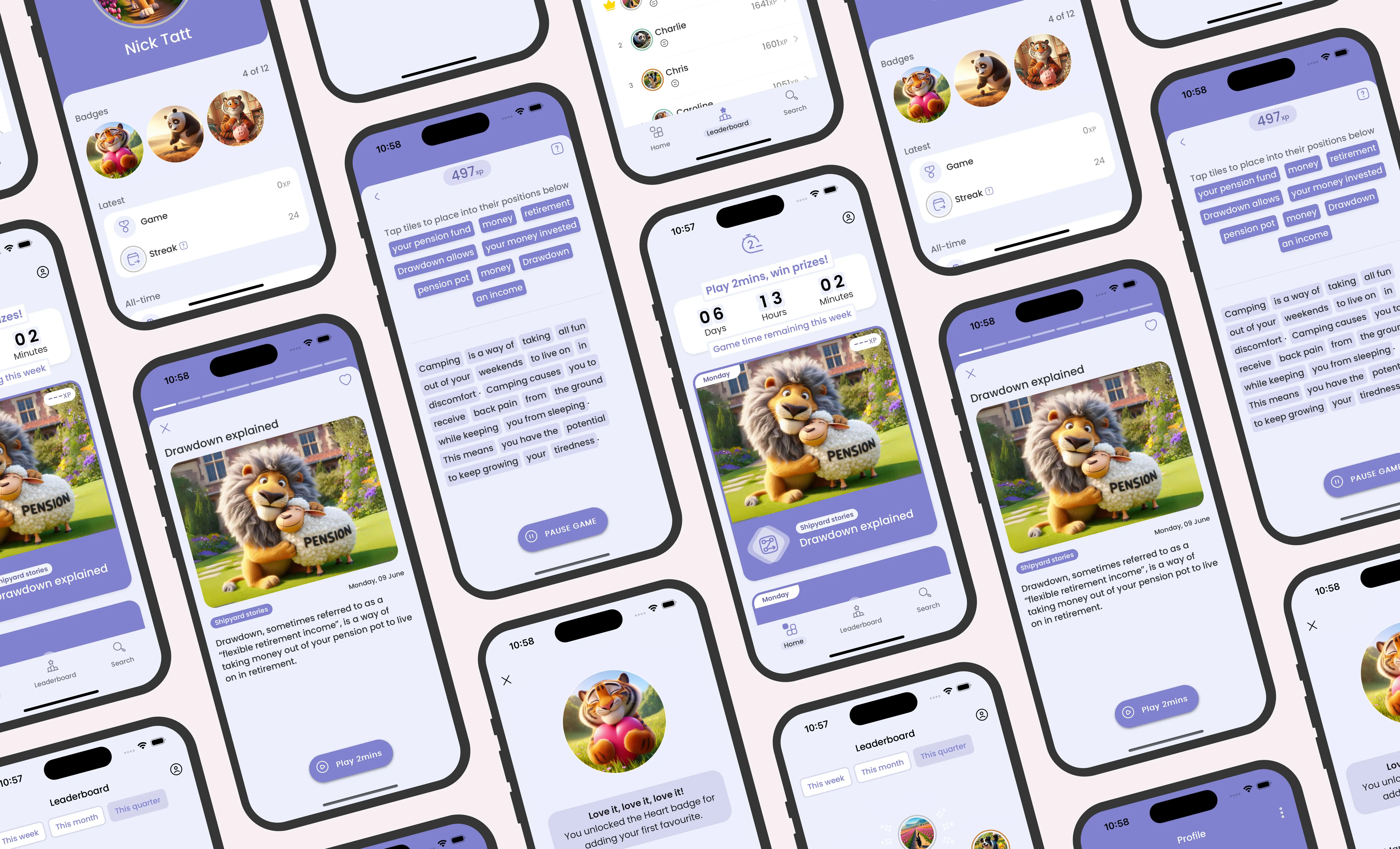
EdTech product validation The 2mins project demonstrates this approach well. A gamified financial education app, 2mins needed to prove that users would engage with bite-sized learning content before building out the full feature set. Tinderhouse delivered the core experience quickly enough to gather real user data and refine the product based on actual behaviour rather than projected engagement models.

Institutional pilots Colleges and universities often want to test a digital approach, such as an AI tutoring tool, an interactive assessment platform or a student wellbeing app, before rolling it out institution-wide. An MVP allows a controlled pilot with a single department or cohort, generating the evidence needed to secure broader funding and institutional buy-in. Tinderhouse structures these projects with clear success metrics defined during discovery, so the pilot produces actionable data rather than vague impressions.

Funding and grant applications EdTech startups and education organisations applying for innovation funding often need a working prototype to demonstrate feasibility. A functional MVP carries significantly more weight with investors and grant panels than a slide deck. Tinderhouse has delivered MVPs in as few as eight weeks, giving founders a tangible product to present alongside their business case.

Explore more →

Education SaaS products, from learning management systems to assessment platforms to school communications tools, face a specific set of technical challenges that distinguish them from SaaS products in other sectors. SaaS development for education requires multi-tenancy architecture that keeps each institution's data isolated while enabling the platform to scale across hundreds or thousands of schools.

Multi-tenancy and data isolation Schools and local authorities are rightly cautious about where student data lives and who can access it. A well-architected education SaaS product provides complete data isolation between tenants, with role-based access controls that reflect the hierarchy within each institution. Tinderhouse designs these systems so that data governance is built into the architecture, not bolted on as an afterthought.

Subscription and licensing models Education purchasing cycles are unlike those in most other sectors. Budgets are set annually, procurement decisions often involve multiple stakeholders, and pricing may need to accommodate per-pupil, per-institution or local authority licensing models. The billing and subscription infrastructure needs to support this flexibility from launch, not require re-engineering when the first large multi-academy trust signs up.

Integration with existing school systems Education SaaS products rarely operate in isolation. They need to exchange data with management information systems, single sign-on providers, assessment tools and parental communication platforms. Tinderhouse builds API-first architectures that make these integrations reliable and maintainable as partner platforms evolve.

Explore more →

AI product engineering in education is moving beyond chatbots and into genuinely useful territory: adaptive learning pathways, automated assessment, content personalisation and administrative workflow automation. The challenge is building AI features that work reliably within the specific constraints of education environments, where data quality varies, privacy requirements are strict and the consequences of a poor recommendation are real.

Adaptive learning and personalisation Learners progress at different rates and respond to different content formats. AI-driven adaptive learning adjusts the difficulty, sequencing and presentation of material based on individual performance data. Building this well requires careful attention to the training data, the feedback loops and the pedagogical assumptions embedded in the model. Tinderhouse combines technical AI capability with the practical understanding of how learning actually works in real classrooms and online courses.

Administrative automation Schools and colleges spend significant staff time on repetitive administrative tasks: processing enquiries, scheduling, generating reports, managing communications. Intelligent automation can handle much of this, freeing staff to focus on work that requires human judgement. Tinderhouse builds these systems with clear human oversight mechanisms, ensuring that automated decisions can always be reviewed and overridden.

Content generation and assessment support AI can assist with generating practice questions, providing formative feedback on written work and identifying students who may be falling behind. The key word is "assist". Education AI tools must be designed to support teachers and tutors, not replace them. Tinderhouse builds with this principle at the core, ensuring that AI features augment professional judgement rather than substituting for it.

Explore more →

Many education websites run on content management systems that were configured years ago and have become increasingly difficult to maintain. ExpressionEngine remains a strong choice for education organisations that need a CMS with genuine flexibility, clean content modelling and a track record of long-term stability. Tinderhouse is one of the most experienced ExpressionEngine agencies in the UK.

Content modelling for education Education content is structured differently from most commercial websites. Course entries need fields for entry requirements, UCAS codes, delivery modes, campus locations, assessment methods and career outcomes. News items need to be tagged by department and audience. Events need calendar integration and booking capability. ExpressionEngine's channel architecture handles this complexity without the workarounds and plugin dependencies that simpler CMS platforms require.

Editorial workflows for non-technical staff The people maintaining an education website are typically marketing coordinators and academic administrators, not developers. ExpressionEngine's publish layouts can be configured to present exactly the fields each editor needs, with validation rules that prevent common errors. Tinderhouse sets this up during the build so that staff can manage content confidently from day one, with documentation and training included.

Long-term maintainability Education institutions need platforms that will be stable and maintainable for five years or more. ExpressionEngine's codebase is mature, well-documented and does not impose the aggressive upgrade cycles that some CMS platforms demand. Combined with Tinderhouse's ongoing support, this means education clients can plan their digital roadmap with confidence that the underlying technology will not force a costly rebuild.

Explore more →

Frequently asked questions

Everything you need to know about working with Tinderhouse, from costs and timelines to our process and expertise.

We have delivered digital platforms for Hadlow College, Kent School of English and GSL Education, covering institutional websites, multilingual booking systems and education recruitment platforms. Each project involved distinct challenges - from managing complex course catalogues across multiple campuses to handling international student enrolment workflows with localised content and payment processing. This practical experience means we understand the operational realities of education organisations, including enrolment cycles, accessibility obligations and the need for non-technical staff to manage content independently.

Yes. We use an API-first architecture approach, designing platforms to communicate with external systems from the outset. We have experience integrating with a range of student record systems, payment gateways, email marketing platforms and timetabling tools. During the discovery phase, we assess your current technical landscape and identify which integrations are essential for launch and which can be phased in later. If your existing system does not have a modern API, we can often build middleware to bridge the gap.

We build to WCAG 2.2 standards as a baseline across all education projects. This includes semantic HTML structure, keyboard navigation support, screen reader compatibility, sufficient colour contrast and properly labelled form elements. We test with multiple assistive technologies and conduct accessibility audits before launch. For education providers, accessibility is both a legal requirement under the Equality Act and essential for serving a diverse student body. We treat it as a fundamental aspect of good engineering, not an optional extra.

A focused institutional website with course catalogue and enquiry management typically takes 8 to 12 weeks from discovery to launch. More comprehensive platforms with student portals, online booking, multilingual content and third-party integrations generally require 12 to 18 weeks. Full-scale EdTech products with custom learning features and AI capabilities can take 18 to 24 weeks. We use an MVP approach where possible, launching core functionality first and iterating based on real user feedback.

Absolutely. We configure content management systems specifically for education workflows, ensuring that course coordinators, marketing teams and administrators can update course information, publish news, manage event listings and handle enquiries without developer involvement. We provide training and documentation tailored to your team's needs, and our ongoing support means help is available when staff encounter anything unfamiliar.

Yes. We develop across iOS, Android and progressive web apps, choosing the approach that best fits your requirements and budget. For many education organisations, a well-built progressive web app provides an app-like experience without the overhead of maintaining separate native applications. For projects requiring deeper device integration - such as push notifications for timetable changes or offline access to learning materials - native development or hybrid approaches may be more appropriate.

Data protection is built into every layer of our education platforms. We implement encryption for data in transit and at rest, role-based access controls to ensure staff only see information relevant to their role, and comprehensive audit logging. Our experience building secure systems for the banking sector, including the My Lost Account portal used by every major UK bank, means we apply enterprise-grade security practices to education projects. We also ensure that consent mechanisms, data retention policies and subject access request workflows are properly implemented.

We provide structured post-launch support covering security updates, CMS upgrades, performance monitoring and feature development. Education platforms need continuous attention - new accessibility requirements emerge, operating systems update, student expectations evolve and institutional needs change. Our long-term client relationships demonstrate our commitment to ongoing partnership. We work with clients to plan annual development roadmaps, ensuring their platforms continue to improve and remain competitive.

We're proud to have worked with...

Team Sky: Elite Sports Technology Partner Willis re Sky Kent County Council Medway Council London School of Economics: Public Sector Research Systems NHS: Healthcare Digital Transformation Partner Cisco Systems: Enterprise Infrastructure Software Partner The Telegraph: National Election Platform Partner

Tinderhouse is ranked as one of the UK's top 50 mobile app development companies.

TEAM SKY
Tech partner
2010-2015
MAP MY TRACKS
#1 App
App Store (Fitness)
MAP MY TRACKS
Featured
App Store
BABY LED WEANING COOKBOOK
#1 App
App Store (Lifestyle)