Established 2003. Still delivering.

AI & Intelligent Automation Services

Building Production-Ready AI Applications for Modern Enterprise

Tinderhouse: Specialist AI & Intelligent Automation Services UK for startups and enterprise teams

At Tinderhouse, we build complete AI-powered applications from concept to deployment. With 20+ years of software development experience, we don't just integrate AI—we create robust, scalable products that solve real business problems. From intelligent mobile apps to enterprise SaaS platforms, we combine full-stack development expertise with cutting-edge AI capabilities to deliver solutions your team will actually use.

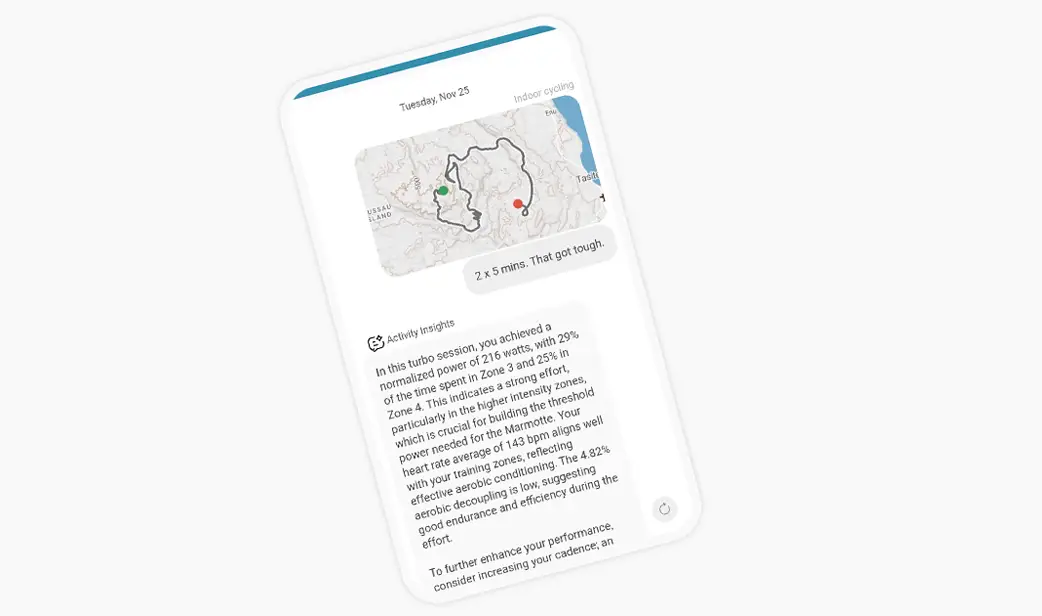
Our Activity Insights feature in Map My Tracks serves over 1 million users with personalised AI coaching, demonstrating our capability to build and scale AI products in production environments.

We build AI-powered products that drive measurable results combining 20+ years of development excellence with modern AI capabilities.

Discuss your project
Our team is ready to begin new projects.

Our services

AI Product Engineering

Build complete AI-powered applications from scratch with 20+ years of development expertise

Explore more →

AI Agent Development

Build autonomous AI agents that handle specific business tasks and integrate seamlessly with your systems

Explore more →

Secure AI & RAG Systems

Build secure AI and RAG systems with complete data sovereignty

Explore more →

AI Consulting

Strategic AI advisory from a team that has spent 20 years building the things other consultants advise about.

Explore more →

How your industry uses AI and intelligent automation

Every organisation sits somewhere different on the spectrum between "we haven't started" and "we've tried a few things but nothing stuck." The way AI gets applied in a healthcare trust looks nothing like the way it works inside a logistics company or a fintech startup, and treating them the same is how projects stall. Tinderhouse has seen AI and intelligent automation applied across the sectors we work, grounded in real delivery rather than theoretical capability.

Financial services firms operate under some of the strictest regulatory and security requirements of any sector, which means AI adoption carries more architectural consequences than it does in most industries. The question is rarely whether AI could help, but whether it can be deployed without compromising data sovereignty, audit trails, or compliance obligations.

Fraud pattern detection Transactional fraud evolves faster than rule-based systems can keep pace with, and most legacy detection engines generate too many false positives to be operationally useful. AI models trained on institution-specific data can learn what normal behaviour looks like for a given customer segment and flag genuine anomalies with far greater precision. The challenge is doing this in real time without introducing latency into payment flows. Tinderhouse has built secure financial platforms for major UK banking institutions, including My Lost Account, which processes sensitive data daily across the banking sector.

Regulatory document processing Compliance teams spend a disproportionate amount of time reading, cross-referencing, and summarising regulatory updates. A well-architected RAG system can ingest new guidance documents, map them against existing internal policies, and surface the specific sections that require attention. This is not about replacing compliance officers. It is about ensuring they spend their expertise on interpretation rather than retrieval.

Client risk profiling Onboarding and ongoing due diligence involve pulling together information from multiple sources, many of which are unstructured. AI can consolidate Know Your Customer data, flag inconsistencies across documents, and generate risk summaries that a human analyst can review in minutes rather than hours. The key constraint is that the system must produce auditable, explainable outputs, not black-box scores.

Personalised financial guidance Consumer-facing fintech products increasingly need to deliver advice that feels tailored without crossing into regulated territory. AI can analyse a user's transaction history, savings patterns, and stated goals to surface relevant prompts and nudges. The line between helpful automation and regulated advice is narrow, and the architecture needs to reflect that from day one.

Internal knowledge retrieval Large financial organisations accumulate vast volumes of internal policy, precedent, and procedural documentation. Staff in branches, call centres, and compliance departments often struggle to find the right answer quickly. A secure internal AI assistant, built on RAG principles with proper access controls, can dramatically reduce the time spent searching and increase the consistency of answers given to customers.

Explore more →

Clinical environments are high-stakes, time-poor, and governed by strict data standards. Any AI system that touches patient data, clinical workflows, or care decisions has to satisfy NHS DSP Toolkit requirements and demonstrate that it will not add cognitive burden to staff who are already stretched thin.

Clinical decision support Clinicians do not need another dashboard. They need contextually relevant information surfaced at the point of care, without requiring them to navigate away from their existing workflow. AI systems that integrate into electronic health records and present filtered, prioritised insights can reduce the time between observation and action. Tinderhouse has built NHS-compliant platforms including NHS Patients in Control and Health Help Now, both of which required careful alignment with clinical data governance.

Patient triage and symptom assessment Pre-consultation triage is one of the highest-impact applications of AI in healthcare, but it requires careful prompt engineering, conservative thresholds, and transparent escalation paths. A system that confidently misclassifies a serious symptom as benign is worse than no system at all. The value lies in routing patients to the right service faster, not in replacing clinical judgement.

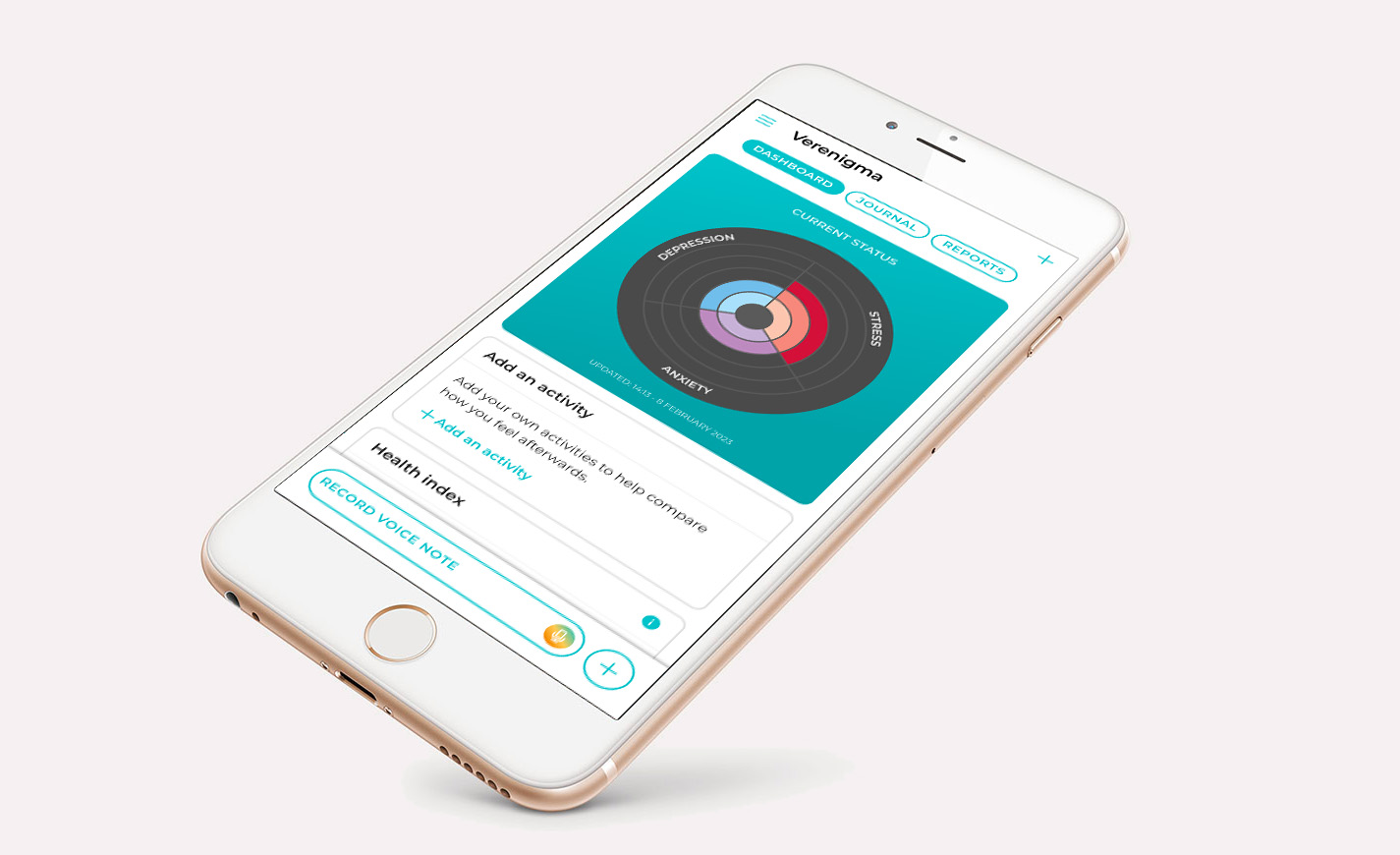
Voice-based health monitoring For patients managing chronic conditions or mental health challenges, voice interaction removes the barrier of screen-based data entry. Tinderhouse developed Verenigma, a voice-powered AI companion for real-time emotional regulation and tracking. Voice as an input modality opens up AI to patient groups who may struggle with conventional interfaces, including elderly users and those with limited digital literacy.

Medical document summarisation Referral letters, discharge summaries, and consultation notes often run to several pages, and the clinician receiving them may have only seconds to extract what matters. AI-powered summarisation can distil the critical details, flag contraindications, and present a structured overview. The architecture must guarantee that source documents remain accessible and that no clinical detail is silently dropped.

Operational capacity planning Hospital trusts and clinical commissioning groups generate enormous volumes of admissions data, staffing records, and resource utilisation metrics. AI can model demand patterns, predict seasonal surges, and identify bottlenecks before they become crises. This is less glamorous than patient-facing AI, but in many trusts it represents the fastest return on investment.

Explore more →

Performance data in sport is abundant but underused. Athletes and coaches collect heart rate, power, pace, cadence, and GPS data from every session, yet most of it sits in spreadsheets or is glanced at once and forgotten. AI changes the equation by turning raw activity data into coaching insight that adapts to the individual.

Personalised coaching feedback Tinderhouse built Activity Insights for Map My Tracks, an AI-powered analysis engine that provides endurance athletes with personalised coaching after every activity. The system analyses effort distribution, pacing strategy, and environmental conditions, then generates plain-language feedback tailored to the athlete's history and goals. It serves over one million users across 190 countries.

Automated performance analytics Lap splits, segment comparisons, and training load calculations can all be generated automatically from GPS and sensor data. The value of AI here is not just speed but pattern recognition: identifying that an athlete's power output drops consistently after 90 minutes, or that their cadence changes on climbs above a certain gradient. These are the kinds of observations a coach would make over weeks that AI can surface immediately.

Injury risk modelling Overtraining is the most common cause of non-contact injury in endurance sport, and it is almost always preventable with better load monitoring. AI models that track cumulative training stress, recovery indicators, and rate-of-change metrics can flag when an athlete is entering a high-risk window. The difficulty is calibrating sensitivity: too many warnings and the athlete ignores them all.

Event and race logistics Large-scale endurance events generate complex logistical challenges around participant tracking, live timing, marshal coordination, and safety coverage. AI agents can monitor GPS feeds from participants, flag anyone who has stopped moving or deviated from the route, and trigger alerts to the nearest safety team. Tinderhouse's experience as Official Technology Partner to Team Sky included real-time tracking and live data systems at the highest level of professional cycling.

Content generation for athletes Post-activity social sharing is a significant engagement driver for fitness platforms. AI can generate photo captions, activity summaries, and shareable graphics automatically, tailored to the type of activity and the athlete's audience. Map My Tracks uses this to turn a raw GPS file into a narrative that athletes actually want to post.

Explore more →

Field-based industries have a common problem: the people doing the work are rarely at a desk, and the systems designed to support them were built for people who are. AI in construction and field operations has to work on-site, often on a phone, often with intermittent connectivity, and always under time pressure.

Site inspection automation Inspection reports are one of the most time-consuming parts of field work, and they are often completed hours after the inspection itself, which introduces errors and omissions. AI can process photos taken on-site, extract relevant details, cross-reference against compliance checklists, and draft reports in real time. The operative reviews and approves rather than writing from scratch. Tinderhouse has built field service tools for companies including Bee Vizible and D&D Carpentry, where reducing admin time per job was a primary objective.

Predictive maintenance scheduling Equipment downtime on a construction site is expensive, and reactive maintenance means the failure has already happened. AI models trained on equipment usage data, environmental conditions, and historical failure rates can recommend maintenance windows before breakdowns occur. The output needs to integrate with existing scheduling tools, not create another system to check.

Document and drawing interpretation Construction projects generate thousands of pages of specifications, drawings, and change orders. AI-powered document search allows site managers to ask natural-language questions and get answers grounded in the actual project documentation, rather than relying on memory or scrolling through PDFs on a tablet.

Resource allocation optimisation Labour, materials, and plant all need to be in the right place at the right time, and delays cascade quickly. AI agents that monitor project schedules, delivery timelines, and weather forecasts can flag conflicts and suggest reallocation before a problem materialises on site.

Safety compliance monitoring Health and safety documentation requirements grow with every project phase. AI can monitor whether required permits are in place, whether toolbox talks have been logged, and whether near-miss reports are being filed at expected rates. The goal is not surveillance but early detection of gaps that could lead to serious incidents.

Explore more →

SaaS businesses are often the fastest to adopt AI because their teams already think in terms of APIs, data pipelines, and user engagement metrics. The challenge is less about whether to use AI and more about where it will create genuine product differentiation rather than feature bloat.

Intelligent onboarding flows New user activation is the single most important metric for most SaaS products, and the onboarding experience is where most churn begins. AI can personalise the onboarding sequence based on the user's role, stated goals, and early behaviour patterns, surfacing the features most likely to drive retention rather than walking everyone through the same generic tour.

In-product AI assistants Users increasingly expect to be able to ask questions inside the product rather than searching a knowledge base. A well-built AI assistant, grounded in the product's own documentation and the user's account data via RAG architecture, can resolve support queries without a ticket being raised. The important distinction is between a chatbot that guesses and one that retrieves verified information.

Churn prediction and intervention Usage patterns often signal churn weeks before it happens: declining logins, narrowing feature use, support tickets going unanswered. AI models that monitor these signals can trigger automated outreach or flag accounts for the customer success team before the renewal conversation becomes a cancellation one.

Automated reporting and insights Many SaaS platforms collect far more data than their dashboards expose. AI can generate narrative reports from raw metrics, highlight anomalies, and surface trends that users would not spot by scanning charts. This is particularly valuable for products serving non-technical users who need to understand their data without learning to query it.

Usage-based pricing optimisation For platforms with usage-based or tiered pricing, AI can model how different pricing structures would affect adoption, revenue, and churn. It can also identify users who are consistently hitting plan limits and would benefit from an upsell conversation timed to a moment of demonstrated value.

Tinderhouse has built and scaled SaaS platforms across multiple sectors, including Noted, a field workforce management platform.

Hospitality and retail businesses run on thin margins, high volumes, and customer expectations that shift faster than most operations can adapt. AI works best here when it reduces manual overhead in back-of-house operations or makes front-of-house interactions feel more personal without adding staff workload.

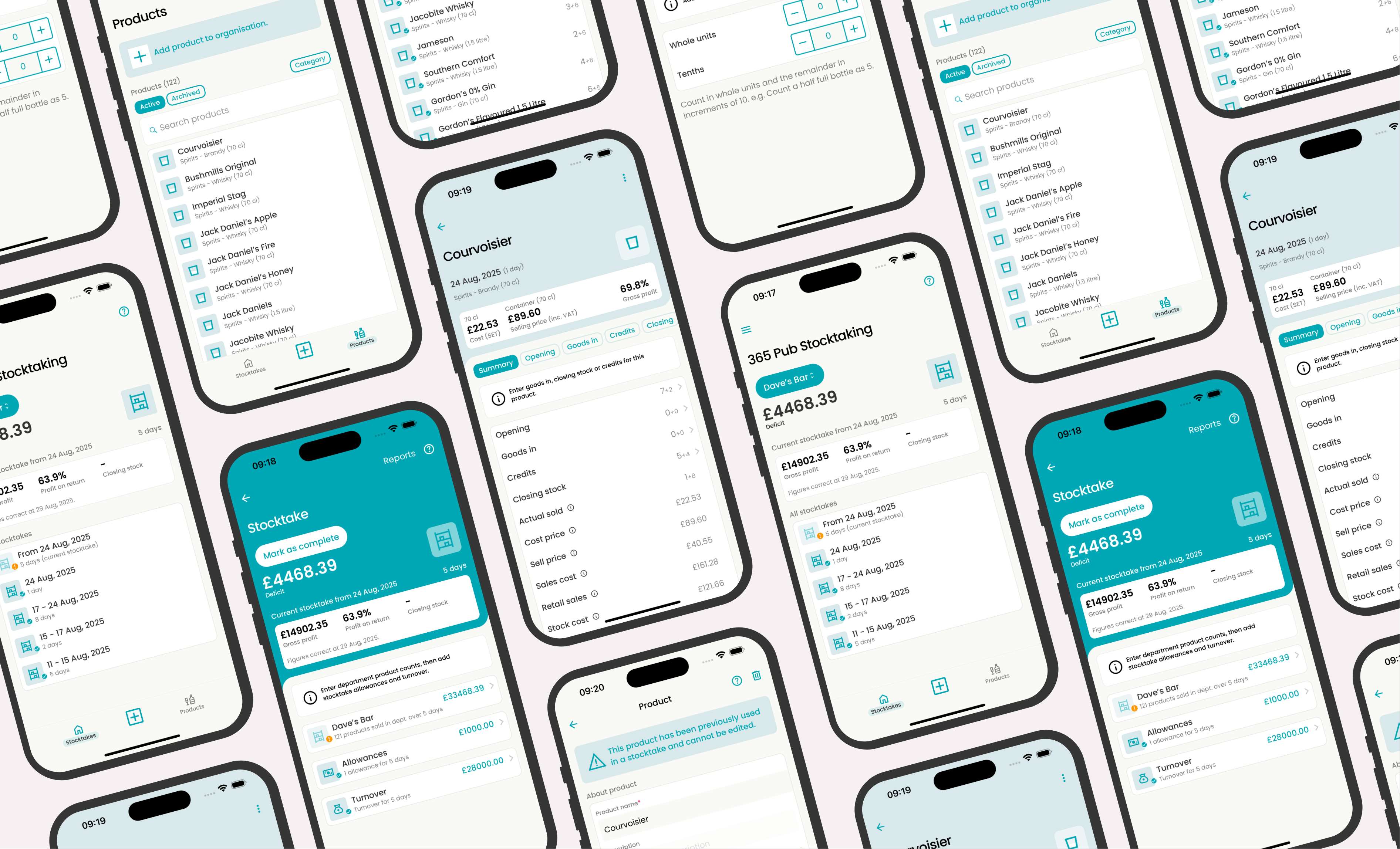
Inventory and stock management Predicting what to order, when, and in what quantity is a problem that scales with menu complexity, seasonal variation, and supplier lead times. AI models trained on historical sales data, local events, and even weather patterns can generate purchase recommendations that reduce waste and prevent stockouts. Tinderhouse built 365 Pub Stocktaking, a mobile solution that gives publicans professional-grade inventory accuracy without the cost of external stocktakers.

Dynamic pricing and promotions Pricing in hospitality is often static despite demand being anything but. AI can adjust pricing in real time based on occupancy, time of day, competitor activity, and booking patterns. For retail, it can identify which promotional offers actually drive incremental revenue rather than simply discounting purchases that would have happened anyway.

Customer feedback analysis Reviews, survey responses, and social media mentions generate a continuous stream of qualitative data that most businesses lack the time to read systematically. AI can categorise feedback by theme, detect sentiment shifts over time, and flag emerging issues before they appear in aggregate scores. A single negative review matters less than a pattern, and AI is better at spotting patterns than a manager scanning TripAdvisor.

Personalised guest communications Pre-arrival emails, post-stay follow-ups, and loyalty programme messages all perform better when they reference the guest's actual preferences and history. AI can generate personalised content at scale, drawing on booking data, previous feedback, and stated preferences without requiring a marketing team to write individual messages.

Workforce scheduling Staff scheduling in hospitality is a weekly puzzle involving availability, labour regulations, demand forecasts, and individual preferences. AI can generate optimised rosters, flag potential compliance issues, and suggest adjustments when unexpected changes occur, such as a large booking or a staff absence.

Explore more →

Public sector organisations typically face a combination of high demand, constrained budgets, and ageing technology estates. AI offers genuine efficiency gains here, but deployment requires careful attention to transparency, accessibility, and public accountability. Citizens are not customers, and the standards for fairness and explainability are correspondingly higher.

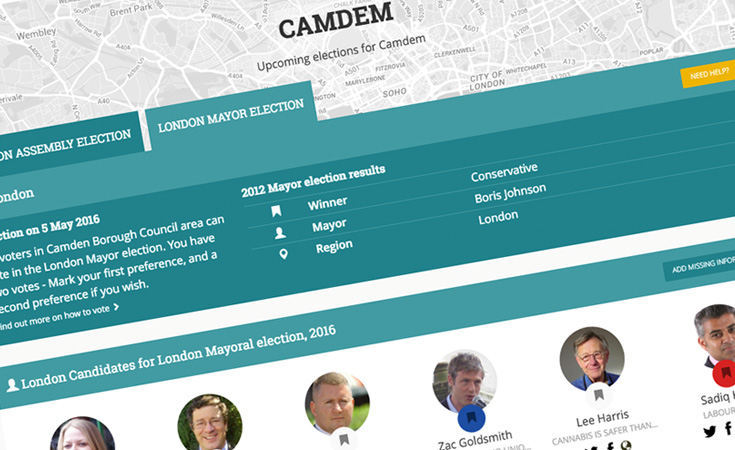
Democratic information access Making complex political and legislative information accessible to the public is a challenge that traditional web platforms handle poorly. Tinderhouse built the Democratic Dashboard for the London School of Economics, a voter information portal designed to bridge the democratic information gap. AI can extend this kind of work by summarising policy documents, tracking legislative changes, and answering citizen queries in plain language.

Legislative and policy tracking Organisations that monitor government activity, such as think tanks, charities, and lobbying firms, deal with enormous volumes of parliamentary output. Tinderhouse built the Statutory Instrument Tracker for the Hansard Society, and AI can augment this kind of tool by automatically classifying instruments, detecting relevant cross-references, and alerting stakeholders to changes in their areas of interest.

Citizen service automation Council contact centres handle thousands of repetitive queries about bin collections, planning applications, parking permits, and benefits eligibility. AI-powered assistants that draw on verified local authority data can resolve a significant proportion of these queries without human involvement, freeing staff to handle complex cases that require judgement and empathy.

Internal knowledge management Local authorities and government departments accumulate decades of policy documents, procedural guides, and precedent records. Staff turnover means institutional knowledge is constantly being lost. A secure RAG-based system can make this knowledge searchable, allowing new staff to find answers in minutes rather than days.

Grant and procurement analysis Evaluating grant applications or procurement bids involves reading large volumes of structured and unstructured text against defined criteria. AI can pre-score applications, flag missing information, and rank submissions by alignment with stated priorities, giving evaluators a structured starting point rather than a blank page.

Explore more →

Law firms, accountancies, and consultancies run on expertise, but a growing share of billable time goes to tasks that do not require expertise at all: document review, data gathering, report formatting, and internal knowledge retrieval. AI applied well in professional services protects margin by keeping skilled people focused on the work that justifies their rates.

Document review and extraction Contract review, due diligence, and regulatory filing all involve reading large volumes of text to find specific clauses, obligations, or risk factors. AI can pre-process documents, highlight relevant sections, and extract structured data from unstructured text. The professional still makes the judgement call, but the preparation that used to take hours now takes minutes.

Client-facing report generation Producing tailored reports for clients is a significant cost centre in consulting and accountancy. AI can draft initial versions from structured data, apply firm-specific formatting and language conventions, and even adapt tone based on the client relationship. The senior professional reviews and refines rather than starting from scratch each time.

Internal precedent search Most professional services firms have solved similar problems before, but finding the relevant precedent means searching across matter files, email archives, and knowledge databases that were never designed to work together. A RAG-based internal search tool can surface relevant past work in response to natural-language queries, reducing duplication and improving consistency.

Proposal and pitch automation Responding to RFPs and tenders involves assembling boilerplate, tailoring messaging, and compiling credentials, often under tight deadlines. AI agents can pull together first drafts from a firm's library of previous responses, case studies, and capability statements, leaving the business development team to focus on strategy and differentiation.

Meeting summarisation and action tracking Client meetings, board discussions, and internal reviews generate decisions and actions that often get lost in email threads or forgotten notebooks. AI-powered transcription and summarisation can produce structured notes, extract action items, and distribute them to the right people automatically.

Explore more →
Educational institutions and edtech platforms face a particular tension: the desire to personalise learning at scale, set against limited budgets, varied digital literacy among staff, and understandable caution about student data. AI that works in education has to be transparent about what it is doing and conservative in how it handles data belonging to learners, many of whom are minors.

Adaptive learning pathways Every student progresses at a different pace, but most course structures assume a single route through the material. AI can adjust the sequence, difficulty, and format of content based on a learner's performance, flagging areas where they are struggling and accelerating through topics they have already mastered. The design challenge is making this feel supportive rather than surveillant.

Automated assessment feedback Marking is one of the most time-intensive parts of teaching, particularly for written assignments. AI can provide first-pass feedback on structure, argument quality, and common errors, giving students faster turnaround and giving educators more time for the nuanced, developmental feedback that machines cannot provide. The system should always be positioned as a supplement to human marking, not a replacement.

Administrative process automation Admissions processing, timetabling, and student record management all involve repetitive data handling that absorbs administrative capacity. AI agents can automate intake form processing, flag incomplete applications, and generate communications to applicants, reducing the administrative burden during peak periods.

Content creation and translation Institutions serving international student populations need materials in multiple languages, and manual translation is slow and expensive. AI-powered translation, combined with human review for subject-specific terminology, can dramatically accelerate the production of multilingual learning resources. Tinderhouse has built platforms for language learning providers including Kent School of English.

Student engagement monitoring Disengagement is a leading indicator of dropout, and early intervention significantly improves retention. AI can monitor engagement signals, including login frequency, assignment submission patterns, and forum participation, and flag at-risk students to pastoral teams before the situation becomes critical.

Frequently asked questions

Everything you need to know about working with Tinderhouse, from costs and timelines to our process and expertise.

Simple automation follows fixed ‘if-this-then-that’ paths. Agentic AI uses large language models to reason through tasks, breaking down complex goals into steps, interacting with different tools, and adapting when it encounters errors. This makes AI agents far more capable of handling sophisticated business processes autonomously.

We recommend starting with our technical discovery phase. By focusing on MVP development first, we validate your AI architecture and integration requirements in a live environment before committing to full-scale deployment. This approach typically delivers working prototypes in 6-12 weeks.

We prioritise secure AI architectures. Rather than sending sensitive data to public AI services, we implement RAG (Retrieval-Augmented Generation) systems and secure API wrappers. Your data stays within your controlled environment whilst still benefiting from advanced AI capabilities. We're experienced in building solutions that meet NHS DSP Toolkit and banking security standards.

Yes. We specialise in API-first AI integration. We build AI capabilities that sit alongside your current systems, accessing your databases, generating insights, and automating workflows within the tools your team already uses. We've successfully integrated AI into mobile apps, web platforms, and enterprise SaaS products.

We're product builders first. Unlike agencies focused purely on AI consulting or prompt engineering, we develop complete applications handling databases, security, user interfaces, and full-stack architecture. Our 20+ years building production software for clients including the NHS, major banks, and Team Sky means we understand how to ship AI products that work reliably at scale.

Using our modular development approach, we typically deliver AI MVPs in 6 to 12 weeks. This allows you to test core functionality with real users and data before scaling to a full enterprise solution. Complex multi-feature applications typically take 3-6 months depending on integration requirements and scope.

Every project we launch comes with a 90-day post-launch warranty. At Tinderhouse, we believe execution doesn't end at 'Go-Live.' For the first three months after launch, our UK-based team handles any technical issues, bug fixes, or performance refinements within the original project budget. This ensures your software or AI system is fully stable in a real-world environment before transitioning to long-term support, protecting your investment and ensuring a seamless experience for your users.

We're proud to have worked with...

Team Sky: Elite Sports Technology Partner Willis re Sky Kent County Council Medway Council London School of Economics: Public Sector Research Systems NHS: Healthcare Digital Transformation Partner Cisco Systems: Enterprise Infrastructure Software Partner The Telegraph: National Election Platform Partner

Tinderhouse is ranked as one of the UK's top 50 mobile app development companies.

TEAM SKY
Tech partner
2010-2015
MAP MY TRACKS
#1 App
App Store (Fitness)
MAP MY TRACKS
Featured
App Store
BABY LED WEANING COOKBOOK
#1 App
App Store (Lifestyle)