Strategic AI advisory from a team that has spent 20 years building the things other consultants advise about.
Most organisations now know they need an AI strategy. The harder question is which opportunities are worth pursuing, which tools are genuinely useful versus overhyped, and what it would actually cost to build the thing being proposed. Tinderhouse AI consulting answers those questions with the kind of precision that only comes from having built AI-powered systems in production. We have shipped AI products for clients and consumer platforms serving over a million users. When we assess your AI opportunity, we are drawing on engineering reality, not vendor literature.
Most AI consultants advise from theory. We advise from 20 years of building systems that have to work in production, at scale, for real users.
Our app and website design and development areas of expertise
AI integration specialists
Web service connections
Back-end database integration
Innovative UX/UI design
Our app and website solutions are helping businesses grow, be more efficient and sell more. Let's talk about your project. Call us on +44 (0)1227 811771 or send us an email.
What AI consulting actually means for your organisation
There is a significant difference between being sold an AI solution and being given an honest assessment of one. AI consulting, done properly, is the work of understanding your business, your data, your systems and your team, and making clear-eyed recommendations about which AI opportunities are worth pursuing and in what order.
At Tinderhouse, AI consulting is not a sales process for our development services. Some clients come to us for strategic guidance and then build with their own technical team. Others use our consulting work as the foundation for a Tinderhouse development engagement. Both outcomes are legitimate, and our advice is the same in either case.
What separates good AI consulting from poor AI consulting is not the framework used or the number of slides produced. It is whether the person advising you has ever had to make the systems they recommend actually work. We have.
The four phases of a Tinderhouse AI consulting engagement
Discover
We begin by understanding where you are. That means reviewing your current systems, data sources and workflows, speaking with the people who use them, and identifying where AI could create genuine value rather than additional complexity. This phase is about asking the right questions before forming any opinions about solutions.
Assess
Once we understand the landscape, we evaluate the realistic options. Which AI capabilities are mature enough to rely on for your use case? Which vendors are genuinely competitive in this area? What does your data infrastructure need to look like before any AI system can function reliably? The assessment produces a clear picture of what is feasible, what is ambitious, and what is not yet worth the investment.
Roadmap
The output of a Tinderhouse AI consulting engagement is a strategic roadmap you can act on. It sequences your AI opportunities by value and readiness, defines the technical requirements for each, and gives you an honest estimate of time and cost. It is written to be used as a brief for development, not filed in a drawer.
Validate
For higher-risk opportunities, we recommend building a proof of concept before committing to a full build. A focused prototype, scoped to answer a specific technical question, is the fastest way to learn whether an idea works in practice. We design and build these ourselves, which means the validation is engineering-grade, not a simulation.
Who benefits from AI consulting
The clients who get the most from an AI consulting engagement tend to share a few characteristics. They have identified AI as strategically important but are not yet certain which opportunities to prioritise. They have heard competing claims from vendors and want an independent view. They are preparing for a significant AI investment and want to reduce the risk of building the wrong thing.
This includes founders approaching a seed or Series A raise who need a credible AI strategy to present to investors. It includes operations directors at established businesses who have been asked to lead an AI transformation programme and need a rigorous foundation. It also includes CTOs who want an outside perspective on a technical approach before committing internal resource to it.
We also work with organisations that are not sure whether they need AI at all. Sometimes the honest outcome of a discovery engagement is that a simpler, less expensive solution would serve better. We would rather tell you that early than after you have spent significant budget on a build.
Why builders make better AI consultants
There is a structural problem with a lot of AI consulting: the person advising you has never had to make the thing work. They understand models from documentation rather than from debugging them when a production system breaks under load. They recommend architectures they have read about rather than ones they have shipped.
Nick Tatt, Tinderhouse founder, has been delivering software since before the current generation of AI frameworks existed. His work spans some of the most demanding technical environments in the UK: secure financial systems for major banking institutions, clinical platforms meeting NHS data standards, and consumer applications at scale. Those are not environments where vague recommendations survive. Every architectural decision has to be defensible, every data handling choice has to be correct, and every system has to work reliably for the people depending on it.
That perspective informs how Tinderhouse approaches AI consulting. We are not impressed by capability demonstrations. We want to know how a system behaves when the data is messy, the users are unpredictable, and the budget is fixed. Those are the conditions your AI system will actually operate in.
Our Map My Tracks platform, serving over one million athletes worldwide, runs AI-powered coaching built on infrastructure we designed, built and maintain. Our NHS work meets clinical data standards. Our financial platforms handle sensitive data across major UK banks. When we give you an AI recommendation, it is grounded in that kind of production reality.
From consulting to build
One of the questions we get asked most often is whether a consulting engagement automatically leads to a development project with Tinderhouse. The answer is no, though it sometimes does.
Our consulting work produces a roadmap and, where appropriate, a validated proof of concept. What happens next is your decision. Some clients take that work to their internal development team. Some go to market with it. Some come back to Tinderhouse for the build.
The clients who do build with us after a consulting engagement tend to find the process considerably faster than starting cold. The discovery has already been done. The technical questions have already been answered. The architecture has already been validated. We are building from a foundation rather than figuring things out as we go.
Build secure AI and RAG systems with complete data sovereignty
Explore more →
How your industry can use AI consulting
Every organisation considering AI faces the same fundamental question: where is the real value, and what would it actually take to get there? The answer looks different depending on whether you operate in a regulated healthcare environment, a fast-moving fintech startup, or a construction business with teams spread across dozens of sites.
Financial services organisations operate under constraints that most AI vendors prefer not to discuss. Regulatory obligations, auditability requirements, and the sheer sensitivity of the data involved mean that an AI strategy in this sector cannot simply be grafted on from a generic playbook. Getting the consulting phase right is what separates a viable AI initiative from an expensive compliance headache.
Fraud pattern analysis Detecting fraudulent transactions in real time is one of the most common AI use cases in financial services, but the strategic question is rarely whether AI can help. It is which approach fits your existing transaction infrastructure, what the false positive tolerance looks like, and how to keep a human in the loop without creating bottleneck delays. A consulting engagement scopes these constraints before any model selection begins.
Regulatory document processing Banks, insurers and wealth managers deal with enormous volumes of regulatory text that must be interpreted, tracked and acted upon. AI consulting in this context involves assessing whether retrieval-augmented generation or fine-tuned classification models are the right approach for your specific document types, and what your data pipeline needs to look like before either is viable.
Customer communication triage Large financial institutions receive thousands of inbound queries daily across multiple channels. An AI consulting engagement can map the realistic opportunities for intelligent routing and response drafting, while being honest about where automated handling crosses a compliance line and where it does not.
Credit decisioning support Lenders are under pressure to make faster, fairer decisions. AI consulting here involves evaluating which parts of the credit assessment process are suitable for model-assisted decisioning, how to maintain explainability for regulators, and what bias testing looks like in practice rather than in theory.
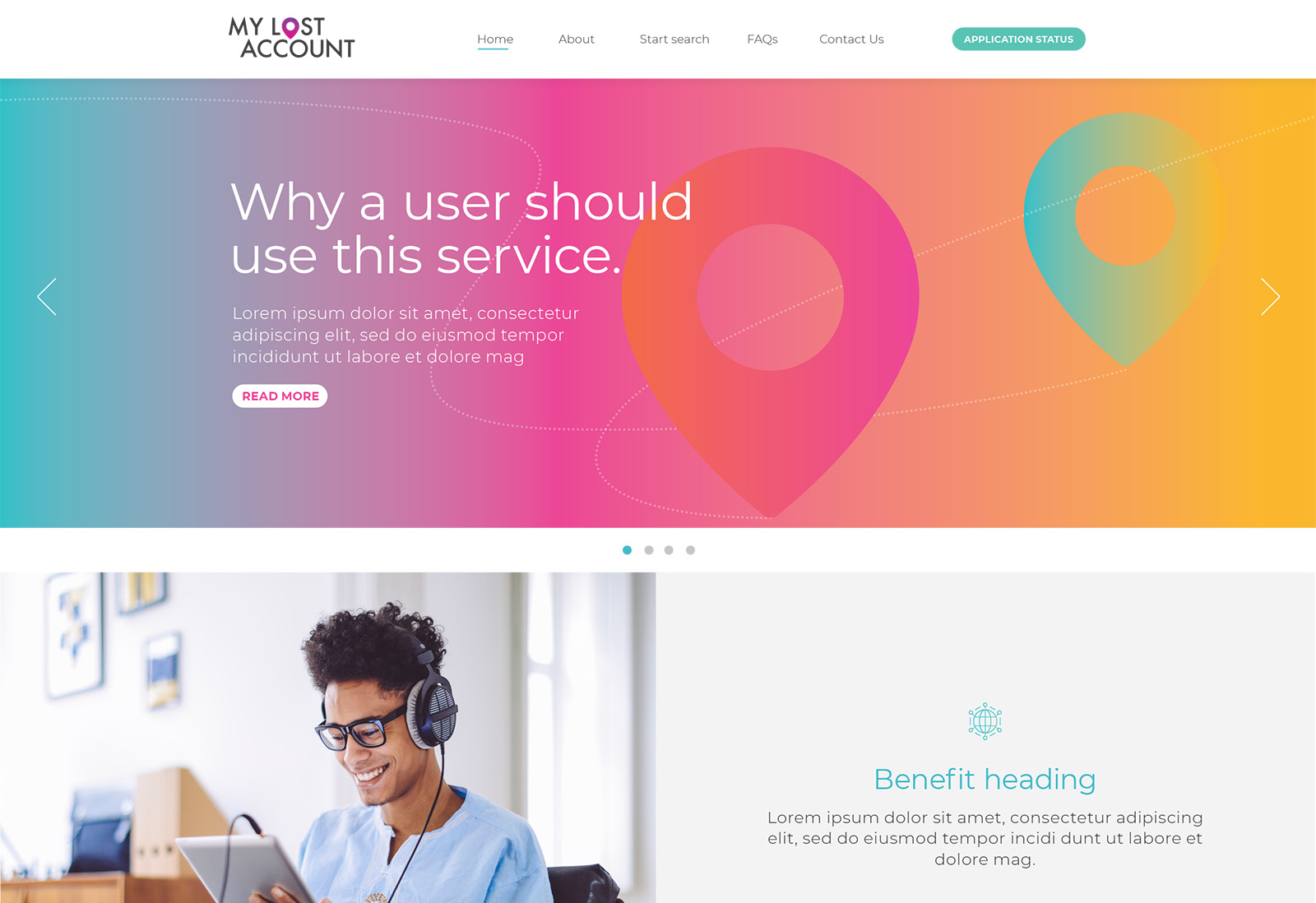
Vendor and model evaluation The financial services AI vendor landscape is crowded and the claims are often difficult to verify independently. Tinderhouse has direct production experience with secure financial systems, including My Lost Account, the central banking portal used by all major UK banks. That kind of hands-on delivery experience changes the questions we ask when evaluating vendors on your behalf.
Clinical environments are unforgiving places to get technology wrong. The stakes are high, the users are time-poor, and the regulatory framework around patient data leaves very little room for improvisation. AI consulting in healthcare needs to account for all of this before it gets anywhere near a model recommendation.
Clinical workflow automation Clinicians spend a disproportionate amount of their working day on administrative tasks: note-taking, referral letters, discharge summaries. AI consulting can identify which of these workflows are realistic candidates for AI-assisted drafting, and which carry too much clinical risk to automate without significant safeguarding. The UX decisions in a healthcare system matter as much as the AI logic, because clinical staff rarely have time to navigate complex interfaces.
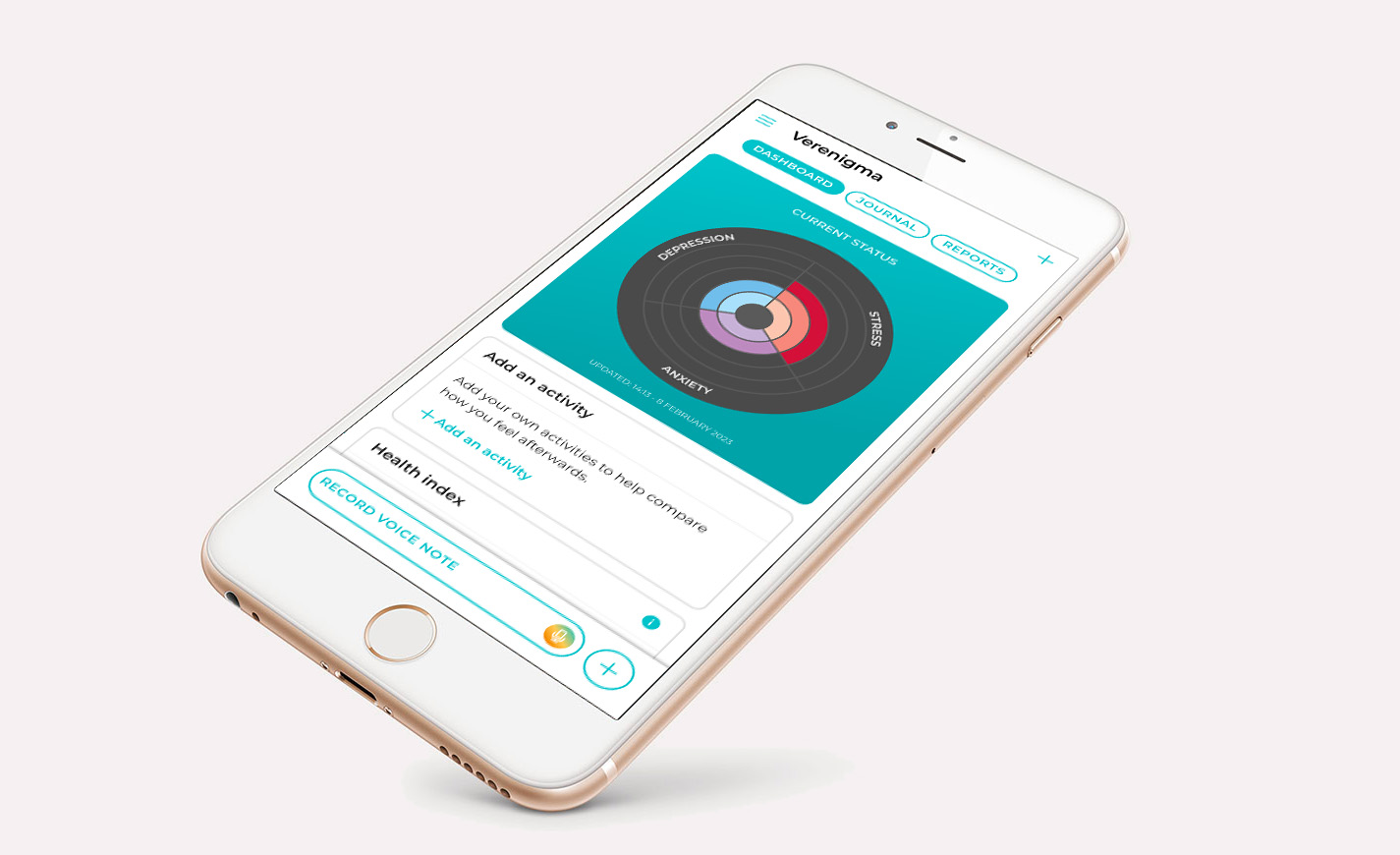
Patient triage and signposting Directing patients to the right service at the right time is one of the most impactful applications of AI in the health sector, and one of the most sensitive. A consulting engagement assesses the feasibility of AI-powered triage against your clinical governance framework, your existing patient pathways, and the very real risk of a system confidently sending someone to the wrong place. Tinderhouse built Health Help Now, an NHS triage platform, so we understand these trade-offs from direct experience.
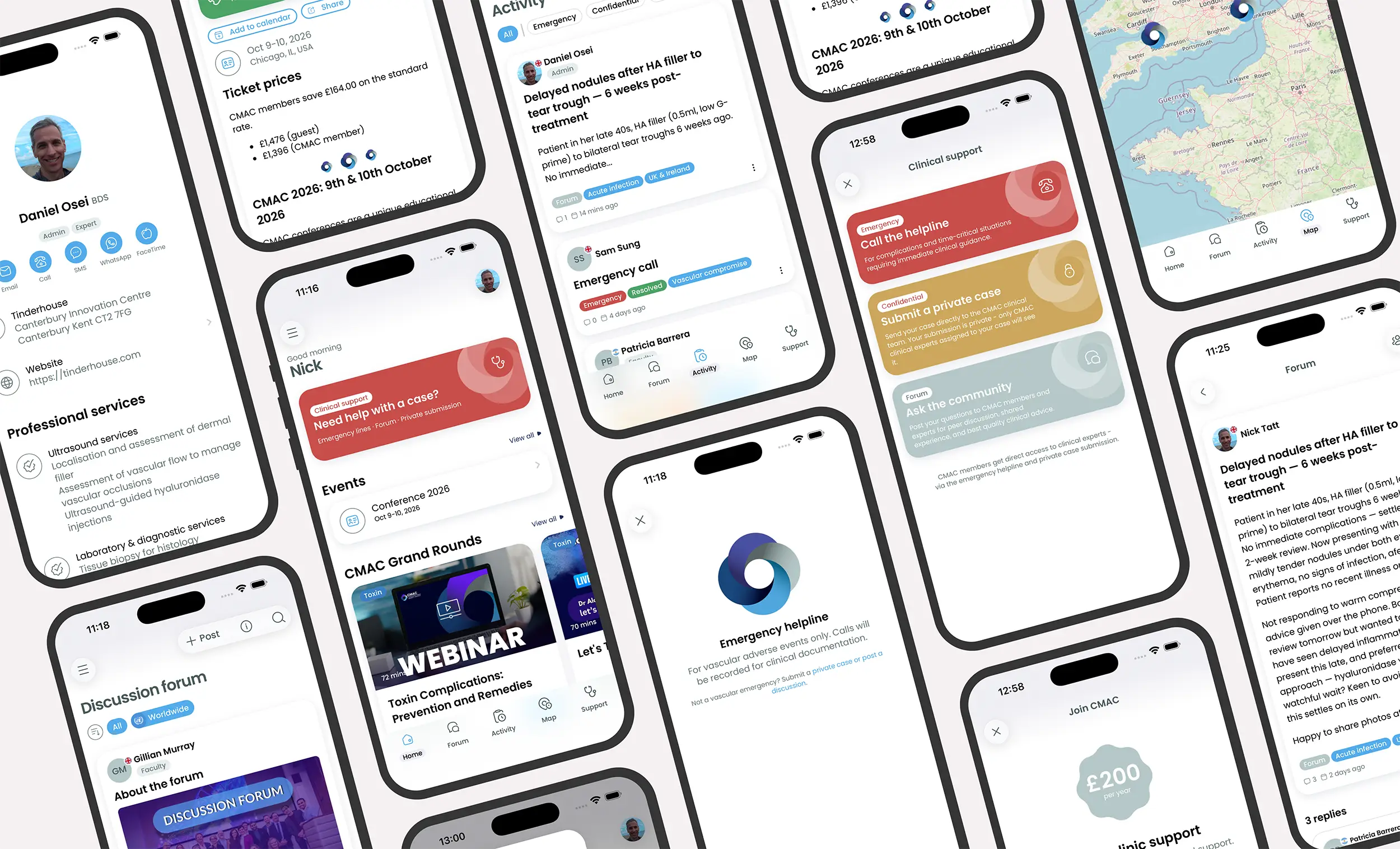
Directing patients to the right service at the right time is one of the most impactful applications of AI in the health sector, and one of the most sensitive. A consulting engagement assesses the feasibility of AI-powered triage against your clinical governance framework, your existing patient pathways, and the very real risk of a system confidently sending someone to the wrong place. It's a risk we design against deliberately: CMAC's clinical case triage routes complications to the right expert using deterministic rules (availability, region, first-to-respond) rather than an AI judgement call, precisely because the cost of a wrong assignment is too high to hand to a confident model. Tinderhouse built Health Help Now, an NHS triage platform, so we understand these trade-offs from direct experience.
Data readiness assessment Most healthcare organisations have vast amounts of potentially valuable data locked in systems that were never designed to talk to each other. Before any AI initiative can succeed, someone needs to honestly assess the state of your data, your interoperability position, and the governance implications of bringing datasets together. This is consulting work, not development work, and it saves significant budget downstream.
AI governance and risk frameworks NHS trusts and private healthcare providers face specific requirements around data protection, clinical safety, and algorithmic transparency. AI consulting in this sector must produce governance recommendations that your information governance team and clinical leadership can actually sign off on, not just a technical architecture diagram.
Remote monitoring and diagnostics Wearable devices and connected health platforms are generating patient data at a scale that clinical teams cannot process manually. Consulting here involves evaluating which monitoring use cases are mature enough for AI-assisted analysis, what the clinical validation requirements look like, and how to design alert thresholds that are clinically meaningful rather than technically convenient.
Performance data in sport has moved well beyond simple tracking. Athletes, coaches and sports organisations are sitting on datasets that could inform training decisions, injury prevention, and fan engagement, but the gap between raw data and useful insight is where most AI ambitions stall. Consulting in this sector is about understanding what the data can realistically tell you and designing an AI approach that fits the way coaches and athletes actually work.
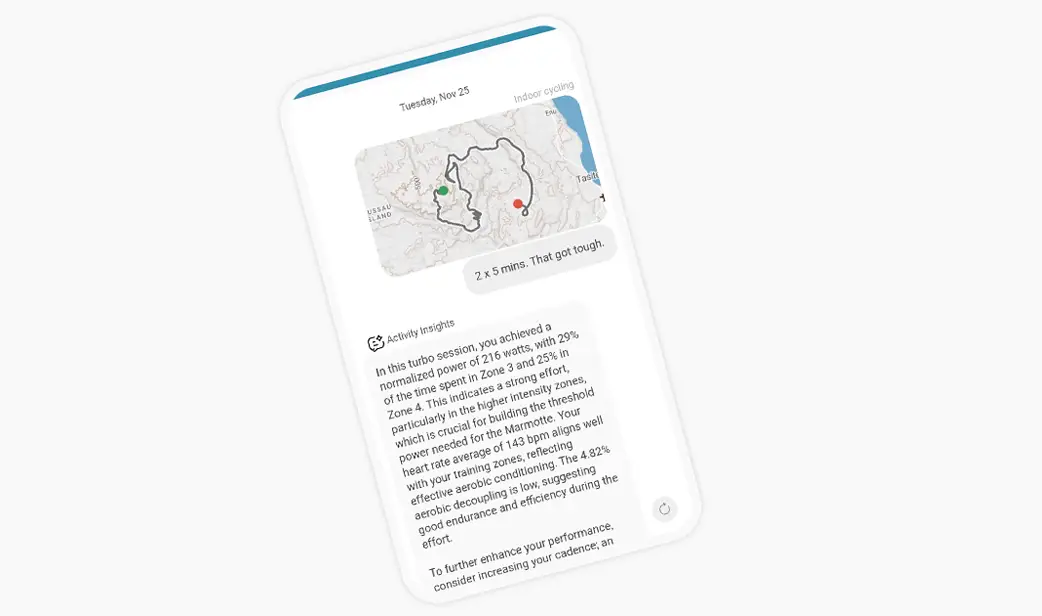
Personalised coaching intelligence Turning GPS, heart rate and power data into coaching advice that is genuinely personalised requires more than a good model. It requires an understanding of training periodisation, athlete context, and the difference between a recommendation that is technically correct and one that is actually useful. Tinderhouse built Activity Insights for Map My Tracks, an AI coaching engine serving athletes across 190+ countries, and the consulting work behind it shaped every aspect of the AI architecture.
Injury risk modelling Sports organisations increasingly want to predict injury risk from training load data, but the science is still catching up with the ambition. AI consulting here means being honest about what the current evidence supports, which data inputs are genuinely predictive, and where a simpler rule-based approach would outperform a complex model that looks impressive on a pitch deck but falls apart with real-world data.
Fan engagement and content Sports media and rights holders are exploring AI for automated highlights, personalised content delivery, and real-time statistical analysis. A consulting engagement maps which of these opportunities are technically feasible with your current content infrastructure and which would require significant data pipeline work before any AI layer could function.
Wearable data strategy The proliferation of wearable devices means sports organisations often have more data sources than they know what to do with. Consulting helps prioritise which data streams are worth integrating, how to normalise data across different device manufacturers, and what the realistic accuracy thresholds look like for different types of wearable-derived metrics.
Construction is an industry where the gap between what technology promises and what actually works on a muddy building site is particularly wide. Field teams need systems that function in low-connectivity environments, that do not require extensive training, and that solve problems foremen and site managers actually have. AI consulting for construction starts with understanding those realities.
Site documentation and reporting Field workers generate huge volumes of information, from progress photos to snagging lists to safety observations, that is often poorly structured and difficult to search. AI consulting can assess the feasibility of automated tagging, classification and summarisation of site data, and identify which approaches work within the connectivity and device constraints of a typical site. Tinderhouse built Noted, a SaaS platform for construction field teams, so we understand the operational context first-hand.
Predictive maintenance scheduling Plant and equipment downtime costs construction firms money and delays programmes. Consulting here evaluates whether your equipment data is sufficient for predictive maintenance modelling, what sensor infrastructure you would need, and whether the investment is justified by the scale of your fleet and the cost of unplanned downtime.
Safety and compliance monitoring AI-powered image analysis for PPE compliance and hazard detection is a growing area, but the accuracy thresholds matter enormously when safety is involved. A consulting engagement assesses whether current computer vision capabilities meet the reliability standard your HSE obligations demand, rather than relying on vendor demonstrations that were conducted in controlled conditions.
Estimating and tender analysis Preparing accurate cost estimates from project specifications and historical data is one of the most labour-intensive parts of the pre-construction process. AI consulting can identify which parts of your estimating workflow are suitable for AI-assisted analysis, what your historical data needs to look like to train useful models, and where the risk of automated error outweighs the time saving.
SaaS companies are under pressure to integrate AI features, and the temptation is to bolt on an LLM-powered chatbot and call it done. The strategic question is more nuanced: which AI capabilities would genuinely improve your product for your users, what would they cost to build and maintain, and how do they fit into your product roadmap without derailing everything else?
Feature prioritisation and roadmapping Not every AI feature is worth building. A consulting engagement helps SaaS product teams evaluate which AI capabilities their users would actually adopt, which would create meaningful differentiation, and which are better left to a later stage. This is product strategy work informed by technical realism, not a feature wish list.
Architecture review for AI readiness Many SaaS platforms were not designed with AI workloads in mind. Before adding intelligent features, it is worth understanding whether your current architecture can support the data flows, latency requirements, and cost profiles that AI capabilities introduce. Consulting here produces a clear assessment of what needs to change and what the migration path looks like.
LLM integration strategy Choosing between OpenAI, Anthropic Claude, open-source models, or a combination depends on your specific use case, your data sensitivity requirements, and your cost tolerance at scale. Tinderhouse has production experience across multiple LLM providers and can give you an independent assessment based on real-world performance, not marketing benchmarks.
Usage-based cost modelling AI features that look affordable in a prototype can become expensive at scale. Token costs, inference latency, and rate limits all behave differently when thousands of users hit the system simultaneously. Consulting helps you model the true unit economics of AI-powered features before they are baked into your pricing.
Data strategy and privacy SaaS platforms handling customer data face specific questions about what data can be sent to third-party AI providers, how to handle data residency requirements, and what your terms of service need to say about AI processing. Getting this right early avoids painful corrections later.
Law firms, accountancies, and consultancies are knowledge businesses. Their value is in expertise, judgement and the ability to process complex information faster and more accurately than their competitors. AI consulting in professional services is about identifying where that processing can be meaningfully accelerated without compromising the quality of advice that clients are paying for.
Document review and analysis Legal and financial document review is one of the highest-value AI opportunities in professional services, and one of the most demanding to get right. Consulting assesses which document types and review tasks are realistic candidates for AI-assisted analysis, what accuracy thresholds your professional indemnity obligations require, and how to design a human review layer that catches errors without eliminating the time saving.
Knowledge management Professional services firms accumulate enormous institutional knowledge across years of client engagements, and most of it is effectively inaccessible once the original team moves on. AI consulting can evaluate the feasibility of retrieval-augmented generation systems for internal knowledge search, and be honest about the data preparation work required to make them useful rather than unreliable.
Client communication drafting Drafting routine client communications, from engagement letters to progress updates, consumes significant fee-earner time. Consulting here identifies which communication types are suitable for AI-assisted drafting, how to maintain the firm's tone and standards, and where the professional liability risk of automated content sits.
Competitive intelligence Monitoring regulatory changes, market movements and competitor activity across multiple jurisdictions is a significant overhead for professional services firms. AI consulting assesses which monitoring and summarisation approaches are technically viable, and whether they would produce intelligence that is genuinely useful or simply voluminous.
Public sector organisations face a distinct set of pressures: limited budgets, complex procurement processes, high accountability standards, and services that affect people's lives directly. AI consulting in this context must be grounded in what is deliverable within those constraints, not what is technically possible in an ideal scenario.
Citizen service automation Local authorities and government bodies handle millions of citizen enquiries annually, many of which follow predictable patterns. Consulting assesses which service interactions are suitable for AI-assisted handling, what the accessibility and inclusivity requirements look like, and how to maintain democratic accountability when automated systems are making decisions that affect people. Tinderhouse built the Democratic Dashboard with the LSE, so we understand how civic technology projects need to balance technical ambition with public trust.
Policy research and analysis Legislators, researchers and policy teams deal with vast quantities of text, from parliamentary proceedings to consultation responses. AI consulting evaluates how natural language processing and summarisation tools can support policy work without oversimplifying the nuance that political and legislative analysis demands. Our work with the Hansard Society on the Statutory Instrument Tracker gave us direct insight into the specific requirements of parliamentary data.
Procurement and grant assessment Processing applications, whether for grants, permits, or procurement bids, is resource-intensive and often inconsistent. AI consulting can assess the feasibility of AI-assisted scoring and classification, while being clear about the transparency and fairness requirements that public sector decision-making demands.
Data sharing and interoperability Public sector organisations often hold valuable data across siloed systems with different governance frameworks. Consulting here evaluates the realistic opportunities for AI-powered data integration, taking into account the legal, ethical and political dimensions that private sector data projects do not typically encounter.
Hospitality and retail businesses run on thin margins, high volumes, and the ability to respond quickly to changing customer behaviour. AI consulting in these sectors needs to focus on opportunities that deliver measurable operational or revenue impact, because there is no appetite for speculative technology projects that do not pay for themselves.
Demand forecasting Accurately predicting demand by location, time period, and product category is one of the most commercially valuable AI applications in retail and hospitality. Consulting assesses the quality and completeness of your historical sales data, evaluates which forecasting approaches are realistic for your data volume, and helps you understand the difference between a forecast that is directionally useful and one that is precise enough to drive purchasing decisions.
Customer experience personalisation Personalised recommendations, dynamic pricing and targeted communications are standard ambitions in retail, but the gap between a personalised experience and a creepy one is often narrower than businesses assume. Consulting helps define the right level of personalisation for your customer base and your brand, and evaluates which data inputs are genuinely predictive versus simply available.
Inventory and supply chain optimisation For multi-site hospitality and retail operations, matching stock levels to demand patterns across locations is a constant challenge. AI consulting evaluates whether your current inventory data supports meaningful optimisation, what the integration requirements look like with your existing EPOS and supply chain systems, and whether the projected savings justify the investment.
Menu and assortment intelligence Restaurants, hotel groups and retailers can use AI to analyse sales mix data, identify underperforming products, and test pricing strategies. Consulting here is about assessing whether your transaction data is clean enough and detailed enough to produce insights you would actually trust enough to act on.
Educational institutions and edtech companies are exploring AI across a wide range of applications, from adaptive learning platforms to administrative automation. The consulting challenge is separating the use cases that genuinely improve learning outcomes from those that simply digitise existing inefficiencies.
Adaptive learning pathways The promise of AI in education is personalised learning at scale, but delivering on that promise requires more than a recommendation engine. Consulting assesses what learner data you have, how it maps to pedagogical models, and whether the AI approach you are considering would produce genuinely adaptive pathways or simply a more sophisticated version of branching logic.
Assessment and feedback automation Marking and feedback are among the most time-consuming activities for educators. AI consulting can evaluate which assessment types are realistic candidates for automated or AI-assisted marking, what the quality assurance process needs to look like, and where the professional and ethical boundaries sit for AI-generated feedback on student work.
Administrative process automation Universities and schools deal with complex administrative processes, from admissions to timetabling to student support referrals. Consulting identifies which of these are suitable for AI-assisted automation and, more importantly, which are too nuanced or too high-stakes to automate without significant human oversight.
Content generation and curriculum support AI can assist with generating learning materials, quiz questions, and supplementary content, but the quality control requirements in education are higher than in most other contexts. Consulting here assesses which content types can be reliably generated, what the review and approval workflow needs to look like, and how to maintain academic standards when AI is involved in content production.
Charities and not-for-profit organisations rarely have the budgets that the private sector takes for granted, which makes the consulting phase even more important. Getting the strategy right first time is not a luxury in this sector. It is the difference between a meaningful project and wasted donor funds.
Donor engagement and retention Understanding which donors are likely to lapse, which are ready for a larger ask, and which communication approaches work for different supporter segments is valuable work that many charities do manually or not at all. AI consulting assesses whether your CRM data is sufficient for predictive donor modelling, and what the realistic return on investment looks like for an organisation of your size.
Service delivery optimisation Charities delivering frontline services often lack the analytical tools to understand patterns in demand, identify unmet need, or allocate limited resources effectively. Consulting evaluates whether AI-powered analysis of your service data could improve allocation decisions, while being realistic about the data quality challenges that many charities face.
Volunteer coordination Matching volunteers to opportunities based on availability, skills and location is a logistics problem that scales poorly when done manually. AI consulting can assess whether the operational overhead justifies a technology solution, and what the simplest viable approach would look like for your volunteer base size.
Impact measurement Funders increasingly expect rigorous impact data, and charities struggle to collect and analyse it at scale. Consulting here evaluates how AI can support impact measurement without creating additional reporting burden for frontline staff, and whether natural language processing could help extract useful insights from qualitative data like case notes and feedback forms.
Frequently asked questions
Everything you need to know about working with Tinderhouse, from costs and timelines to our process and expertise.
A focused AI discovery and strategy engagement with Tinderhouse typically falls between £3,000 and £20,000 depending on the scope and complexity of your organisation. Smaller engagements, such as a targeted technical feasibility assessment or a structured AI discovery workshop, sit toward the lower end. A comprehensive engagement covering discovery, vendor assessment, strategic roadmap and proof of concept will be toward the upper end. This is consistent with the broader UK market, where agency-grade AI consulting runs at £950–£1,500 per day and most strategy engagements are scoped as fixed-fee projects. We scope every engagement precisely before starting, so you know exactly what you are paying for and what you will receive.
In practice, the distinction is often blurred. An AI consultant typically focuses on strategy, architecture recommendations, vendor selection and roadmapping without necessarily building anything. A development agency builds the systems. Tinderhouse does both, which means our consulting is informed by engineering realities rather than theoretical best practice. We have built production AI systems for clients including BSkyB, the NHS, and consumer platforms serving over a million users. That experience changes the questions we ask and the recommendations we make.
Consulting is worth considering when you are not yet certain what to build, who to build it with, or whether the AI approach you have in mind is technically sound. Development makes sense once those questions are answered. Many clients come to us having already decided what they want to build, and part of our consulting work is pressure-testing that decision before any development budget is committed. Coming to us with a fixed idea is not a problem - we will either confirm it is the right approach or explain clearly why a different route would serve you better.
Most of our consulting engagements run between two and eight weeks. A focused technical discovery phase, designed to assess a specific AI opportunity and produce a clear recommendation, typically takes two to four weeks. A comprehensive engagement covering your full AI landscape, vendor assessment, strategic roadmap and proof of concept will take six to eight weeks. We scope engagements to answer specific questions rather than produce volume.
Yes. Vendor selection is one of the most valuable things an independent consultant can do. The AI market is noisy, and the differences between platforms are not always obvious from marketing materials. We have direct experience integrating OpenAI, Anthropic Claude, Google Gemini and a range of open-source models into production systems. We assess vendors based on the specific requirements of your use case rather than on general capability rankings.
We work with both. Some of our most productive consulting engagements are with organisations approaching AI for the first time and wanting to do it properly rather than reactively. Others are with businesses that have already started an AI programme and want an independent review of their direction. The starting point does not matter; what matters is having a clear, achievable strategy by the end of the engagement.
You receive a strategic roadmap, a vendor and technology recommendation, and where applicable, a working proof of concept. What you do with those outputs is entirely your choice. Some clients proceed to build with their own team. Some build with Tinderhouse. Some use the roadmap as a planning document for a longer internal programme. We do not structure our consulting work to create dependency, and we do not produce recommendations that only make sense if you use us for the follow-on build.
Our studio is at the Innovation Centre, University of Kent, in Canterbury. We work with clients across the UK, including London, and regularly take on engagements with international clients. AI consulting engagements can be delivered remotely or with in-person sessions depending on your preference and the nature of the work.